

Best Pizza Stone for Home Oven: Get a Crispy Crust in 2026
You slide the pizza onto a hot tray, set a timer, and wait for that pizzeria moment. The cheese bubbles. The edges color. Then you lift the slice and the bottom tells the truth. Pale center, limp tip, wet middle.
That's where most home pizza nights go wrong.
A home oven can brown toppings long before it gives the dough enough bottom heat. The fix usually isn't a new recipe. It's a better baking surface. If you want the best pizza stone for home oven use, you need to think less about marketing labels and more about the thermal journey of the pizza. What happens before the dough lands, what happens in the first seconds of contact, and what happens as the surface gives heat back between pies all decide whether you get crisp or soggy.
Table of Contents
- The End of Soggy Bottom Pizza
- The Science Behind a Perfect Pizzeria Crust
- Cordierite vs Steel vs Ceramic A Head-to-Head Comparison
- Why a Rectangle Beats a Circle for Home Ovens
- How to Use and Care for Your Pizza Stone
- Our Top Pizza Stone Picks for 2026
- Frequently Asked Questions
The End of Soggy Bottom Pizza
It's common to blame the dough first. I get it. If the crust is floppy, it feels like a recipe problem. Sometimes it is. More often, the dough was never given a proper hot floor to bake on.
A standard baking sheet heats up quickly but loses heat fast. An oven rack gives airflow but almost no stored energy. So the pizza enters a chamber that looks hot, while the underside sits on a surface that can't drive off moisture fast enough. The top cooks. The bottom stalls.
That's why the first serious pizza upgrade isn't a mixer, fancy flour, or a specialized oven. It's a dedicated stone or steel that stores heat before the bake starts and releases it when the dough needs it most.
What failure usually looks like
The pattern is familiar:
- The rim looks promising: You get some puff and a little color, so you think you're close.
- The center stays weak: Tomato sauce and fresh mozzarella drop moisture into the middle faster than the oven floor can remove it.
- The slice folds over: You end up eating good toppings on bread that feels steamed rather than baked.
The bottom crust is the report card. If it's pale and soft, your baking surface didn't deliver enough stored heat.
The good news is that this is fixable with equipment choice and technique, not guesswork. The right surface changes the whole bake cycle. Preheat becomes meaningful. Launching gets easier. Recovery between pizzas improves. Most important, the dough firms up early enough to support the toppings instead of collapsing under them.
The Science Behind a Perfect Pizzeria Crust
A great pizza crust comes from two jobs happening at once. The baking surface has to deliver strong bottom heat, and it has to help the dough lose moisture before that moisture turns the center gummy.
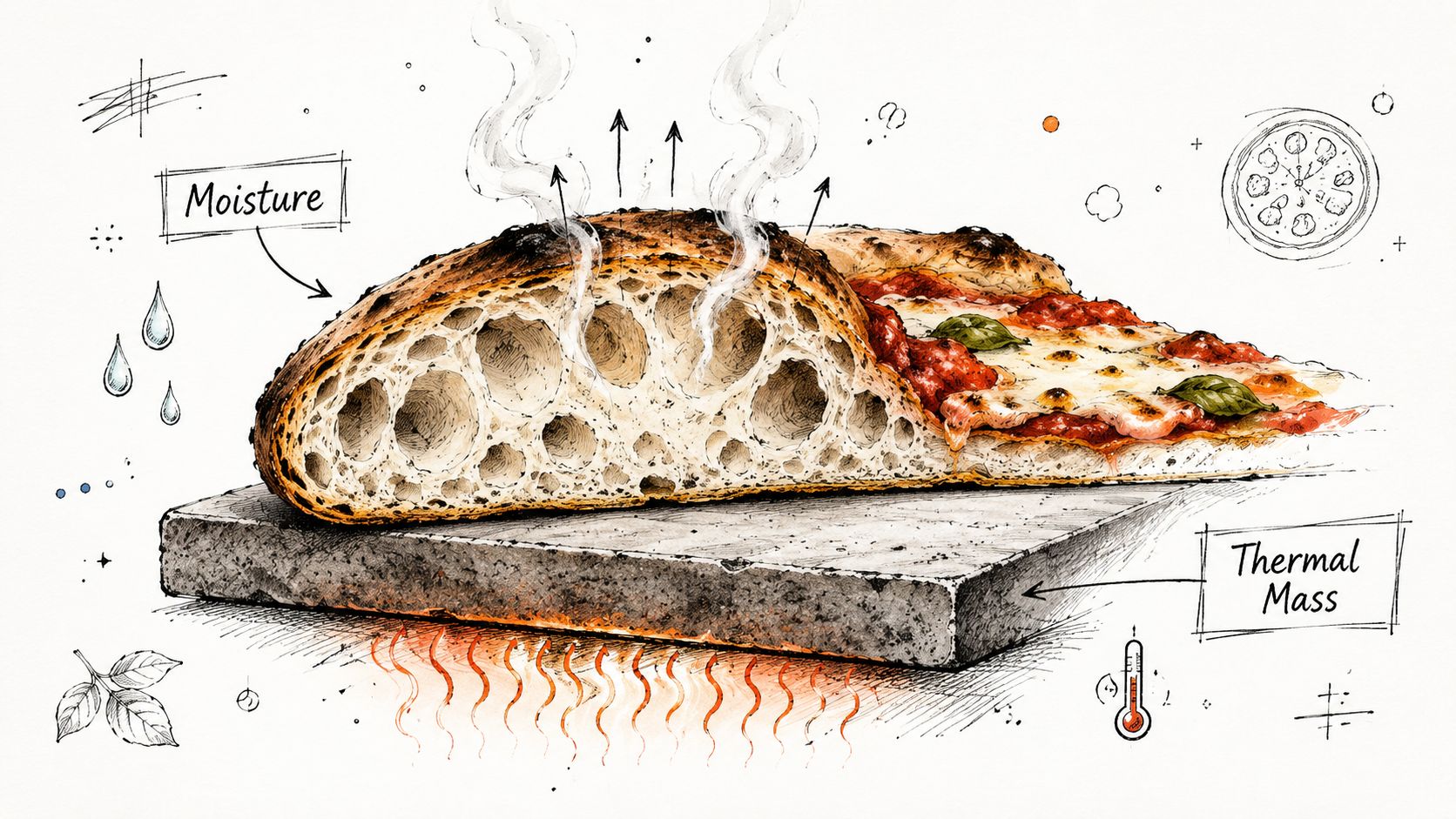
Thermal mass matters more than oven temperature
People focus on the oven dial. The dial matters, but thermal mass is what changes the result. A pizza stone or steel acts like a heat battery. It sits in the oven, absorbs energy, and then dumps that energy into the dough when you launch the pizza.
Without that stored heat, the dough meets a surface that cools too quickly. That's when you get a crust that looks baked on top but feels underdone underneath.
Moisture has to leave fast
Dough contains water. Sauce adds more. Cheese adds more again. The first stage of the bake is a race. If the bottom firms up and moisture escapes, you get structure and crispness. If not, the crust turns limp before it can set.
Material choice affects texture. Some surfaces hit the dough hard and fast. Others heat more gently but help create a drier, more even base.
Practical rule: The best pizza stone for home oven use isn't the hottest-looking option. It's the one that gives your dough the right heat at the right pace.
The thermal journey of the pie
Think of every pizza in three phases:
-
Preheat
The surface stores energy. If this stage is rushed, the rest of the bake is compromised. -
First contact
The dough hits the surface. Heat transfer starts immediately, and this moment decides whether the bottom sets or steams. -
Recovery and cool-down
After one pizza comes off, the surface has lost some energy. Materials recover differently. That affects the next bake, especially on pizza night when you're cooking multiple pies.
Once you look at pizza this way, choosing between cordierite, steel, and ceramic gets easier. You stop asking which one is “better” in the abstract and start asking which one produces the crust you want in your oven.
Cordierite vs Steel vs Ceramic A Head-to-Head Comparison
A pizza surface does two jobs at once. It has to store enough heat during preheat, then release that heat at the right pace once the dough lands. That is why material choice changes the crust so much in a home oven.
Pizza Stone & Steel Material Showdown
| Feature | Cordierite Stone | Pizza Steel | Ceramic Stone |
|---|---|---|---|
| Heat transfer style | Balanced and steady | Aggressive and fast | Gentle, often less stable at high heat |
| Preheat needs | Long full soak for best results | Heats faster, but still benefits from a full preheat | Usually slower and less predictable |
| Moisture behavior | Porous surface helps dry the base | Non-porous surface keeps all moisture on the dough side | Limited moisture handling |
| Crust result | Even, crisp, golden-brown bottom | Darker, faster browning with more char risk | Paler bottom with less consistency |
| Heat tolerance | Handles high oven heat well and resists thermal shock better than standard ceramic | Very durable in a home oven, but can run too hot for some doughs | More likely to crack under repeated high-heat use |
| Best fit | Most home pizza makers | Bakers chasing fast color and aggressive bottom heat | Occasional use on a tighter budget |
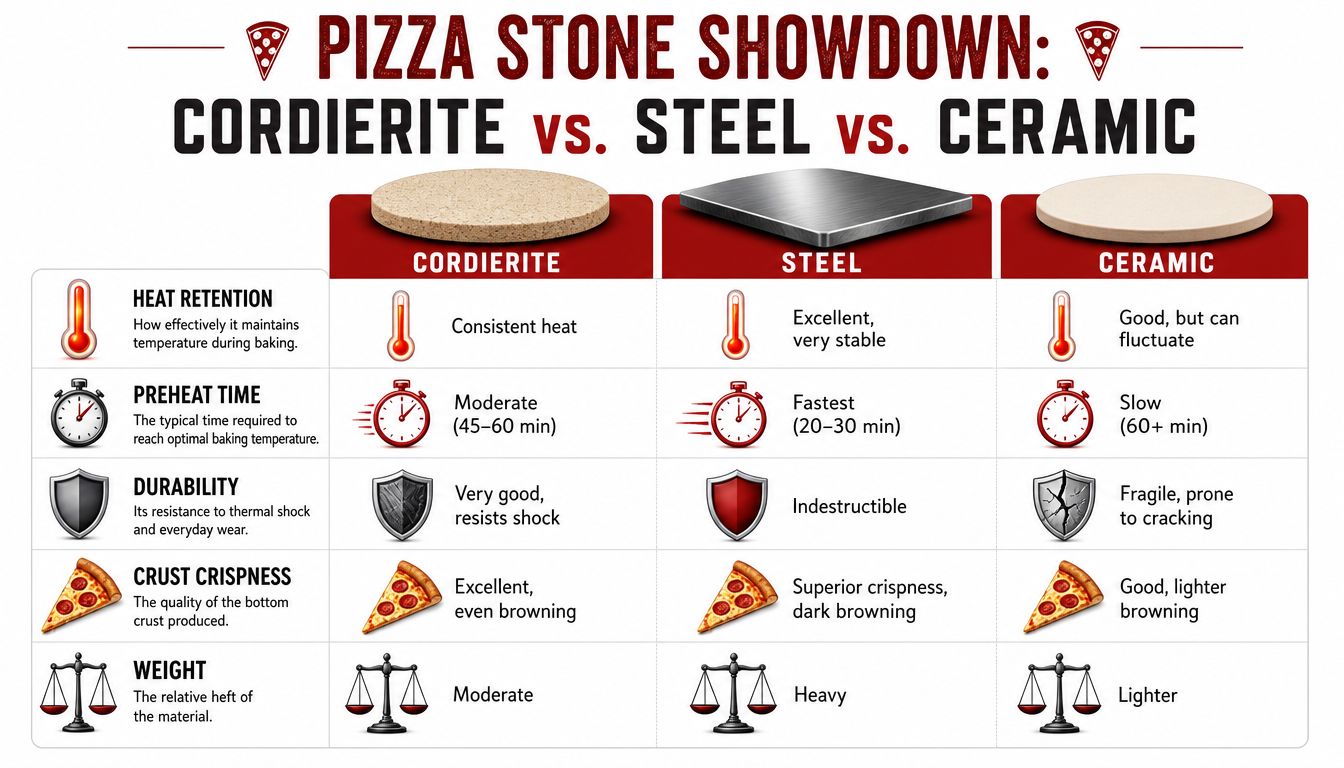
For a closer look at pizza stone material differences for home ovens, compare the material to your dough style and your oven's real top temperature.
How each material behaves through the bake
Cordierite has the most balanced thermal journey. It takes a proper preheat, and that part matters. Once fully soaked, it gives the dough a firm set without slamming it with heat so hard that the underside burns before the rim and cheese finish. During the bake, it releases heat steadily, which is why a good cordierite stone, including the Hans Grill style of thick rectangular stone, tends to produce the most reliable crisp-bottom result in standard home ovens. After one pizza comes off, recovery is solid enough for a second pie if you give it a few minutes.
Steel changes the first contact phase more than any other option. The dough hits a very conductive surface, so the base starts browning almost immediately. That is excellent for thin New York style pies, or for bakers who want stronger leopard spotting and deeper char from a home oven that cannot reach true deck-oven temperatures. The trade-off is narrow timing. A dough with sugar, a heavy layer of toppings, or a slightly low rack position can push the bottom from crisp to bitter fast. Steel also holds a lot of energy after the bake, so it recovers well between pizzas, but its intensity never really eases up.
Ceramic usually sounds close to cordierite on paper and feels different in practice. It often preheats less evenly, gives up heat less confidently at launch, and handles repeated high-heat sessions with less margin for error. For occasional pizza nights, it can work. For weekly baking, especially if you want consistent browning across several pies, it is the material I trust least.
One sentence version. Steel pushes hard. Cordierite cooks with better control. Ceramic asks for more compromise.
Which one works for most home ovens
For home oven baking, cordierite consistently gives some of the best results.
That answer comes from the full cycle, not just the launch. A cordierite stone stores enough heat to set the base, releases it gradually enough to avoid scorching, and cools down in a more forgiving way between pies. That balance is what most home cooks need. Steel is excellent for a specific crust style and for bakers who already know how their dough behaves under aggressive bottom heat. Ceramic is usually the step people outgrow.
If someone asks what to buy first, I point them to cordierite. It gives you the widest margin for good pizza, especially in a home oven that tops out well below a commercial deck oven.
Why a Rectangle Beats a Circle for Home Ovens
Round stones look traditional. Rectangular stones work better in actual kitchens.
The biggest advantage is simple. Most oven racks are rectangular, so a rectangular baking surface uses more of the space you already have.
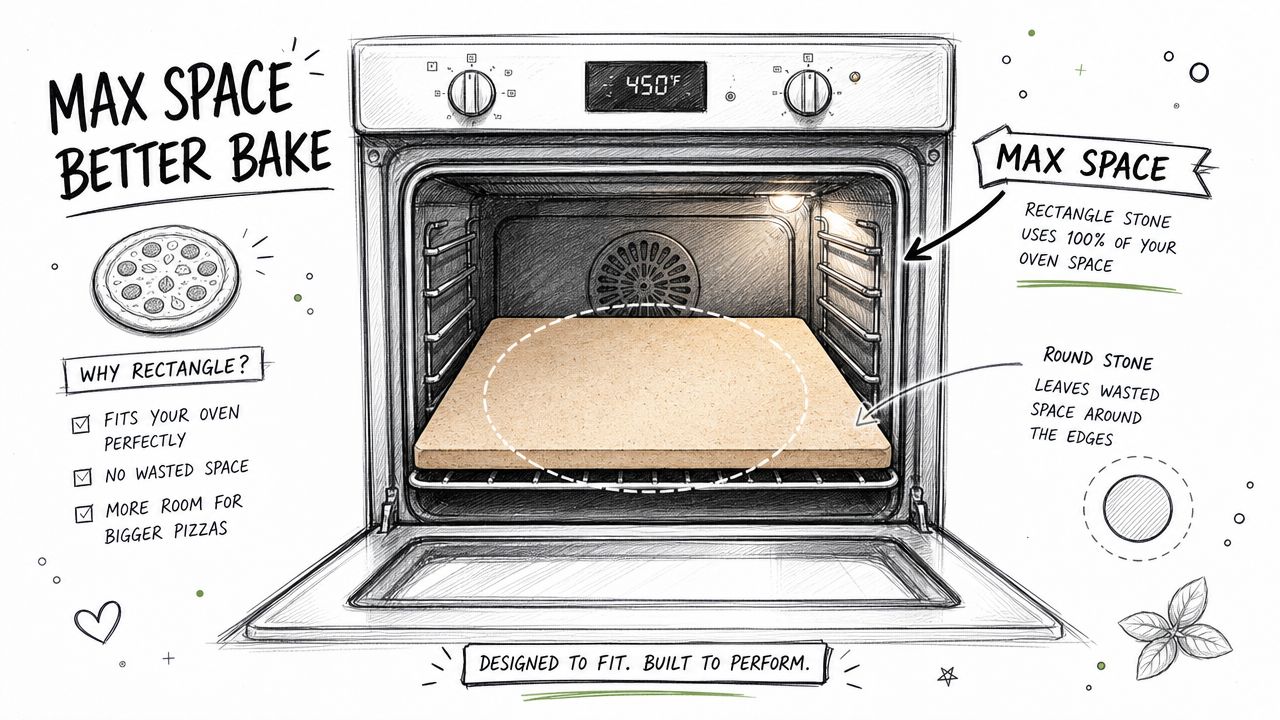
More usable landing space
Launching pizza cleanly matters more than people expect. A round stone leaves dead zones at the sides of the rack. A rectangle gives you a wider target, which means fewer awkward drops and less panic when the dough doesn't slide perfectly off the peel.
A rectangular stone also gives you more flexibility beyond pizza:
- Two smaller pies: Useful when different people want different toppings.
- Flatbreads and bread loaves: The extra length becomes practical immediately.
- Repositioning room: You're not trying to hit a circular target exactly in the center every time.
That's why rectangular designs tend to make more sense for daily use. If you're comparing shapes, this piece on why a rectangular pizza stone is often the smarter fit lines up with what most home bakers discover after a few messy launches.
How to size a stone correctly
Before buying, measure the oven rack, not just the oven cavity. You need space around the stone so heat can circulate.
Use this quick check:
- Measure width and depth of the rack: That tells you your real usable platform.
- Leave breathing room around the edges: Don't pack the rack wall to wall.
- Think about your peel movement: You need enough room to launch without hitting the oven frame.
A rectangle makes the oven easier to use, not just easier to photograph.
The shape also helps during the cool-down part of the thermal journey. With more usable surface area, you can place pies more consistently in the hottest zone and avoid crowding near edges where heat can behave differently.
A short demonstration helps if you want to see that in practice.
How to Use and Care for Your Pizza Stone
Friday night goes wrong in a familiar way. The oven says it is hot, the top of the pizza colors fast, and the bottom stays pale because the stone never finished its part of the job. Good pizza comes from managing the full thermal journey of the baking surface, from preheat to heat transfer during the bake to a controlled cool-down afterward.
A stone should be treated like stored heat, not like a sheet pan. Cordierite takes longer to charge than steel, but it also releases heat in a steadier, less aggressive way. That trade-off is exactly why many home bakers get better results on a quality cordierite surface such as a Hans Grill rectangular stone. It gives the dough time to set, dry, and crisp without scorching the bottom before the top catches up.
Use it the right way from the first bake
Start with the stone in a cold oven. Then give it a full preheat at the oven's highest practical setting. In a home oven, that usually means a longer wait than people expect. The air may be ready first, but the center of the stone is still climbing.
If you want a fuller breakdown of timing, rack position, and common mistakes, this guide on whether you should preheat a pizza stone is useful.
Use this routine:
-
Load the stone before heating the oven
A gradual temperature climb reduces the chance of thermal stress. -
Preheat until the stone itself is saturated with heat
For pizza, rushed preheats are one of the main causes of weak bottom crust. -
Launch fast and close the door fast
Every extra second with the door open drops surface heat and slows oven recovery. -
Watch the second pizza more carefully than the first
A stone often bakes best once fully settled into the session, but repeated launches can cool the surface. If the next pie goes on too soon, the crust loses that first-hit oven-floor energy.
That last point matters. During the bake, cordierite gives up heat at a moderate rate. That helps produce an even, dry base rather than the darker, harder bottom steel can create if the dough is thin and the sugar level is high. Between pizzas, the stone needs a few minutes to recharge.
Care habits that keep it working
Care starts after the bake, not on cleaning day. Leave the stone in place and let it cool with the oven. Fast temperature swings are harder on any baking surface than flour stains or dark patches.
Do not scrub a hot stone. Do not run it under water while it is warm.
Once fully cool, keep the cleanup simple:
- Scrape off stuck bits: A bench scraper, spatula, or stiff dry brush is enough.
- Skip soap: Porous stone can hold odors and detergent residue.
- Do not soak it: Moisture trapped inside the stone can cause trouble on the next high-heat bake.
- Dry it fully before reuse: If you use a damp cloth, let the stone air dry completely.
Stains are normal. A seasoned stone usually looks used because it is used. What matters is whether the surface stays dry, flat, and free of cracks.
One more practical point from long-term use. Avoid oiling the stone, and avoid cutting pizza directly on it. Burned oil creates sticky patches, and knives or rockers can rough up the surface over time. Treat it like a baking surface, not a serving board, and it will keep giving back the kind of steady bottom heat that makes home oven pizza crisp instead of limp.
Our Top Pizza Stone Picks for 2026
Pull a pizza too early from the wrong surface and you get the same disappointment every time. Pale bottom, soft center, toppings done before the base catches up. The best pick is the one that manages heat well through the whole bake cycle, from preheat to launch to the few minutes after the pizza comes out.

The all-round home oven choice
For one surface suitable for the widest range of dough styles, a rectangular cordierite stone is still the smartest buy. It preheats steadily, releases heat at a controlled rate, and stays forgiving if your dough thickness, topping load, or launch speed is not identical every time.
A practical example is the Hans Grill Rectangular Pizza Stone. In a home oven, that kind of stone gives the dough a dry, even base during the first minutes of the bake, then coasts well enough to finish the crust without scorching it. That matters if you make everything from thinner weeknight pizzas to fuller, more heavily topped pies.
The rectangular shape also makes daily use easier. You get more landing space, more room to turn the pizza, and fewer awkward moments near the oven walls.
The fast-crust option
Choose pizza steel if your target crust is richly browned underneath with a shorter bake and stronger initial oven-floor heat. Steel changes the thermal journey right from the launch. It hits the dough hard at first contact, drives rapid bottom color, and gives very little buffer for sugary doughs or thin bases.
That can be excellent in experienced hands.
I use steel when I want an aggressive bake and I know the dough can handle it. I do not hand it out as the default recommendation for a first serious setup. Between pizzas, steel also behaves differently from stone. It recovers quickly, but the same intensity that helps the first pizza can push the next one too dark if you are not adjusting bake time, rack position, or top heat.
The grill-friendly pick
If you bake indoors most weeks but also run a covered BBQ or grill, a larger cordierite stone makes more sense than a single-purpose steel plate. It gives you a broad working surface, handles repeated high-heat sessions well, and suits more than one style of cooking.
That flexibility is why this type stays in regular use. Pizza is the main job, but it also handles flatbreads, reheated slices, and bread with the same steady heat profile. For bakers who want one dependable surface instead of a specialty tool, cordierite usually earns its place faster.
Buy for the crust you actually make on a normal week. The best surface is the one that matches your oven, your dough, and how much active management you want during the bake.
Frequently Asked Questions
Can I cut pizza on the stone
You can. I do not recommend making it your serving board.
Knife marks will rough up the surface over time, and that makes burnt cheese and flour harder to scrub off later. A better routine is simple. Bake on the stone, move the pizza to a board, give it a short rest, then slice cleanly.
Why is my stone stained
Because the stone is absorbing part of the bake. That is normal.
During the thermal journey, oil, flour, and sauce residues darken as the stone heats, bakes, and cools. On cordierite, those marks are usually cosmetic. A used stone often looks worse than it performs. If the surface is dry, solid, and not flaking, staining alone is not a problem.
Do I need parchment or seasoning
Cordierite does not need seasoning like cast iron. It needs a full preheat.
Parchment is fine for early attempts if launch confidence is the main issue, but it slightly interrupts direct contact between dough and hot stone during the first part of the bake. Once your peel work is reliable, flour or fine semolina gives better bottom contact. If you use parchment, pull it out once the base has set and the pizza can hold its shape.
What if the dough sticks
Sticking usually starts on the peel, not on the stone. If the dough sits too long after topping, moisture works into the flour under the base and glues it down.
Build quickly, shake the peel before you walk to the oven, and keep the topping load under control. I also keep sauce away from the edge during launch prep. Overflow at the lip of the peel is a common cause of failed launches.
Can I use the stone on a grill
Yes, if the stone is made for high heat and you bring it up gradually from cold. That matters most with cordierite.
The same thermal journey applies outside as it does in the oven. A cold stone put over aggressive heat is under the most stress at the start, not at peak temperature. Let the grill and stone heat together, and avoid sudden temperature swings during cool-down too. That is one reason a solid cordierite model, such as the Hans Grill pizza stone, makes more sense than a fragile bargain stone if you plan to use both oven and grill.
Why is the top done before the bottom
The baking surface did not store enough heat before launch, or the pizza brought too much moisture with it. Both problems show up in the crust first.
A fully heat-soaked surface changes the whole bake. The bottom sets early, steam escapes faster, and the center firms up before toppings overcook. If this keeps happening, extend the preheat, reduce wet toppings, or switch to a surface with a heat profile that matches your dough and bake style.
If you're ready to stop guessing and start baking on a surface built for repeatable crisp crusts, take a look at Hans Grill. Their pizza tools cover the setups most home cooks use, from cordierite stones for balanced everyday baking to steel for faster, darker bottom heat.


