

Pizza Steel Reviews Tested Picks for Crisp Crusts
You've followed the recipe, stretched the dough carefully, and waited for the oven to heat. Then the first slice lifts to reveal a pale, soft underside while the toppings are already threatening to overcook. That familiar mismatch is why pizza steel reviews deserve more than a quick glance at star ratings. The useful question isn't whether a steel makes crisp pizza. It's whether it transfers heat quickly, stores enough energy for the next pie, fits your oven or grill, and produces the crust you want.
Table of Contents
- Introduction to Pizza Steel Reviews and What Matters Most
- How Pizza Steel Works and Why It Beats Stone for Many Bakers
- How We Tested Pizza Steels for This Guide
- Detailed Comparison of Top Pizza Steels by Performance and Features
- Real World Use Cases for Oven and Grill Baking
- Seasoning Cleaning and Maintenance That Keeps Steel Performing
- Final Recommendations and Which Pizza Steel to Choose
Introduction to Pizza Steel Reviews and What Matters Most
A pizza steel is a thick carbon-steel baking surface that sends concentrated heat into dough. Its value becomes clearer during consecutive bakes or grill use, when the plate must retain energy, recover between launches, and remain practical to handle. A single successful pizza cannot show all of those differences.
Preheat time, clearance, weight, and storage also shape the result. A thick steel can maintain stronger heat for back-to-back pies, while a lighter model may suit someone who bakes one weeknight pizza and puts the plate away afterward. Grill users face another constraint: the steel must fit the cooking area without blocking airflow or becoming awkward to move.
The practical test: Check how quickly a steel reaches useful heat, how evenly it browns the base, and what changes when the second pizza lands.
The category began as a niche experiment. The Original Baking Steel launched on Kickstarter in 2012, and an industry profile describes it as the first commercially available pizza steel. The campaign closed at $38,453 from 472 backers, after reaching a $3,000 target within 24 hours. The category's early history and testing background provides context for the category's focus on heat transfer and recovery.
This guide evaluates four practical criteria:
- Thermal mass: How much heat the plate stores.
- Transfer speed: How rapidly that heat reaches wet dough.
- Recovery: How well the surface rebounds between consecutive bakes.
- Crust result: Browning, crispness, edge development, and consistency.
These criteria also clarify which Hans Grill model suits which baker. A heavier option makes more sense for repeated pies or grill sessions, while a lighter plate may be easier for occasional oven use. Dimensions and customer ratings still matter, but they cannot show how quickly the base browns or how much the second bake differs from the first.
Review volume can indicate how much user experience is available, but it does not establish identical performance across models. A major tested roundup recorded more than 13,800 reviews for one steel, while another option had 598 reviews, a 4.6-star average, and 83% five-star ratings. The same roundup cited a different steel with a 4.4-star average across 13,800+ reviews. The available pizza steel review data adds context, while thermal behavior and consecutive-bake results remain more useful for choosing between products.
How Pizza Steel Works and Why It Beats Stone for Many Bakers
A steel plate changes the bake at the point where dough meets the surface. Carbon steel conducts heat far more efficiently than cordierite stone, so energy stored in the plate reaches the dough quickly after launch. Technical comparisons place carbon steel at roughly 45 to 58 W/m·K, while cordierite sits around 2 to 3 W/m·K. Under that comparison, steel transfers heat roughly 18 to 20 times faster. The thermal comparison between carbon steel and cordierite gives pizza steel reviews a useful basis for evaluating heat transfer rather than relying on marketing descriptions.
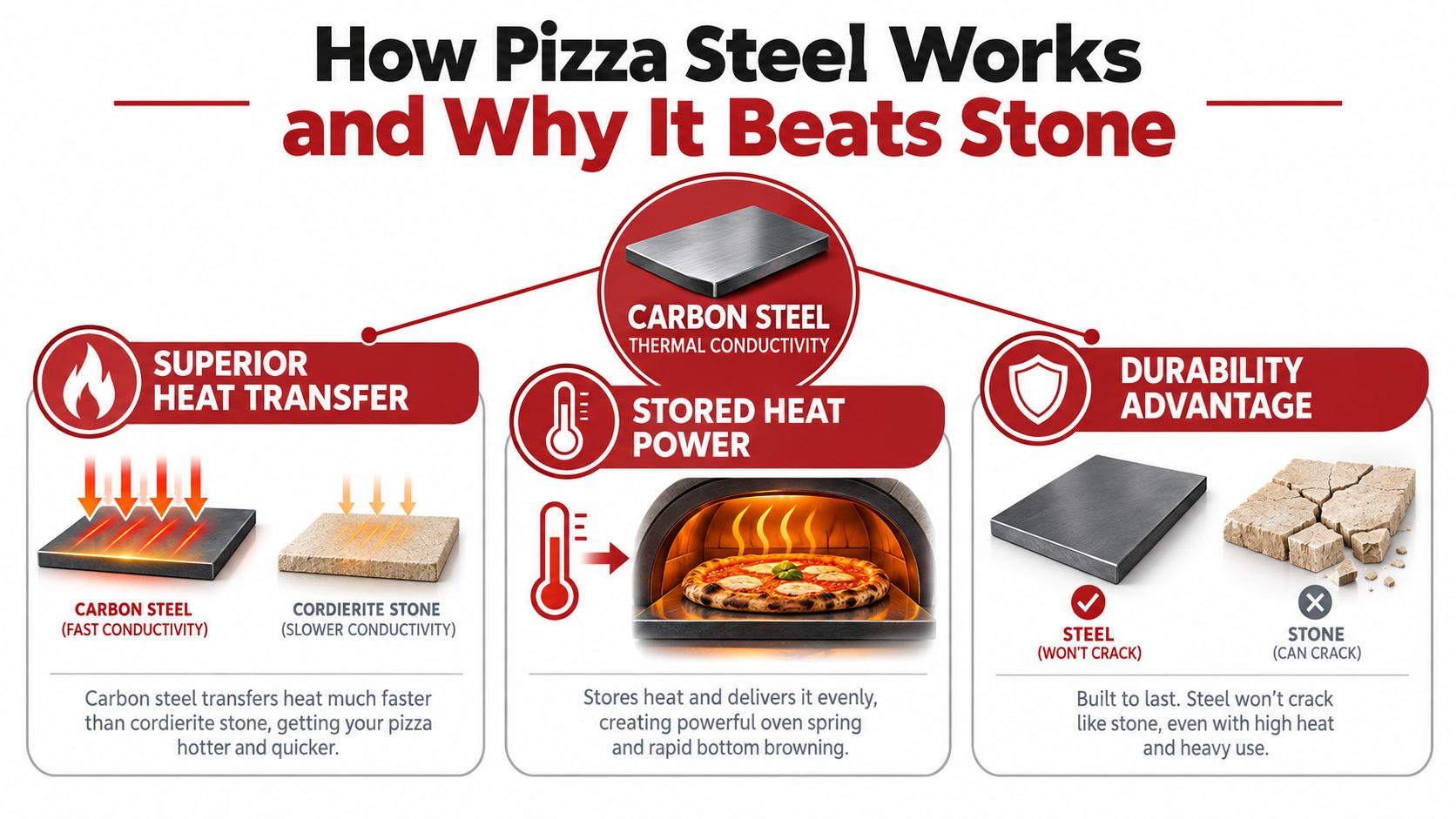
Heat transfer changes the bottom crust
Steel does not make every part of a pizza cook faster in the same way. Its clearest effect is underneath the dough. The hot surface transfers energy rapidly into the base, encouraging earlier browning and a firmer crust before the toppings overcook.
Bake time and bottom color therefore reveal more than maximum oven temperature. One review reported New York-style pizza taking about 6 minutes on steel versus 8 minutes on stone. Other testing found steel cooking pizza up to 30% faster than a baking stone. The documented bake-time comparisons support the practical difference: steel can shorten the window between a properly browned base and overdone toppings.
Mass determines what happens next
Conductivity explains the initial heat transfer. Thickness and weight determine how much useful energy remains after cold dough lands on the surface. A thin plate may heat quickly but lose surface temperature more readily. A heavier plate usually needs more preheating, then holds steadier conditions through several launches.
That distinction matters more for back-to-back pizzas than for one pie. Serious Eats recorded a top-performing steel reaching an average total heat potential of 517°F after 30 minutes of preheating and maintaining that level, while other steels needed a full hour to reach similar performance. The same testing found that strong heat retention made multiple pies easier to bake in a row. Serious Eats' pizza steel testing is therefore especially relevant for group meals, repeated oven use, and grill sessions.
For a single thin-crust pizza, a lighter Hans Grill plate can be easier to handle and may provide enough thermal performance. Frequent consecutive baking favors a heavier model, while grill users should prioritize retained heat and stable recovery over quick preheating alone. Steel will not crack like stone, but it can rust without care and requires deliberate handling because of its weight. Seasoning protects the surface and can reduce sticking, though it does not make steel friction-free.
Stone remains a reasonable choice for bakers who prefer gentler heat transfer, already own dependable cordierite, or usually bake one pie at a time. This pizza steel versus stone comparison covers the material and technique trade-offs in broader detail.
How We Tested Pizza Steels for This Guide
A useful pizza steel review should let you understand what happened before the verdict. The same oven setting, dough behavior, launch technique, and measurement routine matter more than dramatic adjectives. Without that consistency, "fast" may mean the reviewer used a thinner dough or a hotter shelf position.
The repeatable testing sequence
- Preheat the surface. Place each steel on the same oven rack and use the same oven setting. Track the time from a cold start until the surface reaches the intended baking condition, rather than assuming the oven's air temperature tells the whole story.
- Measure the plate. Check the center and edges with an infrared thermometer. The center shows the launch zone, while edge readings reveal whether the steel has developed a useful baking field beyond the middle.
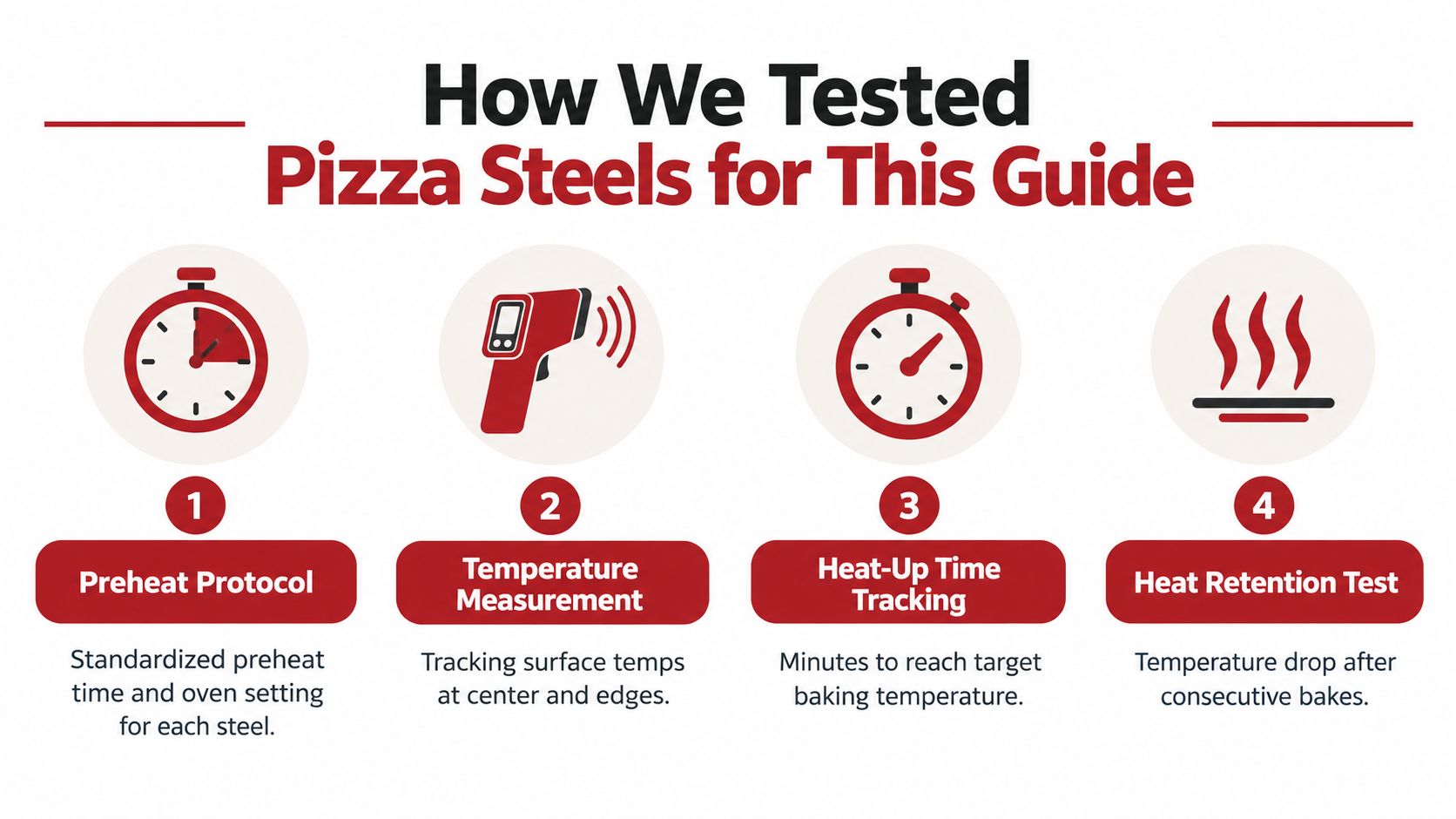
- Track heat-up behavior. Record when the plate becomes ready for dough, not just when the oven announces that it has reached temperature. A steel's mass can make the rack surface lag behind the air.
- Test recovery. Bake consecutive pies with the same dough weight and launch pattern. Measure the temperature drop after each bake and note whether the second crust browns like the first.
Crust scoring needs more than color
I'd score the underside in three parts: bottom char, edge puff, and evenness. A dark base isn't automatically a good base. Steel can brown quickly enough to expose weak dough handling, excess flour, or an overly wet topping load.
Handling belongs in the test as well. A steel that produces excellent crust but is awkward to lift, difficult to position, or too large for the rack may create more friction than it removes. Check corners for safe gripping space, confirm that the oven door closes normally, and measure the rack rather than trusting the advertised nominal size.
Grill testing adds another variable. Outdoor burners and charcoal create stronger temperature gradients than a conventional oven, so placement affects the result. The surface should sit securely, leave room for airflow, and remain clear of direct contact with unstable grates.
Repeat this at home: Bake two pizzas with identical dough portions, keep the launch position consistent, and compare the second underside with the first. Recovery is where many apparent differences become obvious.
Detailed Comparison of Top Pizza Steels by Performance and Features
A steel that performs well for one pie may behave differently during a full baking session. Single-pie users usually care about manageable handling, rack fit, and predictable preheating. For consecutive launches, stored heat and recovery matter more. Grill users add another constraint: the plate must sit securely and leave enough space for airflow.
The comparison table therefore focuses on practical trade-offs rather than a single ranking. Earlier testing showed that steels differ in how quickly the cooking surface becomes ready and how well it maintains useful heat. That distinction matters most when the second or third pizza follows quickly, or when a grill creates uneven heating across the plate. A review should record those differences instead of treating every steel as interchangeable.
| Model | Thickness and Weight | Heat-Up and Retention | Crust Result and Best For |
|---|---|---|---|
| Hans Grill Pizza Steel PRO | Confirm the current product specification before buying, especially plate size and mass | A practical steel option for oven or BBQ use; results depend on preheat time, rack position, and placement | Crisp, strongly browned bases for home bakers and grill users who want one adaptable surface |
| Hans Grill Pizza Steel PRO XL | Larger format; verify rack and grill clearance before purchase | More baking area supports larger pies, while greater size or mass calls for more deliberate preheating | Useful for broad pizzas and multi-pie sessions when the oven or grill can accommodate it |
| Original Baking Steel | Commercially available category pioneer launched in 2012 | A reference model for assessing conductive heat transfer and recovery across repeated bakes | Useful as a comparison point for steel behavior against stone |
| Cordierite pizza stone | Ceramic material rather than carbon steel | Slower heat transfer and gentler bottom cooking | Suitable for bakers who prefer stone's pace and mainly prepare individual pies |
Hans Grill models for different priorities
The Pizza Steel PRO fits a standard oven or backyard grill when the goal is a direct, strongly browned base without a large baking setup. Its smaller format can be easier to position and handle, especially where rack depth or grill clearance is limited. It still requires a complete preheat, and a wet topping load can overwhelm any steel by cooling the dough surface before the crust sets.
The PRO XL addresses a different limitation, available surface area. It gives a broad pie more room for launching and positioning, which can reduce awkward edge placement. The larger format also demands closer attention to rack dimensions, door clearance, grill airflow, and lifting space. More metal can provide more stored heat during consecutive baking, but it can also extend the time needed for the whole plate to become ready.
The trade-off reviewers should state plainly
Steel's advantage is clearest when the bake requires fast heat transfer or several launches in succession. Cordierite remains a reasonable choice for bakers who prefer gentler bottom cooking, lighter handling, and lower rust risk. That difference is a use-case decision, not proof that one material suits every pie.
For one pizza, prioritize fit, handling, and the crust texture you prefer. For a sequence, give greater weight to plate mass and observed recovery. For grill use, check secure placement and dimensions before selecting the thickest or largest option. The useful comparison is the one that matches the baker's workload, not the one that assigns every model the same winner's label.
Real World Use Cases for Oven and Grill Baking
The same steel can feel like three different tools depending on what you're cooking. A weeknight baker wants reliable browning without turning dinner into an equipment ritual. A backyard griller wants a surface that tolerates intense, uneven heat. A host making several pies needs the plate to recover instead of producing a strong first pizza followed by progressively softer bases.
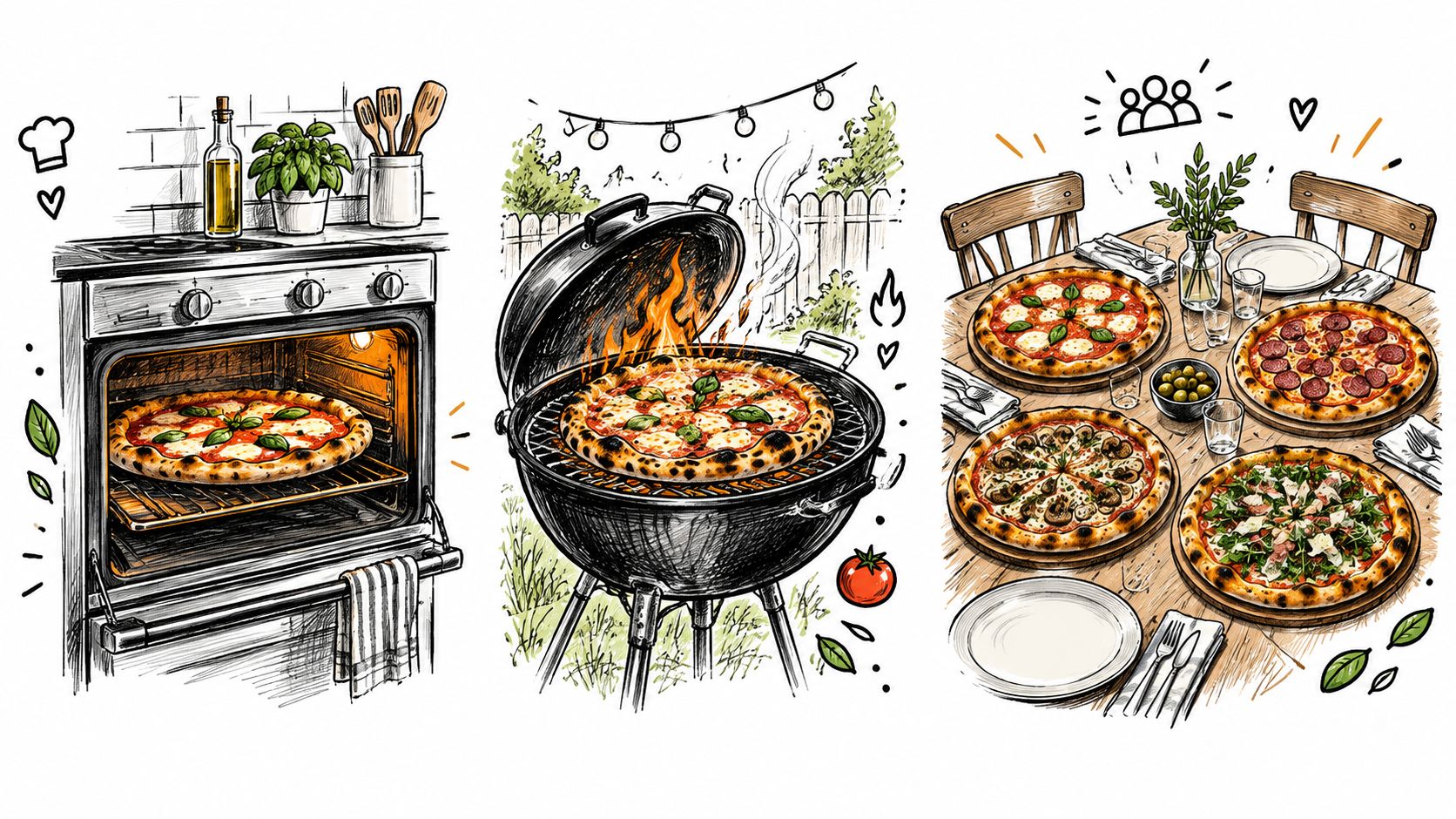
The weeknight oven baker
For one or two pies, place the steel on an upper-middle rack and preheat until the plate itself is ready, not merely until the oven display signals temperature. Launch with a lightly floured peel, keep toppings restrained, and rotate only if your oven creates an obvious hot side.
A standard cordierite stone can still satisfy a thin-crust baker who prefers a slower base. Steel becomes the more compelling upgrade when pale bottoms persist despite good dough and sufficient preheating. The change is most noticeable at the contact surface, where rapid transfer helps the crust firm before the toppings overcook.
The backyard griller
A grill creates a harsher test because the heat source is often concentrated below the grate. Keep the steel stable, avoid placing it where direct flame can create an extreme hot spot, and allow the surface to heat gradually. The grill lid must close without touching the plate or the dough.
The Pizza Steel PRO fits this user type when the goal is a conductive baking surface for outdoor use rather than a dedicated pizza-oven floor. Check dimensions against the grill before ordering. The safest choice is the largest plate that leaves practical clearance, not the largest plate listed on a product page.
Use this guide to using pizza steel for launch, positioning, and handling details.
The host baking several pies
Thickness and recovery are decisive. A strong steel can keep delivering heat to the underside after the first launch, but each successive pie still changes the surface temperature. Give the plate a short recovery interval when the second base shows weaker browning, and avoid opening the oven unnecessarily.
A thicker or larger model can suit a pizza-night marathon, provided the oven rack can support it safely and the cook accepts slower initial preparation. The mistake is choosing maximum mass without considering lifting, storage, and preheat discipline. A plate that stays in the oven throughout the session is more practical than one that must be moved repeatedly.
Seasoning Cleaning and Maintenance That Keeps Steel Performing
Carbon steel rewards a simple routine and punishes careless moisture. The surface doesn't need complicated treatment, but it does need to be washed appropriately, dried immediately, and stored where condensation can't linger.
Build protection before the first bake
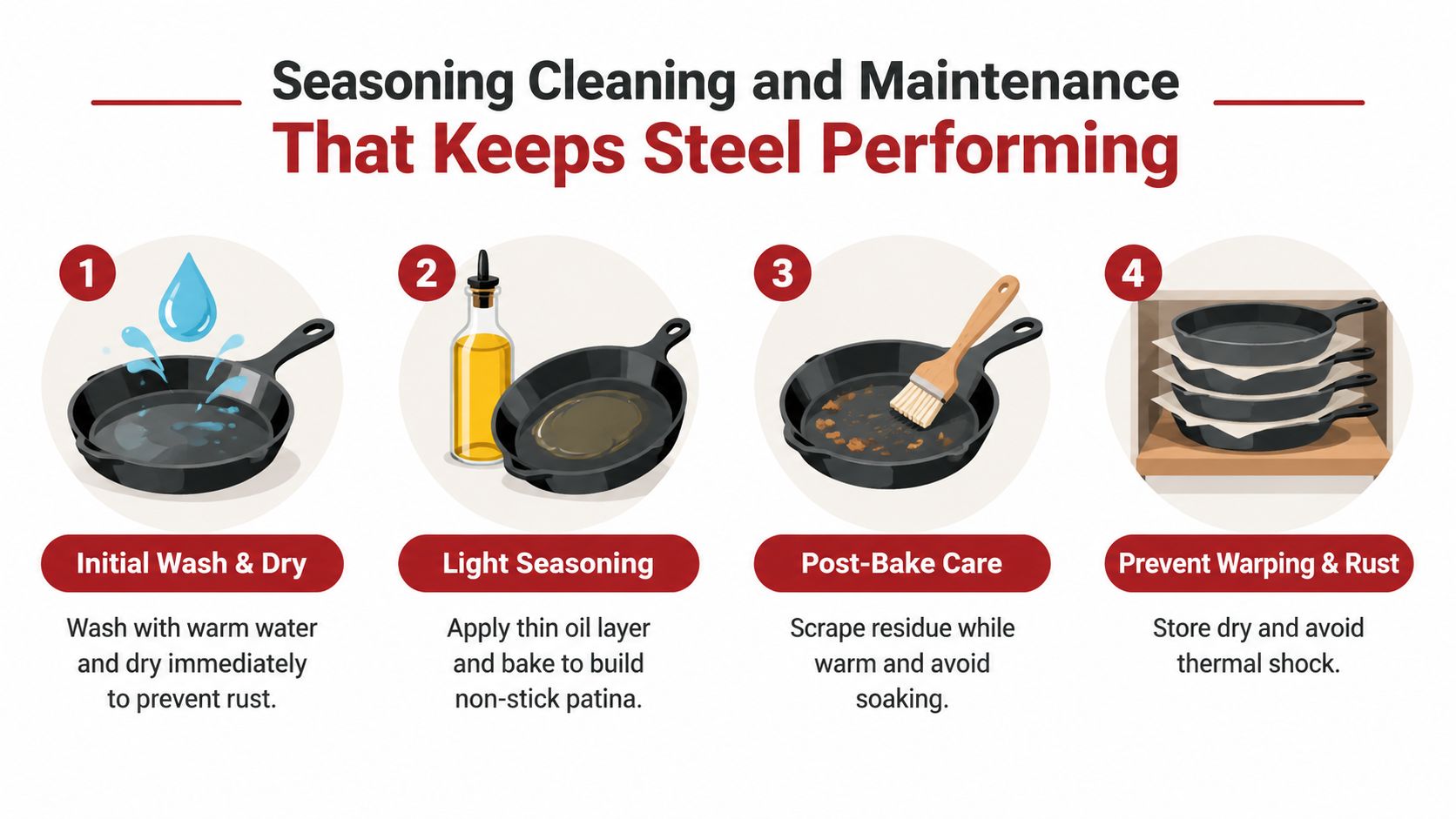
Wash a new steel with warm water to remove manufacturing residue. Dry it completely, then apply a very thin film of neutral cooking oil and heat it according to the manufacturer's instructions. Too much oil creates a sticky layer, so wipe the plate until it looks almost dry before heating.
Seasoning won't prevent every food item from sticking. Wet dough, excess flour, and cheese pushed beyond the edge can still bond to the surface. A properly prepared plate becomes easier to maintain as repeated heating builds a darker protective patina.
Clean while the residue is manageable
Let the steel cool enough to handle safely, then scrape baked-on residue with a suitable scraper or brush. Avoid soaking it, because prolonged exposure to water creates a direct path to rust. Use mild cleaning only when needed, and never put a steel plate through a dishwasher.
Dry the surface immediately after washing. A brief return to low heat can drive off hidden moisture, followed by a thin oil wipe if the surface looks dry or unprotected.
The detailed pizza steel seasoning guide offers a practical maintenance reference.
Treat grill use as a separate risk
Outdoor cooking adds grease, smoke residue, and rapid temperature changes. Don't move a blazing-hot steel onto a cold, wet surface, and don't cool it with water. Thermal shock is more commonly associated with stone cracking, but sudden temperature changes and careless handling can still damage equipment or create safety hazards.
Light rust isn't a reason to discard the plate. Scrub the affected area back to clean metal, wash it, dry it thoroughly, and rebuild a thin oil layer. Store the steel indoors in a dry position with airflow around it, rather than sealed against damp material.
Final Recommendations and Which Pizza Steel to Choose
Choose by baking pattern. A weekly single-pie baker needs reliable contact heat, manageable weight, and a plate that fits the oven. Back-to-back sessions place greater value on heat recovery and usable working area, while grill users also need dimensions that leave airflow and handling space.
For a practical oven-and-BBQ setup, the Hans Grill Pizza Steel PRO suits cooks who want strongly browned bases without the largest format. The PRO XL fits larger pies and consecutive baking better, provided it fits the rack, door opening, and grill. Neither model is an automatic winner. The useful distinction is how much thermal reserve your session requires and whether the plate fits the cooking surface.
Use this decision rule:
- One pie weekly: choose the PRO if its dimensions fit your oven and grill.
- Three or more back-to-back pies, or XL grill coverage: choose the PRO XL, after checking grate and lid clearance.
- Mostly one pie with lower-maintenance handling: a stone remains a reasonable choice.
This rule reflects the testing priority that matters most in practice. A steel can produce a crisp, browned base on the first bake, yet the second and third pies reveal whether its mass and recovery keep results consistent. That difference matters more on a grill, where airflow, grate size, and repositioning limit usable space.
Before checkout, confirm the seller's current warranty, return terms, and shipping conditions. Also verify that the plate can be lifted, stored, and moved safely when hot. Those checks affect repeatable use more than a star rating.
Steel earns its place when pale bottoms frustrate you, rapid browning matters, or later pizzas need to resemble the first. The strongest pizza steel reviews should therefore emphasize recovery testing and real crust outcomes, not star count alone.
Hans Grill offers pizza stones, Pizza Steel PRO models, XL formats, and supporting tools for home ovens and backyard BBQ baking. Match the plate to your oven or grill, then visit Hans Grill to compare the available surfaces and choose the setup that fits your next pizza session.


