

Pizza Stone for BBQ Guide to Crisp Crusts Every Time
You're probably standing at the grill with dough ready, toppings lined up, and one question nagging at you: why does pizza on a BBQ sometimes come out brilliant and sometimes come out burned underneath and pale on top?
That inconsistency usually isn't about the dough. It's about the surface under the dough and how that surface takes, stores, and gives back heat. A pizza stone for BBQ use can fix that, but only if you treat it like a heat tool, not just a slab you toss on the grate.
I've seen the same mistake over and over. The grill thermometer says the BBQ is hot, so the pizza goes on. Then the bottom scorches before the top settles, or the dough sticks because the stone never got properly heat-soaked. If you get one thing right, get this right: the stone surface temperature matters more than the dome reading.
Table of Contents
- Why BBQ Pizza Works Differently Than Oven Pizza
- How a Pizza Stone Transforms Your Grill Into a Pizza Oven
- Choosing Your Material Cordierite Steel and Cast Iron Compared
- Sizing and Thickness That Actually Fit Your Grill
- Heat Strategy and Placement for Even Baking on a BBQ
- From Launch to Slice Using Your Stone Without Sticking or Burning
- Safety Cleaning and Storage That Keep Your Stone Crack Free
Why BBQ Pizza Works Differently Than Oven Pizza
The first bad BBQ pizza usually follows the same script. The grill is running hot, the stone goes in late, the dough lands with confidence, and within minutes the base is too dark while the cheese still looks halfway there. Or the opposite happens. The top cooks, the crust stays blond, and the middle feels underdone.
That happens because a grill doesn't heat like a kitchen oven. A BBQ pushes stronger heat from below, and that bottom heat can get aggressive fast. The lid helps trap hot air above the pizza, but on most grills the lower heat source still does most of the damage or most of the work.
What the stone is really doing
A pizza stone for BBQ cooking acts like a buffer between flame-driven grate heat and delicate dough. Instead of exposing the crust directly to metal bars and direct radiant heat, the stone spreads that energy across a broader surface. That's why a properly heated stone gives you a more even underside and a steadier bake.
Without that buffer, direct-on-grate pizza can work for some styles, but it becomes a different method entirely. You're managing dough structure, topping load, and timing at a much tighter margin.
A grill can read hot while the baking surface is still wrong for pizza.
Reliable BBQ pizza isn't about copying a pizzeria oven exactly. It's about building a setup that gives you three things at once:
- A stable bottom surface that won't torch one side
- Enough top heat under the lid to finish cheese and crust together
- Repeatable recovery between pies so the second pizza doesn't behave differently from the first
What success actually looks like
Good grill pizza doesn't have to be leopard-spotted and dramatic to be right. For most backyard cooks, success is simpler than that. The crust releases cleanly, the bottom browns evenly, the rim rises without drying out, and you don't need rescue moves halfway through the bake.
That's why the decisions ahead matter. Material changes browning behavior. Size changes airflow. Placement changes whether the stone bakes evenly or cracks early. Get those right, and a pizza stone for BBQ use becomes one of the most useful things you can keep next to the grill.
How a Pizza Stone Transforms Your Grill Into a Pizza Oven
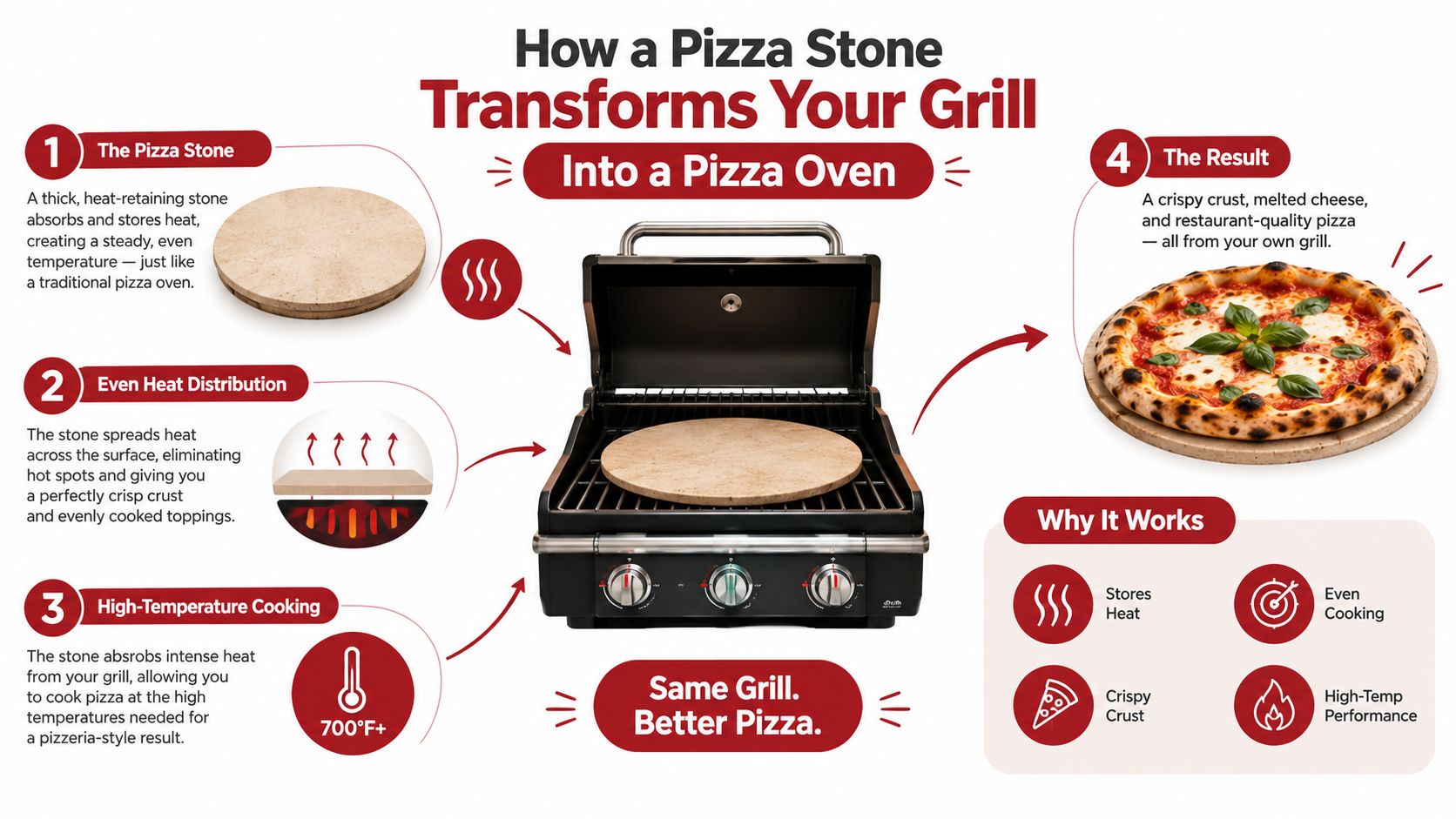
A grill becomes a pizza cooker the moment you stop thinking only about air temperature and start thinking about stored heat. Dough needs contact heat from below and circulating heat above. A stone helps create both conditions in a setup that would otherwise run too harsh underneath.
Heat storage changes everything
When you preheat a stone properly, it stores energy and then releases it into the dough at a steadier rate than bare grates. That matters because raw dough chills the cooking surface on contact. A weak surface drops off fast and gives you pale, tough crust. A properly heated one keeps cooking through that contact.
The stone also helps moderate the grill's stronger lower heat. That's a big reason many cooks prefer stone when they want a crust that browns evenly instead of blistering too hard too fast.
Why dough behaves better on stone than on grates
Raw pizza dough on grates can sag, stick, and cook unevenly before you can even rotate it. A stone gives the dough full support from edge to edge. That lets the base set before toppings start sliding or moisture starts pooling in the center.
There's another practical benefit. A stone surface tends to help with crispness because it supports a drier, firmer bake than a floppy, direct-grate launch. That's especially helpful with home doughs that carry a little extra moisture.
The grill still needs the lid closed
A stone alone doesn't make pizza. The closed lid does the rest of the job. Once the pie lands, the lid traps hot air and turns the grill chamber into a rough oven environment. Open-lid cooking lets too much top heat escape, so the base races ahead of the toppings.
Keep this mental model in mind:
- Burners or coals create the energy
- The stone stores and spreads that energy
- The lid traps upper heat to finish the top
- Airflow decides how balanced the whole system feels
Practical rule: If the lid stays open for long, you're grilling dough, not baking pizza.
Thickness and mass affect rhythm
Not all stones feel the same in use. A lighter, thinner piece heats faster and is easier to handle, but it can lose energy faster between pizzas. A thicker or heavier surface usually feels steadier once hot, though it takes longer to come into its stride.
This is why two grills at the same apparent heat can bake very differently. The question isn't just whether the grill is hot. It's whether the surface has enough stored heat to bake the next dough cleanly.
Choosing Your Material Cordierite Steel and Cast Iron Compared
Material choice decides how forgiving your grill setup will be. It affects browning speed, recovery time between pizzas, and how much punishment the surface tolerates on a live-fire cooker.
Here's the quick view first.
BBQ Pizza Surface Comparison by Heat Behavior
| Material | Heat Recovery | Browning Control | Best For |
|---|---|---|---|
| Cordierite | Slower than steel | More forgiving and even | Thin crust on gas or charcoal when you want steadier control |
| Steel | Very fast | More aggressive bottom heat | Fast bakes, strong underside browning, experienced heat management |
| Cast iron | Strong heat retention | Can run forceful underneath | Cooks who already use cast iron on the grill and don't mind the upkeep |
Cordierite for control
Cordierite is the standard material many BBQ pizza stones use for a reason. It was discovered in 1813, later became a common high-temperature material because of its thermal shock resistance, and one reference notes it can withstand temperatures up to 1470°F (800°C) while also being used in kiln shelves, which helps explain why it suits grill use where heat changes are common (cordierite background and temperature reference).
That doesn't mean it's unbreakable. It means the material is built for heat better than many cheaper alternatives. In real cooking, cordierite's main strength is that it gives a more moderated bake. It's less likely than steel to hammer the bottom of a thin pizza before the top catches up.
For most home cooks, that moderation is useful. It gives you a wider margin for error on gas grills, where burner heat below can turn aggressive quickly.
Steel for speed
Steel behaves differently. It recovers heat much faster after the dough hits the surface. One benchmark summary reports steel returning to target temperature in about 75 to 90 seconds after dough contact, versus 4 to 6 minutes for cordierite stone (steel vs stone recovery comparison).
That speed is a real advantage if you're baking back to back or chasing harder bottom char. It's also why steel can overbrown thin dough more easily on a BBQ. Grills already supply strong lower heat. Add a very fast, very conductive surface, and the margin narrows.
Steel wins recovery. Stone wins forgiveness.
If you want a deeper material breakdown before you buy, this guide on the best pizza stone material is useful for comparing behavior by cooking style.
Cast iron for cooks who like weight and retention
Cast iron sits in its own lane. It holds heat well and feels dependable once fully hot, but it doesn't behave like a classic pizza stone. It also brings maintenance baggage. You need to keep it dry, protected, and cared for like cast iron, not like a porous baking stone.
Some cooks like it because they already know how cast iron reacts on a grill. That familiarity matters. If you're comfortable managing a surface that stores a lot of heat and can brown hard from below, cast iron can work well. If you want a more forgiving first setup, cordierite is usually easier to live with.
What I'd match to each grill type
- Gas grill users: Cordierite is often the safer match because it softens the force of burner heat and gives you more even bottom color.
- Charcoal cooks who bake in batches: Steel can make sense if you know how to keep top heat in step with the base.
- People who value simplicity: Cast iron works best when you already own it and already understand its care routine.
One practical body mention is enough here. Hans Grill's Rectangular Pizza Stone is a cordierite option made for oven and BBQ use, which fits the cook who wants an even-baking stone rather than a high-aggression steel plate.
Sizing and Thickness That Actually Fit Your Grill
The wrong size stone causes more trouble than expected. Too large, and you choke airflow around the edges or struggle to close the lid cleanly. Too small, and you lose usable cooking area without gaining much control.
Modern BBQ stones are commonly sold around 30 cm (about 12 inches) to 42 cm (about 16.5 inches). One grill-focused listing specifies a 30 cm diameter with 1 cm thickness, while another markets a 42 cm cordierite stone for grill systems, which shows how the category has settled around home-grill use rather than commercial deck-oven sizes (typical BBQ pizza stone sizes).
Leave breathing room around the stone
The best fit usually isn't the biggest stone your grate can physically hold. You want clearance around the sides so heat can move and the lid can circulate it. A stone pressed too close to the walls of the grill can make airflow uneven and can create odd hot spots at the edges.
Measure your usable grate space, then subtract enough room for air to pass around the stone. On a round kettle, that often makes a round stone feel natural. On longer gas grills, a rectangular stone can make better use of the central cooking zone.
Shape matters more than people think
Round stones suit kettle grills because they follow the grill's geometry and often leave more even edge clearance. Rectangular stones make sense on gas grills with broader grate spans because they give you room to build and launch slightly longer pies without crowding the sidewalls.
The shape also affects handling. A bigger rectangular stone can be awkward if you're lifting it often. A round stone tends to feel easier to center and rotate into position.
Thickness changes behavior on the grill
Thickness isn't just about durability. It changes preheat feel, weight, and steadiness during a session.
A useful way to think about it:
- Thinner stones: Easier to carry, faster to get going, less forgiving in back-to-back baking
- Thicker stones: Slower to fully saturate with heat, more stable once there
- Oversized heavy stones: Fine if your grill supports them and you won't move them much, annoying if setup and storage happen every weekend
Buy for the grill you actually own, not the pizza you imagine making six months from now.
If you're choosing one stone for general backyard use, fit and airflow matter more than chasing the absolute largest surface.
Heat Strategy and Placement for Even Baking on a BBQ
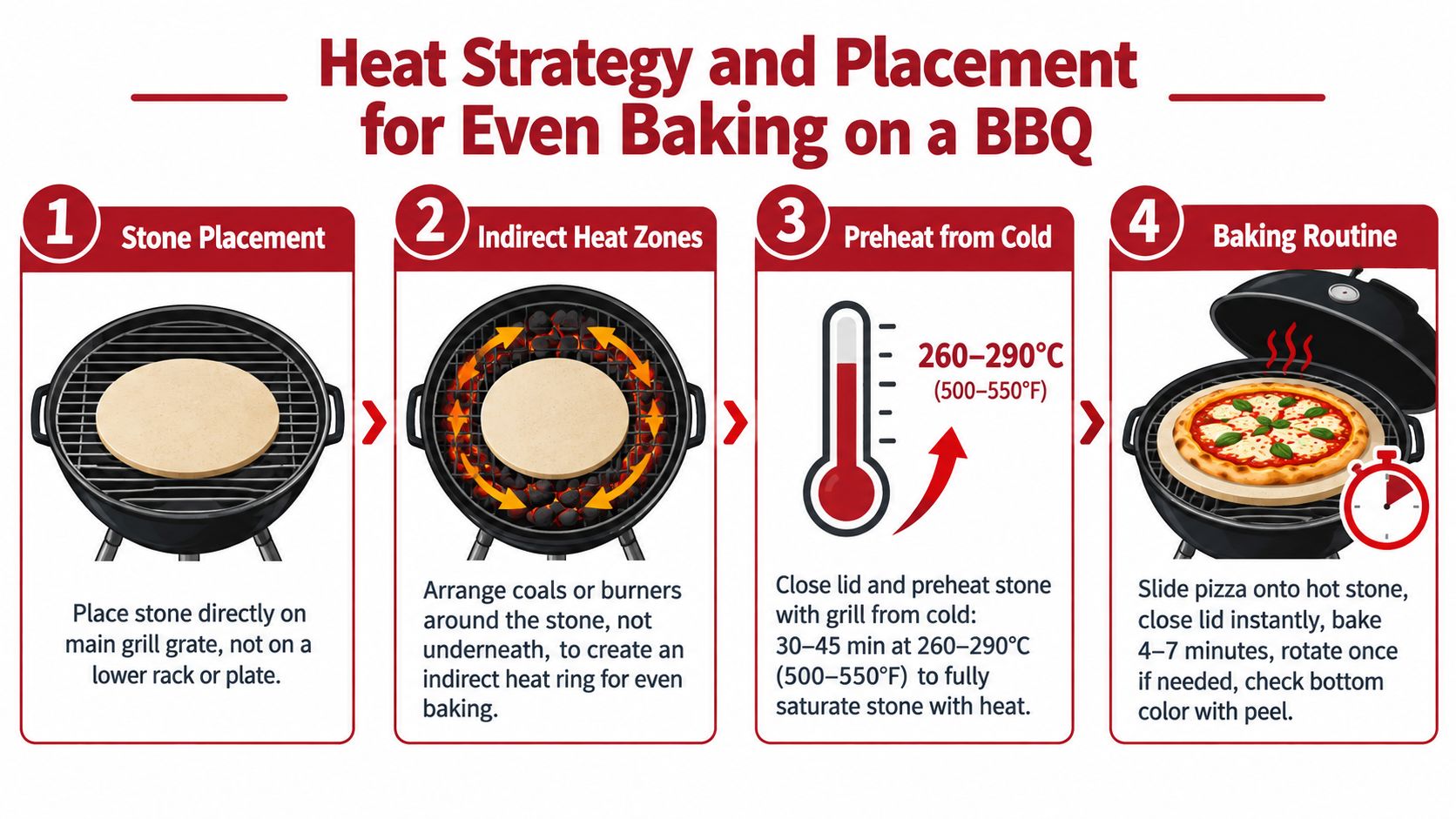
Most bad grill pizzas come from one of two setup mistakes. The stone gets blasted by direct heat from one area below, or the cook trusts the lid thermometer instead of the baking surface. Both lead to the same frustration: a pizza that bakes unevenly and a stone that takes more abuse than it should.
This visual sums up the setup well.
Start cold and heat evenly
Cordierite is the dominant technical choice for BBQ pizza stones because of its thermal-shock resistance and workable grill-side heat tolerance. Independent reviews commonly cite safe operating ranges around 1,000°F to 1,500°F+, while also noting that the bigger cracking risk is rapid temperature difference, such as putting a cold stone onto a fully hot grate or exposing a hot stone to cold water (cordierite use and cracking guidance).
The practical takeaway is simple. Put the stone on the grill while everything is still cold. Then preheat with the lid closed so the whole piece warms gradually.
Don't chase maximum temperature blindly
A lot of pizza advice gets sloppy here. Available guidance spans a wide range, from about 425°F+ with a 30 minute preheat to 480 to 580°F, and some grill guidance pushes 650 to 750°F surface temperatures. That spread shows why dome thermometers don't tell the whole story and why “hotter” isn't automatically better, especially on a BBQ surface where material, thickness, and heat source change the result (pizza stone temperature guidance on grills).
For a pizza stone for BBQ use, the better question is how the surface is delivering heat. On gas grills especially, too much heat directly under the stone can burn the underside before the top crust and cheese finish.
A strong setup usually looks like this:
- Center the stone over the main cooking zone, not hanging over one hot edge
- Use indirect-style heat where possible, with burners or coals arranged so heat wraps around rather than attacks one spot
- Keep the lid closed during preheat and bake, except for quick launches and checks
Placement on gas versus charcoal
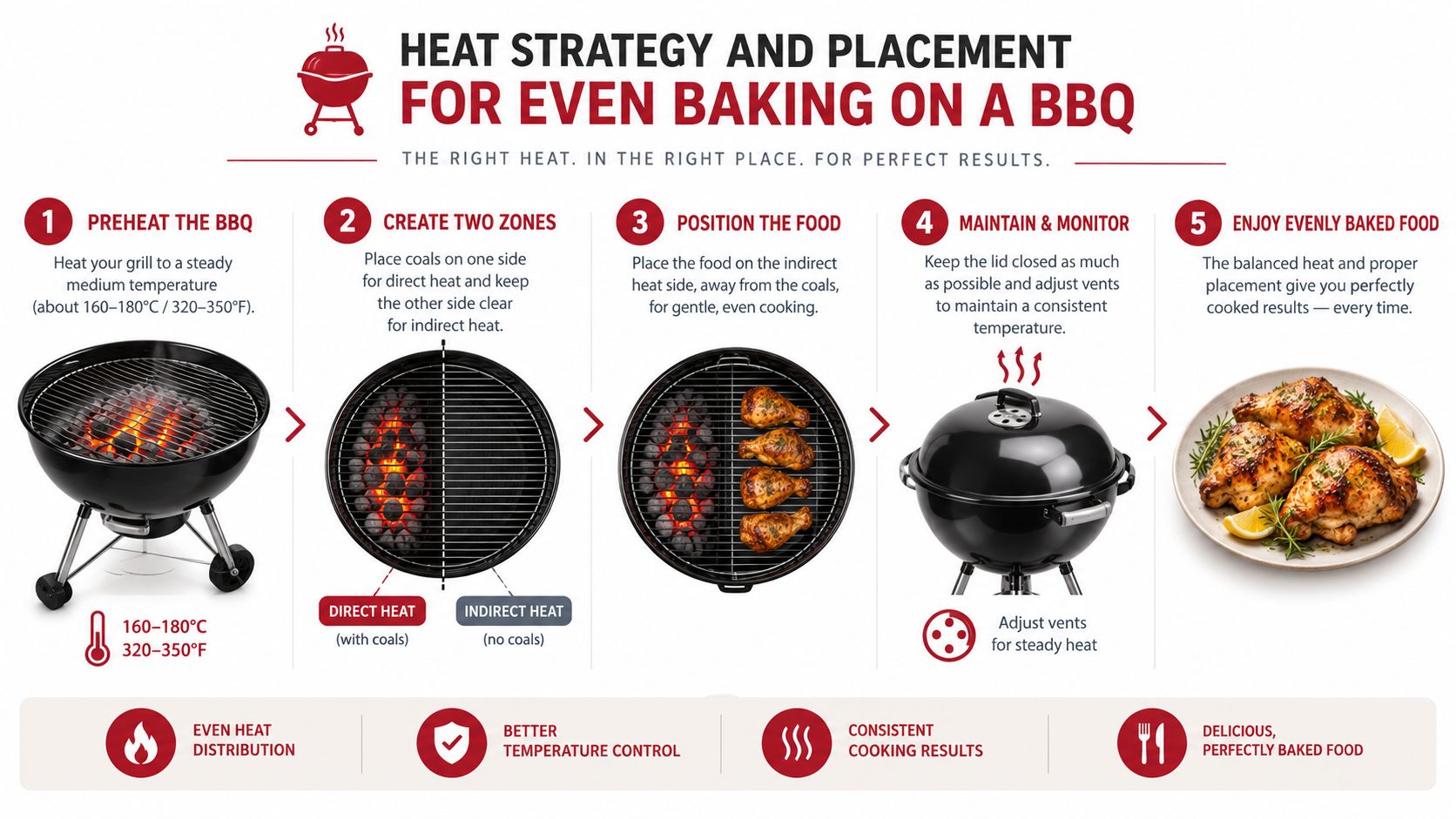
Gas grills reward restraint. Run the heat so the stone gets surrounded by heat, not drilled from one burner line. If one edge sits over a concentrated hotspot, that edge of the stone works harder than the rest and your pizza will show it.
Charcoal grills give you more flexibility. You can bank fuel to the sides or build a ring effect that lets the stone heat more evenly while still giving the dome plenty of energy.
For a working example focused on burner management, this guide on pizza on a gas grill is worth a read.
Later in the cook, this video helps show the rhythm of setup and bake in a live grill environment.
If one side of the stone is seeing more flame than the other, the pizza won't forgive you.
From Launch to Slice Using Your Stone Without Sticking or Burning
A clean pizza session is mostly about rhythm. Build the pizza fast, launch cleanly, close the lid, and don't start fussing with it too early. Most sticking happens before the pizza ever reaches the stone. Most burning happens because the cook hesitates after launch and leaves the lid open too long or ignores the underside until it's too late.
Build for launch, not for looks
If the dough sits too long on the peel, moisture starts binding it to the surface. That's when the front edge sticks, folds, and lands like a crumpled bedsheet. Dusting the peel lightly helps, but speed matters more than dumping on flour.
A few habits make a huge difference:
- Keep toppings restrained: Heavy sauce and wet mozzarella raise the chance of sticking and make the center slower to set.
- Shake the peel before walking to the grill: If the pizza doesn't move now, it won't move better over a hot stone.
- Use parchment as a training wheel if needed: It's a practical option for beginners who need one clean launch before they refine peel technique.
If you need help with the mechanics, this breakdown on how to use a pizza peel covers the motions that prevent most launch disasters.
Bake with the lid down and check the bottom, not just the cheese
Once the pie lands, close the lid right away. Let the top heat do its job. Looking through the lid vent area or checking quickly is better than repeatedly lifting the lid and bleeding away the environment you built.
When you check doneness, slide the peel under the pie just enough to inspect the underside. Bottom color tells the truth faster than cheese does. Cheese can look nearly done while the base still needs time, or the reverse can happen on a hotter grill.
A pizza can look perfect from above and still be wrong underneath.
Handle back-to-back pizzas without guessing
Material shows up in real life. Steel recovers faster between pies, while stone takes longer to settle back into its best baking state. If you're running a cordierite stone, give the surface a moment to recover instead of launching the next dough the second the first pizza comes off.
Different pizza styles also want different discipline:
- Thin crust: Best match for a controlled, fully preheated stone and a quick bake cycle.
- Very thin, lightly topped pies: Watch the bottom closely because they can finish underneath before the rim colors.
- Thicker or heavier pizzas: Use a slightly calmer setup and don't overload the center.
If your pizzas keep burning underneath, lower the stone's aggression, not just the total cook time. If they keep sticking, shorten the build time on the peel and simplify the topping load.
Safety Cleaning and Storage That Keep Your Stone Crack Free
Most stones don't fail because they were bad. They fail because they got shocked. Heat on its own usually isn't the problem. Sudden change is.
A hot stone should never meet cold water. A cold stone shouldn't be dropped onto a fully blazing grill. And one edge shouldn't sit over a concentrated flame path while the rest of the stone lags behind. Those are the habits that kill stones early.
Cleaning without wrecking the surface
A pizza stone for BBQ use doesn't need fussy care, but it does need the right care. Let it cool completely before touching cleanup. Scrape off baked-on flour or cheese with a stiff scraper or brush, then wipe away loose residue.
Avoid soaking it. Avoid soap saturation. Avoid trying to make it look brand new. Darkening and staining are normal on a working stone.
Storage habits that matter
Store the stone flat and dry. Don't lean it somewhere it can take a knock on one corner. Don't trap moisture against it for long periods, especially if it lives near the grill and sees outdoor temperature swings.
A simple checklist keeps most problems away:
- Cool completely before moving
- Never rinse a hot stone
- Store it flat in a dry spot
- Replace it if cracks run through the body or make handling unsafe
Hans Grill also states that purchases through its website or Amazon are backed by a 1-year warranty, with 30-day returns, which is useful if you're comparing support policies while shopping.
If you want gear built for this kind of cooking, Hans Grill offers cordierite pizza stones, pizza steel, and other pizza tools designed for ovens and BBQs. If you're dialing in a pizza stone for BBQ use and want the surface, peel, and prep tools to work together, it's a solid place to look.


