

Pizza Stone for Oven Buying Guide That Crisps Every Crust
You've cranked your home oven as high as it goes, waited impatiently, and pulled out a pizza with a beautifully browned rim but a pale, flexible center. The toppings are hot. The underside still folds like a napkin. That's the exact problem a pizza stone for oven baking is meant to solve, but only if you match the stone to your oven and use it correctly.
A stone isn't just a more attractive baking tray. It's a heat reservoir that delivers strong bottom heat when cold dough lands on it. Material, size, preheating, recovery, and cleaning all affect whether you get a crisp base or another soft one. This guide cuts through marketing language and focuses on what happens in a standard oven or backyard grill.
| Surface | Thermal conductivity | Heat behavior | Best fit |
|---|---|---|---|
| Cordierite stone | About 2.0–3.0 W/mK (US Marble explains cordierite stone heat behavior) | Gentle, even transfer with substantial stored heat | Beginners, standard ovens, balanced crusts |
| Traditional ceramic | Not specified in the verified data | Can provide steady stone-style baking, but material durability varies | Careful home use |
| Pizza steel | About 45–58 W/mK (Pizza Oven HQ compares steel and stone conductivity) | Aggressive contact heat and faster recovery | Thin crust, fast browning |
| Composite or other stone-like surfaces | Varies by product | Depends on construction and thermal mass | Buyers who can verify specifications |
Table of Contents
- Why Your Oven Pizza Needs a Stone to Get Crisp
- How Pizza Stones Create Pizzeria Heat in a Home Oven
- Comparing Pizza Stone Materials for Oven Performance
- Choosing the Right Size Shape and Oven Fit
- Heating Baking and Recovery for Crisp Golden Bases
- Maintenance Cleaning and Storage That Prevents Cracking
- Which Pizza Stone for Oven Setup Should You Buy Next
Why Your Oven Pizza Needs a Stone to Get Crisp
The weak point in most home-oven pizza isn't the air temperature. It's the moment the cool dough hits a cold or thin metal surface. A baking tray heats from the oven air and the rack, but it doesn't hold a large reserve of energy. The dough then steams and bakes before the underside receives enough concentrated heat to turn crisp.
A proper stone changes that contact point. One independent baking-science comparison estimates that a typical 15 x 16 inch cordierite stone weighing about 18 pounds, or 8.2 kilograms, stores roughly 1.4 MJ when preheated to 500°F, while a standard half-sheet pan stores less than 0.07 MJ, approximately 20 times less (read the baking-science comparison). That stored energy is why the stone keeps pushing heat into the dough after the oven door opens and the pizza goes in.
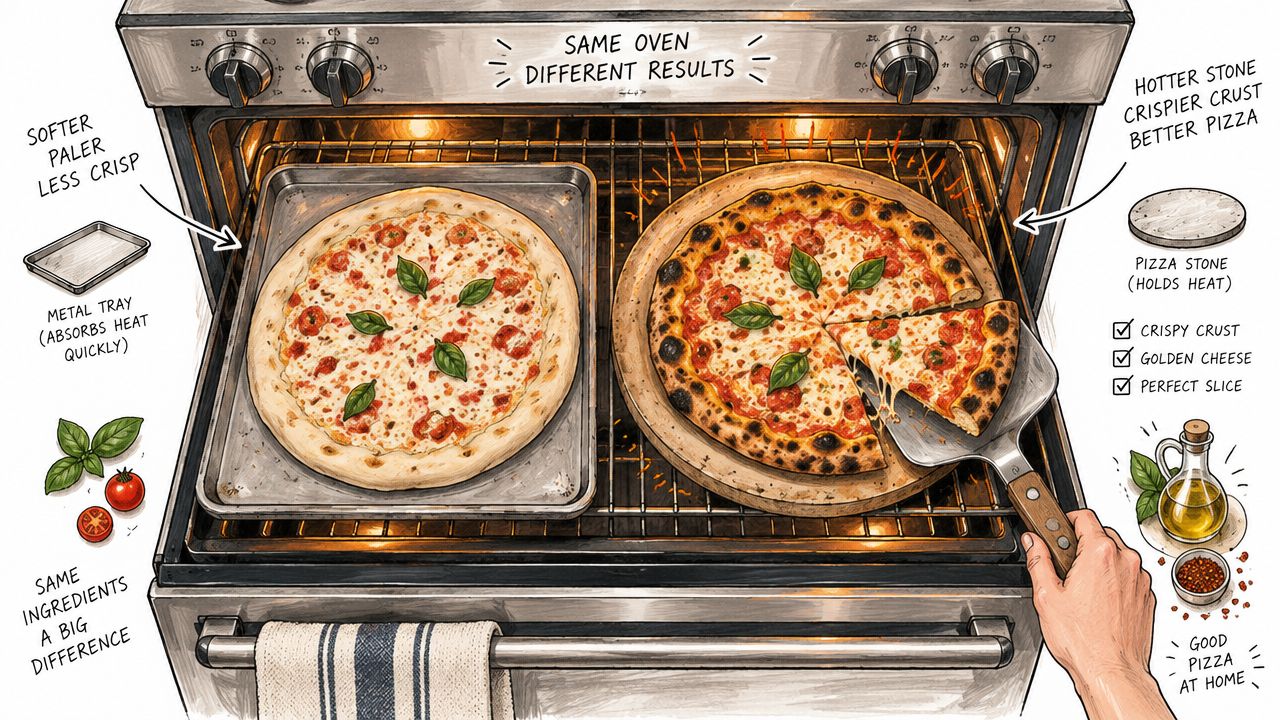
Core promise: A fully heated stone gives the pizza a broad, steady source of bottom heat, so you can build crispness without constantly rotating the pie.
That doesn't mean every stone is automatically better than every alternative. A thick cordierite stone rewards patience and gives beginners a forgiving landing surface. Steel transfers heat much more aggressively, which can produce faster browning but punish a wet dough or a poorly timed launch. Your oven's actual weakness decides which behavior helps.
A stone also makes sense for cooks who bake on grills. The same thermal mass that stabilizes a domestic oven can buffer uneven burner or charcoal heat. If you make pizza occasionally and want a straightforward upgrade from a tray, cordierite is the sensible starting point. If your priority is the fastest possible bottom browning, you should compare it directly with steel rather than assuming “stone” is the universal winner.
How Pizza Stones Create Pizzeria Heat in a Home Oven
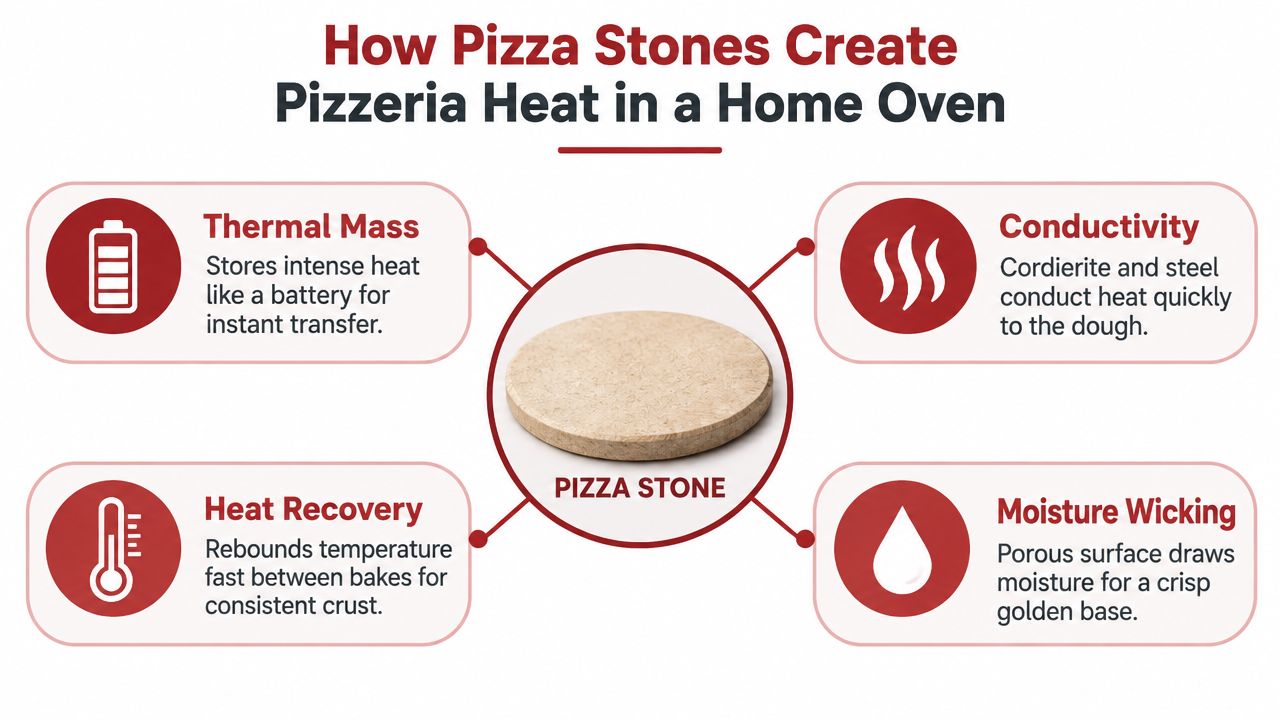
Your oven may reach a high setting, yet the pizza still comes out pale underneath. The problem is often the baking surface. A pizza stone works through three linked properties: thermal mass stores heat, conductivity moves it into the dough, and recovery determines how quickly the surface regains strength after a pizza draws heat from it.
A substantial stone needs a full preheat, then releases that stored energy when the dough lands. Opening the door, loading cold dough, and losing hot air all weaken the oven briefly. The stone keeps delivering bottom heat while the air recovers, which helps beginners get a crisp base without perfect timing.
Conductivity controls the force of that contact heat. Cordierite is commonly reported at about 2.0–3.0 W/mK, so it transfers heat at a measured rate rather than attacking one patch of dough instantly (see the cordierite thermal-conductivity reference). In a standard home oven, that slower response is useful. It supports browning while giving the center and toppings time to cook, unlike a more aggressive surface that can scorch a thin base early.
Why cordierite suits repeated heating
Cordierite is a practical choice for repeated oven or grill use because its thermal-shock resistance helps it handle rapid heating from room temperature to about 500°F without cracking, according to independent comparisons. Follow the manufacturer's heating and cooling instructions anyway, because thermal shock often comes from sudden temperature changes (read the cordierite thermal-shock comparison).
Stone baking has a long history. Bread baking on heated stones can be traced to the Early Paleolithic Age, roughly 11,000 to 47,000 years ago, when people cooked food on stones heated in fire pits (Fabio Lous Pizza discusses the history of stone baking). A modern cordierite stone applies the same basic heat-contact principle in a controlled oven or grill.
Moisture control finishes the job. A porous surface can draw some moisture from the dough's underside while stored heat drives evaporation and browning. Choose by heat storage, even transfer, and compatibility with your oven or grill, not by marketing labels. For a practical guide to how pizza stones work in home cooking, focus on those operating principles rather than advertised temperature alone.
Comparing Pizza Stone Materials for Oven Performance
Material choice should follow your actual setup, not the label on the package. In a standard home oven, cordierite gives beginners a controlled bake and a forgiving contact surface. Steel delivers a harder, faster hit that rewards quick launches and thin dough. Ceramic can work well, but its construction, thickness, and care instructions matter more than the word “ceramic.”
| Material | Best fit | Main advantage | Main trade-off |
|---|---|---|---|
| Cordierite | Standard ovens, mixed skill levels, oven or grill use | Even browning and a forgiving bake | Needs a full preheat and takes longer between pies |
| Ceramic | Careful home bakers who follow product guidance | Can produce a crisp, pleasant crust | Quality and thermal-shock tolerance vary |
| Pizza steel | Thin crust, short bakes, repeated pizzas | Strong bottom heat and quick recovery | Can scorch wet or thin dough |
| Composite | Buyers comparing specific products | Performance can be tailored by the blend | You must check the manufacturer's instructions |
Cordierite for controlled crisping
Cordierite is my default recommendation for a first pizza surface. It transfers heat steadily rather than attacking the dough immediately, so the base has time to bake through while moisture escapes and the underside colors. That extra forgiveness helps when a home oven has hot spots or your stretching, topping, and launching still take too long.
It also suits cooks who move between an oven and a grill, provided the product is rated for both. Follow the stated heating and cooling procedure, and keep the stone dry before use. The cost of that easier learning curve is patience. A cordierite stone must be thoroughly preheated, and the next pizza may need more time after a pie has been launched.
Ceramic and traditional baking stones
Ceramic stones can make excellent pizza, but appearance and a vague high-heat claim are poor buying criteria. Check whether the manufacturer lists oven or grill compatibility, explains preheating, and gives clear instructions for temperature changes.
Ceramic is not automatically fragile, and cordierite is not automatically indestructible. Thickness, manufacturing quality, moisture exposure, and abrupt heating or cooling all affect service life. For a beginner, a clearly rated cordierite stone usually creates fewer decisions and fewer handling risks.
Steel for maximum bottom heat
Steel suits a different kind of baker. It is the better choice for thin crusts, short bakes, and a strongly browned underside because it pushes heat into the dough aggressively. A comparison of pizza steel and stone performance covers the conductivity and recovery differences behind that behavior.
That power demands better timing. Place steel too low, use a surface that is excessively hot, or launch a thin, wet dough too slowly, and the base can burn before the toppings finish. Steel also exposes weak dough handling. A hesitant launch or overloaded pie loses its margin for error quickly.
Stone heat is gentler and more even. Steel heat is faster and more demanding.
For a queue of pizzas, steel keeps its pace more easily because it regains baking temperature quickly between launches. For one or two pies in a standard home oven, cordierite is easier to manage and less likely to punish small mistakes. A grill user should choose based on control as well as speed, since a strong live-fire setup can make steel overly aggressive.
Composite surfaces deserve the most caution. Their behavior depends on the blend and thickness, so read the product documentation rather than assuming they behave like stone or steel. Use this guide to compare pizza stone materials before buying, then choose the surface that matches your dough, oven position, and baking pace.
Choosing the Right Size Shape and Oven Fit
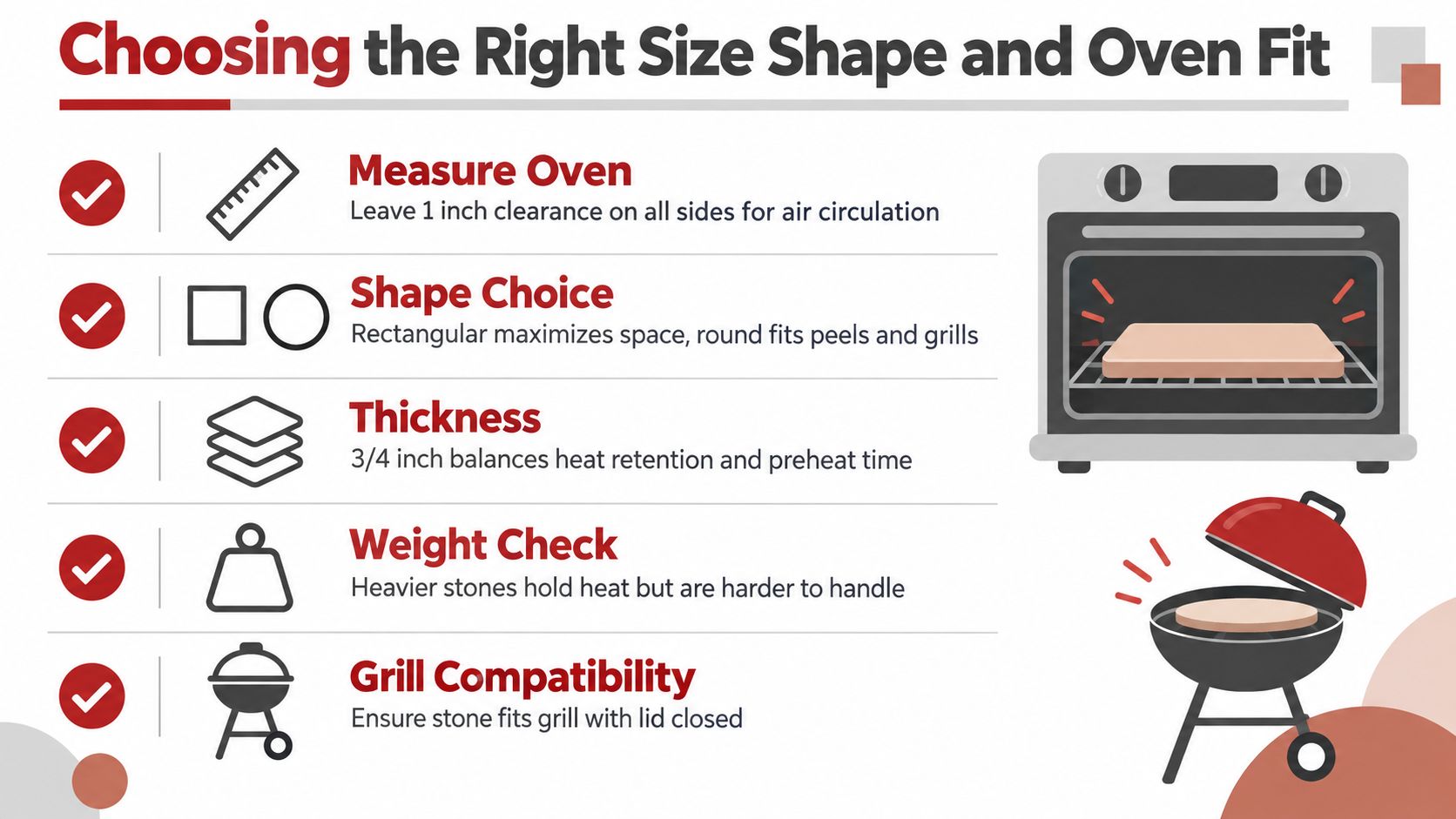
A great stone that doesn't fit your oven is a bad purchase. Measure the rack opening, the distance between the side walls, and the clearance above the stone before you shop. Don't measure only the rack itself. You need enough room to slide in the stone, position a peel, and maintain airflow around the surface.
Rectangular or round
A rectangular stone usually makes better use of a standard oven rack. It gives you more usable launching space and leaves room for different pizza shapes, bread, or a small pan beside the pie. That extra surface area is valuable when your peel technique isn't precise yet.
Round stones make sense when you use a round peel or a compact grill. They're easier to orient on a circular cooking grate and can feel less awkward in a small setup. They also waste more of a rectangular oven's available footprint.
Thickness and handling
Thicker stones generally hold more heat, but they take longer to heat and weigh more. A stone that's difficult to lift safely becomes a nuisance, especially if you move it between an indoor oven and an outdoor grill.
Don't wedge the stone tightly between the oven walls. Leave breathing room around it so heat can circulate and the stone can expand without pressure. On a grill, close the lid and confirm that the stone doesn't interfere with the lid, burners, or heat deflectors.
Use this quick checklist before ordering:
- Measure the opening: Record the narrowest internal width and depth, not the advertised oven size.
- Check peel access: Leave a clear approach for the peel at the front of the stone.
- Confirm grill clearance: Close the lid with the stone in position before heating it.
- Plan storage: Make sure you have a flat, dry place where the stone won't get knocked or buried under cookware.
For a small apartment oven, prioritize manageable dimensions and front access over maximum surface area. For a large backyard grill, prioritize coverage and stable placement, but don't sacrifice lid clearance. The right fit lets the stone heat evenly instead of creating a cramped, awkward baking station.
Heating Baking and Recovery for Crisp Golden Bases
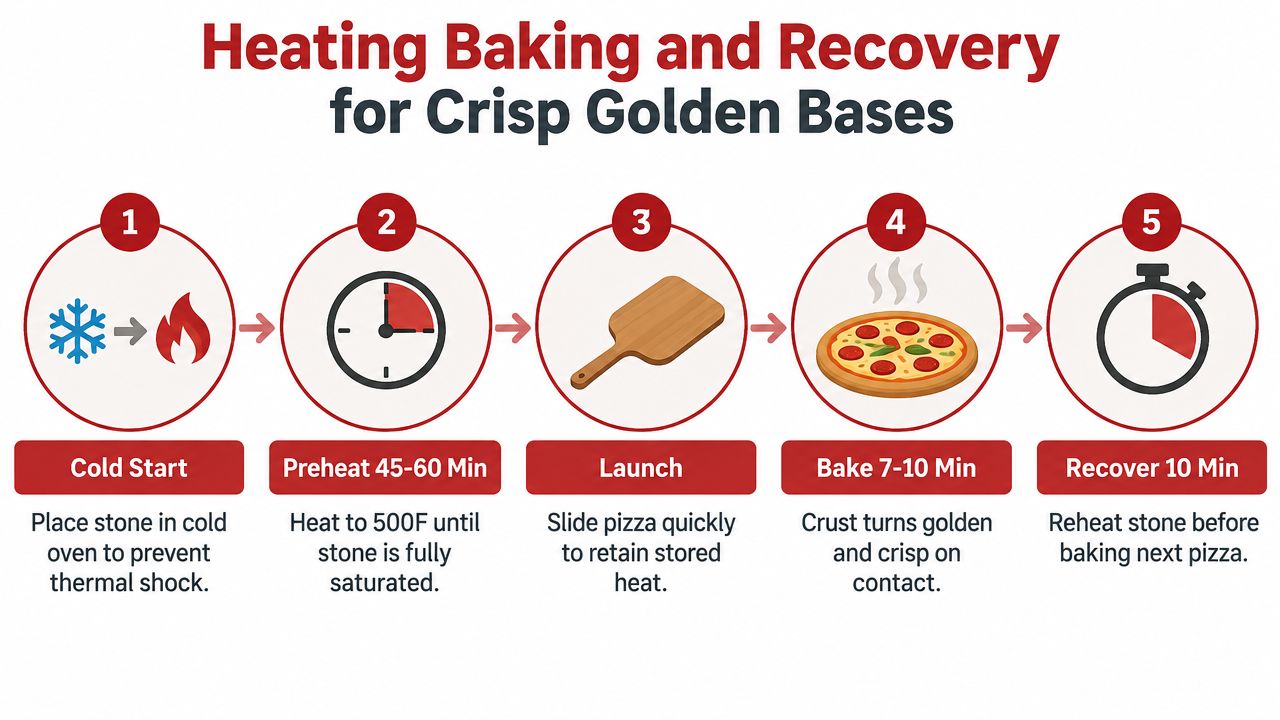
Crisp pizza starts before the dough reaches the oven. Put the stone in a cold oven, then heat both together. This lowers thermal-shock risk, and The Pizza Craft explains pizza-stone technique also recommends cold-oven preheating for safer use.
The reliable workflow
- Start cold. Set the stone on its rack before switching on the oven. A room-temperature stone should not enter an already blazing oven.
- Preheat thoroughly. Set the oven to your intended baking temperature and let the stone absorb heat fully. Oven air reaches temperature first, so the preheat signal does not prove that the cooking surface is ready. An oven thermometer helps reveal how your appliance behaves.
- Prepare the launch. Build the pizza on a lightly floured or cornmeal-dusted peel. Shake it before leaving the counter. If the dough sticks, correct the dough handling or reduce the toppings before approaching the oven.
- Launch decisively. Open the door, position the peel close to the stone, and slide the pizza forward with one short, confident movement. A slow launch loses heat and can fold the dough.
- Watch the underside. Lift an edge with the peel, or turn the pizza only when one area clearly colors faster. A properly positioned stone limits unnecessary rotation, though every oven has its own hot spots.
Recovery between pizzas
The first pizza usually gets the strongest bake because the stone has had the longest uninterrupted preheat. Dough pulls heat from the surface as it cooks, and a cordierite stone returns to temperature more slowly than steel. Give it a real pause before launching the next pizza.
Do not use a stopwatch as the only test. If the next crust colors more slowly underneath, the stone has not recovered. In a standard home oven, that delay matters more than marketing claims about maximum heat. A stone rewards patience with forgiving, even baking, while a steel suits faster back-to-back cooking when the oven can keep the surrounding heat steady.
Practical rule: If the second pizza browns more slowly underneath, give the stone recovery time instead of adding toppings or extending the bake.
Keep the next dough ball ready, but let the cooking surface regain heat. On a grill, recovery also depends on keeping the lid closed and maintaining steady burner or coal heat.
Maintenance Cleaning and Storage That Prevents Cracking
Pizza stones aren't meant to look pristine. Dark marks and baked-on discoloration are normal results of repeated cooking, and trying to restore a new-looking surface can create more damage than the stains ever will.
Let the stone cool completely before cleaning. Moving a hot stone onto a cold counter, running water over it, or wiping it with a wet cloth creates a sharp temperature change. That uneven cooling is a common route to cracks.
The simple care routine
- Remove loose crumbs: Use a dry nylon brush or a wooden scraper once the stone is cool.
- Lift stuck residue: Work gently with a plastic scraper. Don't gouge the surface with a knife or metal spatula.
- Use minimal moisture: If a stubborn spot demands it, use a barely damp cloth and let the stone dry fully before its next bake.
- Skip soap: Porous stone can absorb detergent and carry unwanted flavors into future pizzas.
- Store it flat: Keep the stone dry, stable, and free from heavy objects that could strike or flex it.
A pizza stone shouldn't be soaked or placed in a dishwasher. Water can enter the pores, and trapped moisture can expand during heating. Don't oil the surface to “season” it like cast iron. Pizza ingredients provide enough natural residue, while deliberate oiling can create sticky carbonized patches and smoke.
If cheese or sauce burns onto the surface, scrape off what you can and let the next preheat handle the remaining residue. Don't chase every mark. The useful target is a dry, debris-free cooking surface, not cosmetic perfection.
For the specific question of soap, water, and routine cleaning, see how to wash a pizza stone safely.
Which Pizza Stone for Oven Setup Should You Buy Next
Choose the surface that fits your oven, baking rhythm, and crust target. Marketing specifications matter less than how much heat your setup can store, deliver, and recover between pizzas.
For a standard home oven and a first stone, buy a cordierite stone with enough room for comfortable peel work. Its steady heat gives beginners more forgiveness when dough thickness, launch timing, or rack placement is slightly off. A rectangular format usually uses oven space better than a small round stone.
Choose pizza steel for thin crust, strong underside browning, and quick successive bakes. It suits bakers who will watch bake time and rack position closely. Steel leaves less room for slow launches or wet dough, so it rewards control rather than casual baking.
Grill owners should confirm the surface is rated for grill use and measure the lid clearance before buying. A broad cordierite stone works well when one surface must serve both an oven and a BBQ. Budget buyers should put money into correct sizing, a peel, and a full preheat before decorative extras.
Match the buyer to the surface
| Your setup or priority | Buy | Check before ordering |
|---|---|---|
| Standard oven, occasional baking, forgiving results | Cordierite | Confirm the stone fits with airflow around it |
| Thin crust and repeated pizzas | Steel | Plan to monitor the base closely |
| Limited oven width | Smaller rectangular stone | Leave clearance for the peel and oven walls |
| Large oven or grill | Larger cordierite surface | Measure the cooking area and lid clearance |
| Mixed oven and grill use | Grill-rated cordierite | Follow conservative temperature changes |
For a compact oven, do not force a large slab into the cavity. Measure the rack width, depth, and door clearance, then leave enough space to slide the peel without striking the walls. In a larger oven or grill, extra surface area makes placement easier, provided the lid closes without contact.
Hans Grill's Rectangular Pizza Stone is a cordierite option sized 15 x 12 inches, designed for oven baking and BBQ grilling. The product range also includes the Pizza Stone PRO XL Set and Pizza Steel PRO, allowing the material to match the crust style.
My recommendation: Start with cordierite for a standard home oven and dependable results. Choose steel when rapid browning and repeated bakes matter more than forgiveness.
Measure first, commit to a full preheat, and buy for the cooking space you have. Visit Hans Grill to compare cordierite stones, steel surfaces, and pizza-making tools for home ovens and backyard grills. Use the surface that fits your oven, then bake on a fully heated base instead of a cold tray.


