

Pizza Stone Rectangular vs Round: The 2026 Shape Verdict
The popular advice is simple: buy a round pizza stone because pizzas are round. After burning through three stones, I think that advice starts in the wrong place. The core question isn't whether your dough forms a circle. It's whether your oven gives you enough useful surface, whether you can launch the dough without catching an edge, and whether the baking surface recovers before the next pie.
A rectangular pizza stone often wins for those practical reasons, but shape isn't the whole verdict. Thickness, material, thermal shock resistance, and your baking routine matter just as much. A thin rectangular stone can still produce pale bottoms, while a well-chosen cordierite slab can turn an ordinary home oven into a much more predictable pizza setup.
Table of Contents
- Why Shape Matters More Than You Think
- Understanding Cordierite and Stone Materials
- Rectangular Pizza Stone vs Round Pizza Stone
- Thickness, Size, and Heat Performance
- When Pizza Stone Beats Pizza Steel
- Maintenance That Actually Keeps Stones Performing
- How to Choose the Right Rectangular Pizza Stone
- Final Recommendations for Home Pizza Bakers
Why Shape Matters More Than You Think
The usual home-pizza failure is familiar. The rim looks promising, but the center stays soft. A second pie comes out paler than the first, or the peel catches against the stone and folds the dough into a lopsided mess. Many cooks blame the recipe or the oven immediately. Often, the baking surface and the way it fits the rack deserve attention first.
A round stone leaves unused corners on a rectangular oven rack. That doesn't automatically make it a bad tool, but it means part of the available rack area contributes nothing to the bake. A rectangular slab follows the geometry of the rack more closely, giving you a broader landing zone for a peel and more room to work with dough that isn't perfectly circular.
The revival of baking stones in household electric and gas ovens took shape during the 1990s, when kitchen equipment producers introduced pizza and bread-baking stones designed to mimic the crisp base associated with Neapolitan-style pizza, as described in this history of household pizza stones. The technology became familiar, but the buying advice often stayed stuck at “round for pizza.”
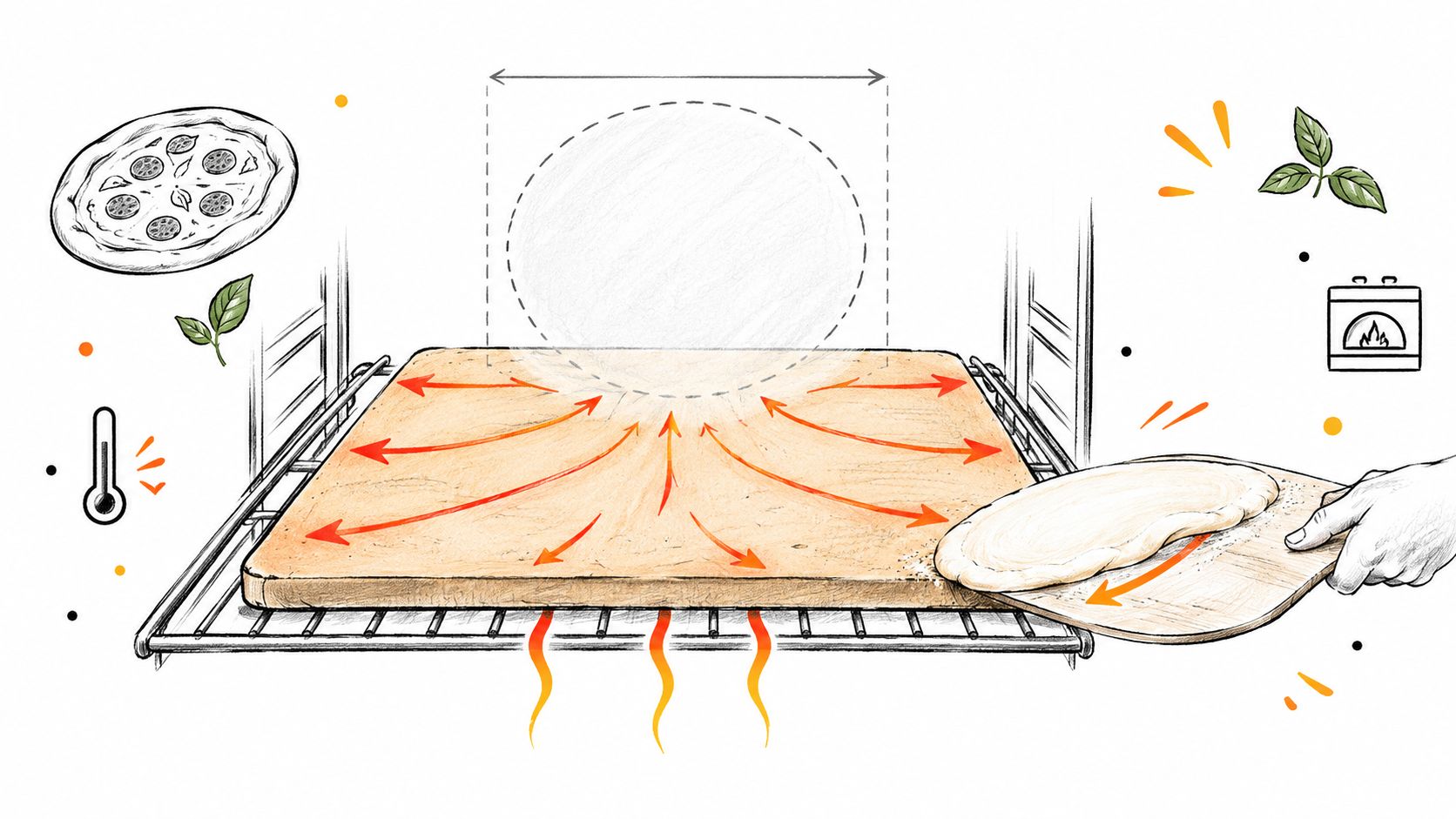
The useful surface is the surface you can load
A rectangular format helps in small kitchens because it supports more than one idealized circle. It gives you better clearance for launching, accommodates oval flatbreads, and can support bread or pastry that would be awkward on a round slab.
Practical rule: Choose the shape that matches your oven rack and your peel technique, not the shape of the finished pizza.
That doesn't mean rectangular is always superior. A round stone can feel intuitive, especially if you bake one circular pie at a time and already have a peel that fits it comfortably. But if your current stone leaves you scraping the peel against the edge, or forces you to position every pizza with excessive precision, the rectangular format addresses a real handling problem rather than adding a cosmetic feature.
Understanding Cordierite and Stone Materials
The word cordierite sounds technical, but its useful traits are straightforward. It's a refractory ceramic, meaning manufacturers fire it at extreme temperatures and use it where resistance to heat is important. Pizza stones made from it tolerate the demanding environment of a hot oven better than many ordinary ceramic objects.
A materials guide places cordierite firing at about 1,200 to 1,400 °C, or roughly 2,200 to 2,500 °F, and gives its thermal conductivity as about 2.5 to 3 W/mK. The same pizza baking surfaces guide describes that conductivity as 2 to 4 times higher than chamotte or fire brick and 6 to 8 times higher than biscotto.
Those comparisons matter because conductivity influences how quickly heat moves through the slab and into the dough. A cordierite rectangular stone won't behave like metal, but it can deliver a more responsive baking surface than slower, more insulating ceramic alternatives. That helps the underside set and brown instead of steaming against a surface that can't transfer energy efficiently.
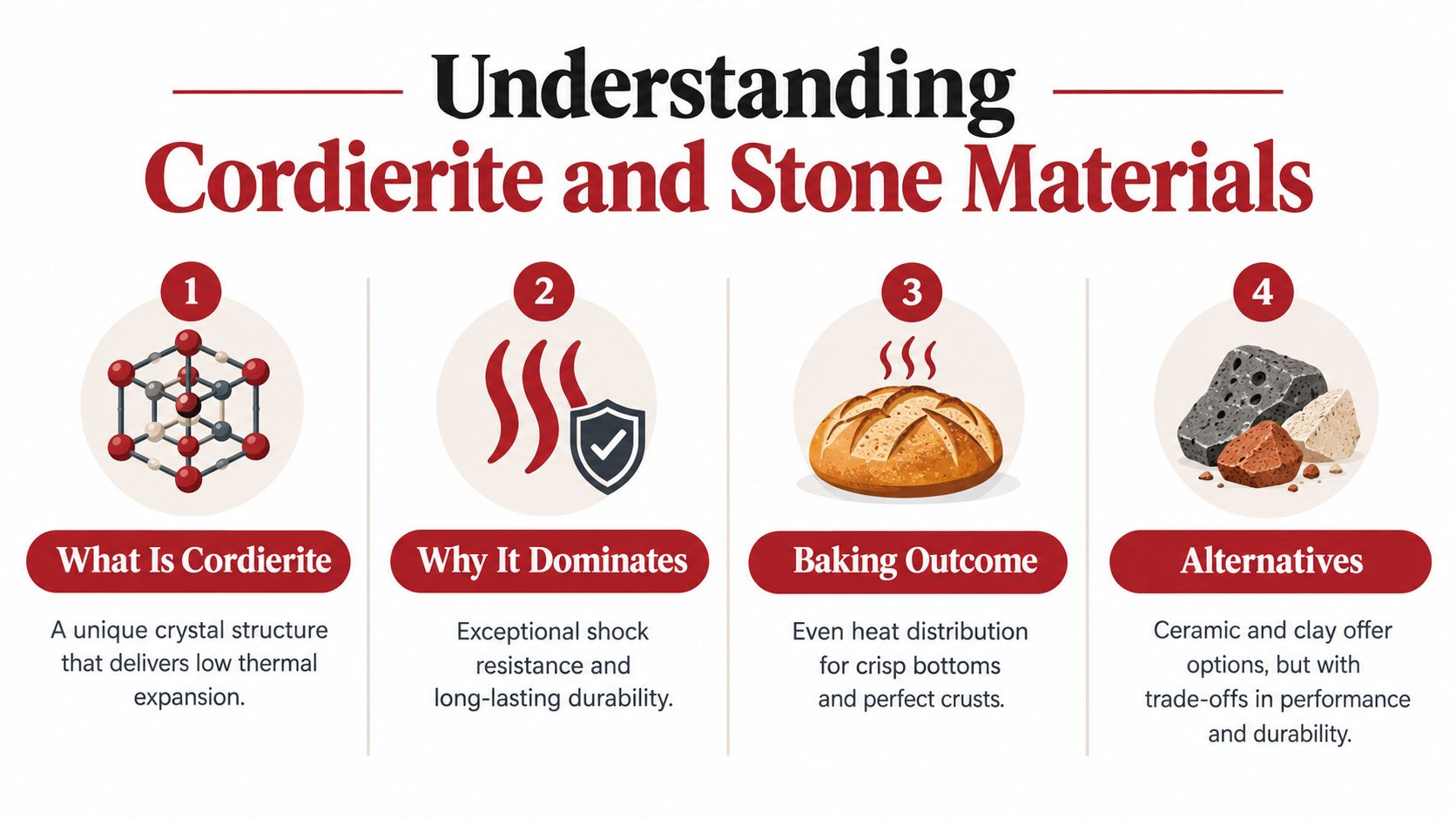
Why low expansion matters at home
The other half of cordierite's appeal is stability during temperature changes. Home cooks move stones into hot ovens, load cold dough, and sometimes make the mistake of rinsing a warm slab under water. A refractory material with strong resistance to thermal shock gives you more margin for ordinary use, although it doesn't make careless temperature changes safe.
Material choice also changes handling. Chamotte, fire brick, and biscotto each have their own baking behavior, but they aren't interchangeable because they look like stone. If you want a forgiving all-purpose surface for pizza, bread, and flatbreads, cordierite remains a sensible default. For a plain-language breakdown of the materials, see this guide to what a pizza stone is made of.
The practical conclusion is modest but important. Cordierite isn't magic, and it won't rescue underproofed dough or inadequate preheating. It gives a rectangular stone a dependable material foundation, with enough heat movement for crisp bottoms and enough thermal stability for normal home-oven abuse.
Rectangular Pizza Stone vs Round Pizza Stone
The rectangular-versus-round debate becomes clearer when you stop comparing shapes on a countertop and compare them inside an oven. Standard oven racks are rectangular. Peels are usually rectangular or gently tapered. Dough may be round, but it rarely stays perfectly round after stretching, topping, and launching.
A rectangular stone therefore tends to offer more usable surface area in a home oven, particularly when you want room around the pie for safer transfers. Recent buying guidance also points to rectangular stones as more versatile for bread and other non-round bakes, while round stones make the strongest case on circular grills. The comparison in this round pizza stone guide is useful if your setup is built around a round cooking surface.
Where rectangular earns its keep
| Consideration | Rectangular stone | Round stone |
|---|---|---|
| Rack fit | Matches rectangular rack geometry more naturally | Leaves corner space unused |
| Peel work | Gives you a wider target for launching | Feels familiar for centered circular pies |
| Other baking | Suits bread and irregular flatbreads | Favors circular items |
| Repeated baking | More surface and mass are often available | Can be compact and easy to position |
| Grill compatibility | Works well on rectangular grills | Makes sense on circular grills |
The shape also affects your nerves at the oven door. With a round stone, the usable landing area narrows toward the curved edge. A rectangular slab gives the peel a longer straight approach, which is useful when a high-hydration dough stretches or when toppings have made the pie harder to slide.
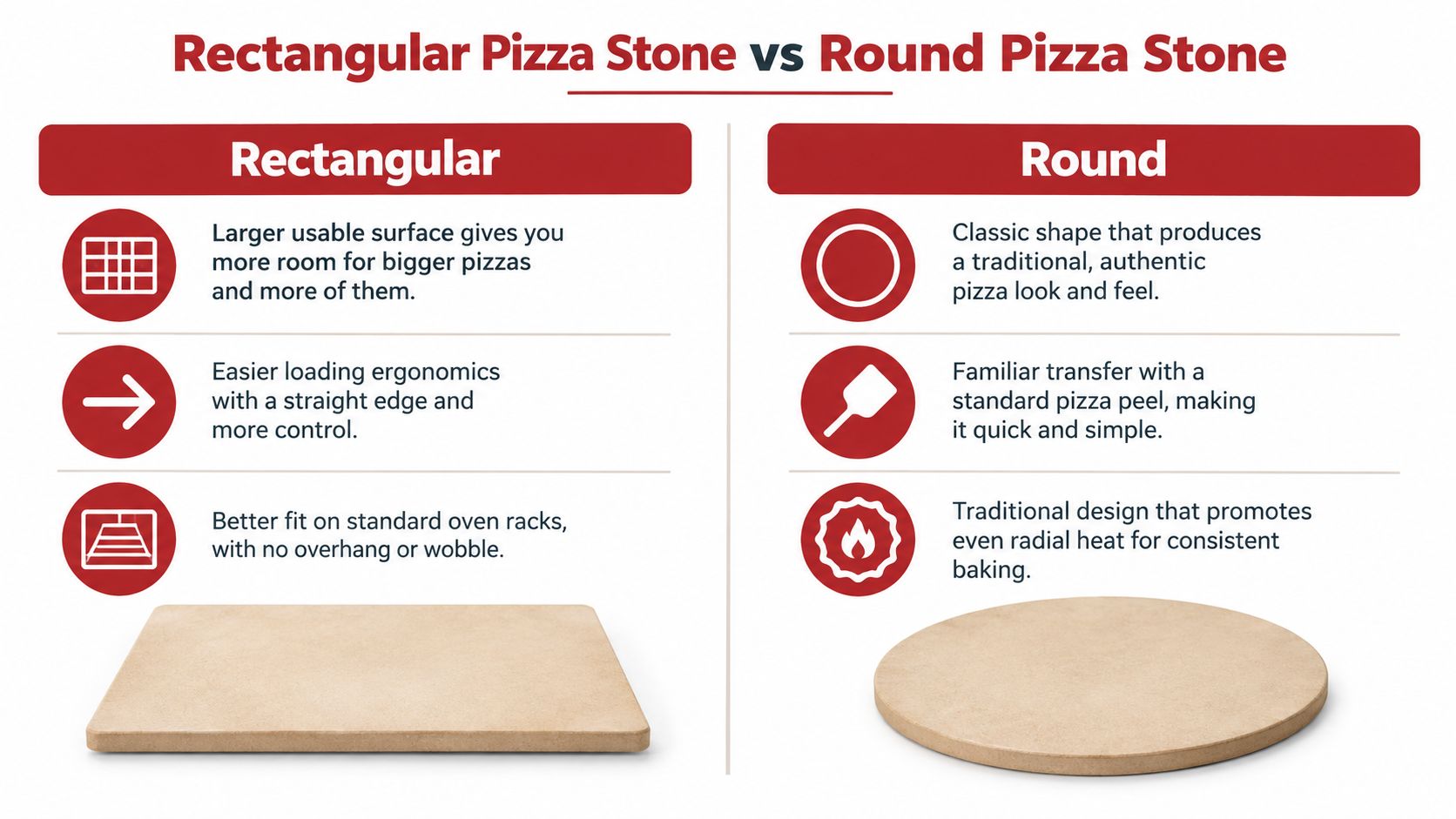
The round case isn't imaginary
Round stones remain perfectly workable for a single pizza. Their circular outline matches the traditional pie, and some cooks find the visual center easier to judge. On a circular grill, a round stone can also use the cooking area efficiently instead of forcing a rectangular slab into an incompatible footprint.
The weak version of the rectangular argument says, “bigger is always better.” The stronger version says usable area must match the oven and the way you bake. A stone that's too large can restrict airflow, collide with oven walls, or become difficult to remove. Shape helps only when the slab fits safely and leaves enough clearance for handling.
If your oven rack is rectangular and you bake bread, flatbreads, or multiple pies in succession, rectangular is usually the more versatile purchase. If you use a circular grill and want one centered round pizza, the round option still has a legitimate advantage.
Thickness, Size, and Heat Performance
Shape gets the attention, but thickness controls the temperament of a pizza stone. A thin slab reaches baking temperature sooner, which is convenient on a weeknight. It also stores less energy, so the surface can lose heat more quickly after a pizza lands on it.
Independent guidance describes 0.5-inch stones as faster to heat but more prone to losing energy between pizzas. 0.75 to 1.0-inch stones hold more heat and provide more consistent browning during multi-pizza sessions, according to this pizza stone use guide.
That trade-off creates two different good choices:
- For one occasional pizza: A thinner stone can be practical if you value shorter preparation and don't need rapid recovery.
- For back-to-back pies: A thicker slab is usually the calmer performer because its thermal mass supports steadier bottom heat.
- For bread and repeated baking: Extra mass helps maintain a stable baking environment, provided you allow enough time for the stone to heat completely.
The common rectangular format in the 14 to 16-inch class is favored because it fits typical oven rack geometry while offering useful baking area and enough mass for even heat transfer, as noted in the same guide. That size range isn't a command to buy the largest slab available. Measure the rack first, including the clearance needed to slide the stone in and out.
Don't confuse preheat speed with baking quality
A thinner stone may be ready sooner, but “ready” should mean more than a hot surface. The interior of the slab also needs to absorb heat. If the top feels hot while the stone hasn't developed enough stored energy, the first pie can brown acceptably and the second can expose the weakness.
My preference for a regular pizza night is a rectangular cordierite stone around the thicker end of the practical home range, assuming the oven can accommodate it. The slower warm-up is an easy trade for less dramatic recovery between pies. If you bake only one pizza and want a lighter object to store, the thinner option may fit your routine better.
When Pizza Stone Beats Pizza Steel
Pizza steel wins the speed argument. That doesn't settle the buying decision. Recent comparisons place steel's heat transfer at roughly 18 to 30 times faster than cordierite, and that aggressive transfer can produce darker, faster browning, as discussed in this materials comparison on pizza steel and cordierite.
That behavior is useful when you want a forceful underside and rapid cooking. It can also punish weak dough handling. A steel can brown the base before the top has finished, and its intensity leaves less room for an underprepared bake. Beginners often interpret a dark bottom as proof that the equipment works, even when the crust has become hard rather than crisp.
The durability trade-off
Cordierite's appeal is thermal shock resistance. It is valued for handling rapid temperature changes and resisting cracking, although any stone can fail if exposed to severe shock. Steel avoids the cracking problem, but it introduces different concerns, including weight, handling, and the possibility of warping if the slab or heating conditions are unsuitable.
The best material depends on what you want the surface to do:
| If your priority is | More suitable direction |
|---|---|
| Maximum browning speed | Pizza steel |
| Gentler, more forgiving heat transfer | Rectangular cordierite |
| Bread and varied baking | Rectangular cordierite |
| A surface that won't crack | Steel |
| Lower concern about harsh underside heat | Cordierite |
| Frequent grill use | Either, matched to safe grill handling |
A rectangular cordierite stone makes particular sense for cooks who want dependable rather than aggressive performance. It can support pizza, bread, and other bakes without turning every launch into a race against a rapidly browning base. For a fuller side-by-side discussion of the equipment choices, see this guide to pizza steel versus stone.
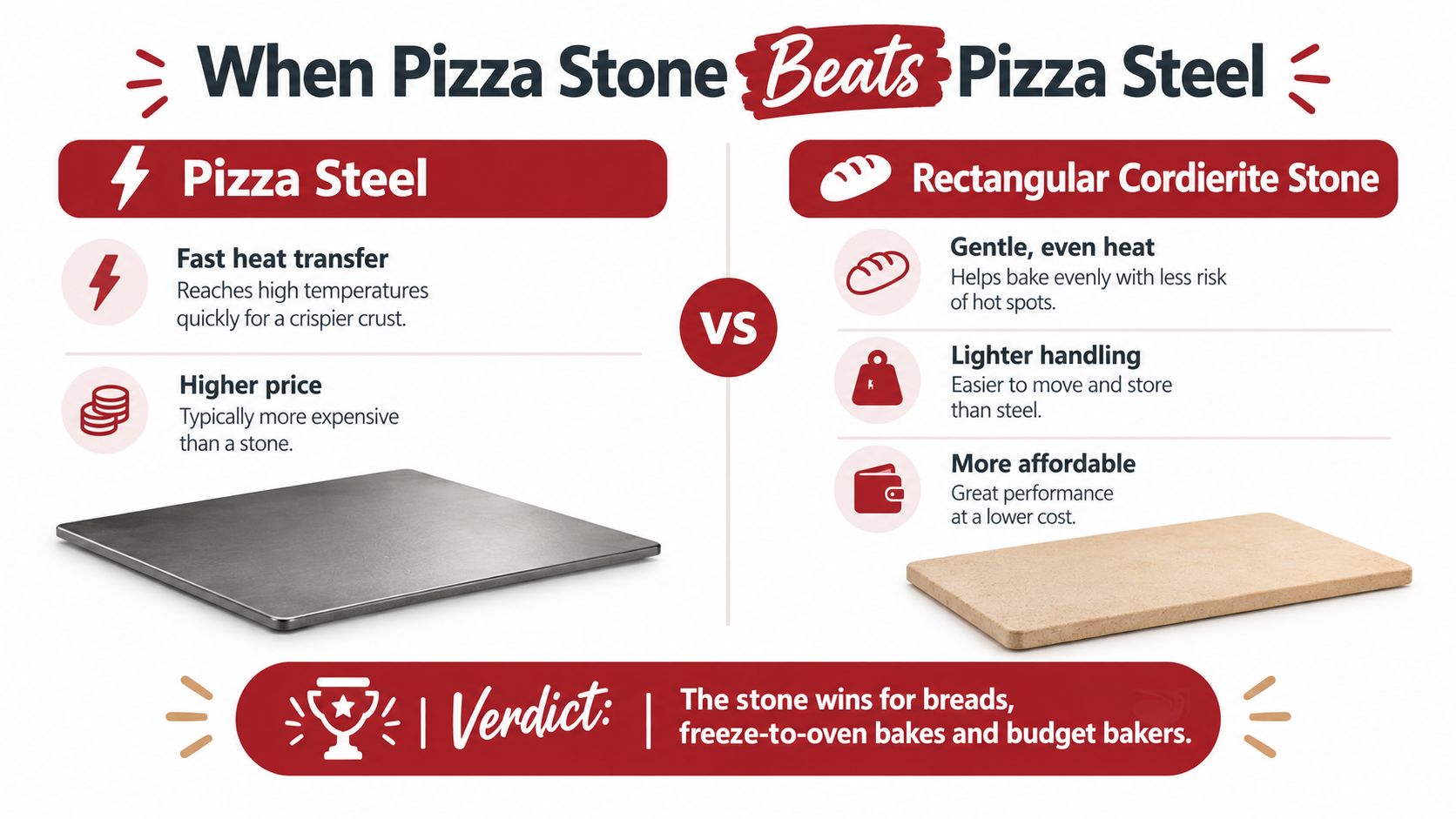
Steel isn't an upgrade in every kitchen. If you bake on a grill, change temperatures often, or are still learning dough transfer, a cordierite rectangle may offer a less stressful path to consistent results. Choose steel when you specifically want its aggressive response, not because faster heat transfer sounds automatically superior.
Maintenance That Actually Keeps Stones Performing
A pizza stone is porous, and that changes the care routine. Don't treat it like a skillet. The stone doesn't need a coating of oil, and oil can soak into the surface, smoke, and leave residue that affects later bakes.
Start with a dry stone in a cool oven, then let it heat gradually with the oven. This routine reduces the shock of moving a cold slab directly into an already blazing chamber. Cordierite gives you useful protection against temperature swings, but it isn't permission to pour cold water over a hot stone.
A simple care routine
- Cool it completely. Leave the stone in place until both the oven and slab are cool enough to handle safely.
- Scrape, don't soak. Use a bench scraper or a stiff plastic scraper to remove baked cheese and dough.
- Wipe lightly. Use a barely damp cloth for stubborn surface residue, then dry the stone thoroughly.
- Store it dry and supported. Keep it flat or in a position that won't put pressure on a corner.
- Inspect before heating. Hairline cracks, chips, or a damaged edge deserve attention before the next high-heat bake.
Dark marks aren't automatically a problem. A working stone develops baked-on discoloration, and aggressive scrubbing can damage the surface or force water deeper into the material. What matters more is loose debris, moisture, and structural damage.
A clean stone isn't a pale stone. It's a dry, intact stone with no loose residue where the dough will land.
Don't season a cordierite stone the way you season cast iron. Flour or semolina on the peel can help with transfer, while parchment can provide a temporary learning aid for beginners. Neither approach replaces proper preheating and a dry baking surface.
If you use the stone on a BBQ, let it cool naturally before moving it or exposing it to a cooler environment. Grills can create abrupt temperature changes, especially when a lid opens or fuel behavior shifts. Good maintenance won't make a stone indestructible, but it removes the avoidable mistakes that shorten its useful life.
How to Choose the Right Rectangular Pizza Stone
Start with the oven, not the product page. Measure the rack and the opening, then leave enough clearance to place and remove the stone without scraping the sides. A rectangular stone should maximize usable area while still allowing airflow and safe handling.
Use this decision filter:
- First-time buyer: Choose cordierite, a manageable rectangular footprint, and a thickness that won't make storage awkward. Prioritize forgiving handling over the most aggressive browning.
- Backyard griller: Confirm that the dimensions suit the grill and that the stone can sit securely on the cooking surface. Rectangular stones work naturally on rectangular grills.
- Back-to-back baker: Favor a 0.75 to 1.0-inch stone for stronger heat retention, accepting the longer warm-up described in this thickness guidance.
- One-pie weeknight cook: A thinner slab may be enough if faster heating and lighter handling matter more than recovery.
- Bread and flatbread baker: Select a rectangular surface because the format supports shapes that don't need to stay circular.
Hans Grill offers a 15 x 12-inch rectangular cordierite pizza stone for ovens and BBQ grills, supplied with a wooden peel. It's one practical option to compare against other stones after you've checked your measurements and baking habits.
Final Recommendations for Home Pizza Bakers
For most standard home ovens, I'd choose a rectangular cordierite stone over a round one. The rectangle matches the rack, gives the peel a more forgiving target, and supports bread or irregular flatbreads without forcing everything into a circle.
Choose thickness according to your evening, not your fantasy pizza schedule. A thinner stone suits a single pie and quicker warm-up. A 0.75 to 1.0-inch stone makes more sense for repeated baking because it holds heat more steadily, even though it asks for more patience before the first launch.
Small ovens need measurement discipline. Grill users need a secure fit and gradual temperature changes. Beginners should value predictable handling over the harshest possible heat transfer, while experienced bakers who chase intense underside browning may prefer steel.
Whatever you buy, preheat the stone fully, launch with a dry and lightly prepared peel, and give the surface time to recover before the next pizza. Those habits matter more than a fashionable shape or a dramatic product claim.
The best rectangular pizza stone isn't the biggest or fastest slab. It's the one that fits your oven, matches your baking rhythm, and gives you enough thermal mass to produce the crust you want.
If you're ready to compare a practical rectangular cordierite setup for your oven or BBQ, visit Hans Grill to explore its pizza stones, peels, steels, and proofing tools. Choose by your available space and baking routine, then build your Tuesday-night setup around repeatable heat rather than guesswork.


