

Pizza Stone Smoking: Causes, Cleaning and Safe Temps
A third pizza goes onto the stone, and a few minutes later the kitchen smells acrid and the smoke alarm chirps. It's unsettling, but smoke doesn't automatically mean the stone is burning or broken. In most cases, something that fell onto its hot surface is burning.
The fastest fix usually isn't oil or seasoning. It's finding the residue, removing it safely, and adjusting how you launch the next pizza.
Table of Contents
- Match the Smoke to Its Cause Before You Change Anything
- How to Clean a Smoking Pizza Stone Step by Step
- Which Oils, Fats and Launch Materials Are Safe
- Safe Temperatures and Gradual Preheating
- Grill and Oven Differences That Change Smoke Risk
- Confirm the Fix and Decide Whether to Replace the Stone
Match the Smoke to Its Cause Before You Change Anything
A pizza stone gets hot enough to scorch loose flour, cornmeal, sauce, cheese, and toppings that fall onto it. During a multi-pizza session, debris can build up between bakes, so a stone that seemed fine for the first pie may smoke by the third. Frigidaire identifies this kind of residue as a common cause of smoke and occasional small flames, and recommends keeping the oven, stone, and peel clean while using only enough cornmeal to move the dough.
The stone itself is rarely the culprit. Use the smoke's timing and smell to narrow down what landed on the surface before trying a different cleaning method or changing the oven temperature.
| Symptom | Likely cause | First fix |
|---|---|---|
| Thin grey smoke in the first five minutes | Loose cornmeal or flour burning on the hot stone | Brush the stone and peel, then dust less |
| Smoke that starts only on the third or fourth pizza | Debris built up between bakes | Cool, scrape, and brush before the next session |
| Acrid smoke when cheese drips onto the stone | Cheese or fatty toppings reached the surface | Keep fatty toppings on the pie and clean the drip zone |
| Greasy or rancid smell with smoke on an older stone | Oil or fat absorbed into the porous surface | Stop oiling, let it dry fully, and stop using any oil spray |
| Chemical smell with smoke on a brand-new stone | Manufacturing residue or packaging film | Run one empty preheat with the window open, then retest |
| Smoke with cracks, flakes, or loose particles | Thermal shock or structural damage | Stop using the stone and check the manufacturer's warranty |
If flames appear: Keep the oven door closed. Flour or cornmeal flames are typically small, and closing the door deprives them of oxygen. Don't open the oven to inspect or try to blow the flames out.
For the next launch, use less dusting material and wipe excess cornmeal off the peel before transferring the dough. Frigidaire also notes that semolina has a higher smoke point than cornmeal, but it contains gluten, so it isn't suitable for gluten-free guests. The Frigidaire guidance on stone-baked pizza smoke and flames gives the same practical priority: keep loose material and food debris off the hot surface.
How to Clean a Smoking Pizza Stone Step by Step
Cool first, clean dry, and never soak or dishwash an unglazed stone. A hot stone can crack if you add water, and a wet stone shouldn't go straight back into a hot oven. Once it's completely cool, clean only what's on the surface.
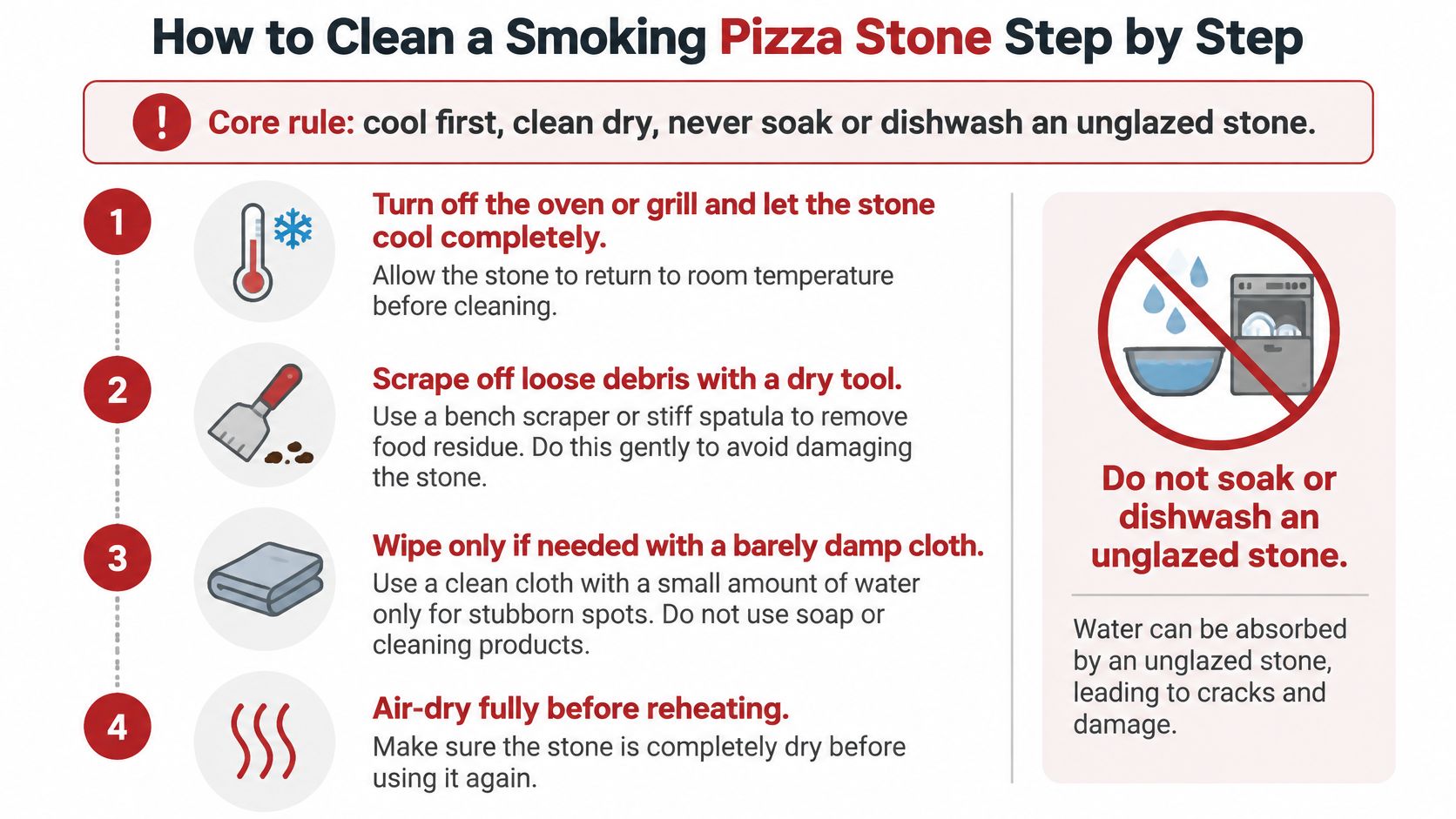
- Turn off the oven or grill and let the stone cool completely. Don't move or rinse it while it's hot. A sudden temperature change can crack the stone, and water can flash into steam.
- Scrape off baked-on debris with a dry tool. Use a dry brush or plastic scraper for flour, cheese, and grease. This removes the particles most likely to smoke and smell during the next bake.
- Wipe only if needed with a barely damp cloth. Keep the cloth just damp enough to lift remaining residue. Don't pour water over the stone or scrub it with soap.
- Air-dry the stone fully before reheating. Give it enough time to dry through, not just on the surface. Trapped moisture can cause problems when the stone heats again.
- Inspect the surface before each session. Look for pooled grease, loose debris, cracks, or flakes. Scrape off residue before you launch another pie.
A little cleaning is usually enough; soaking and aggressive washing aren't. If smoke continues after you've removed residue, or you notice a persistent chemical smell or loose particles, stop reheating the stone and check the product instructions. For a more detailed cleaning walkthrough, use this guide to cleaning a baking stone.
Avoid oiling or seasoning, soaking, dishwasher cleaning, and scouring with soap. An unglazed stone absorbs oil, and absorbed oil can leave a sticky film that smokes during a later high-temperature bake. The pizza-stone cleaning guidance also recommends letting the stone cool fully, scraping residue dry, and drying it completely before using it again.
Which Oils, Fats and Launch Materials Are Safe
Keep an unglazed stone dry and free of fat. Its porous surface can absorb grease, which may smoke or smell when reheated. A product-use manual published through Lowe's warns that absorbed fat can produce smoke and odors, and advises against baking high-fat foods directly on the stone.
| Material or contact | Verdict | Reason |
|---|---|---|
| Cornmeal, light dusting | Use sparingly | Burns at high heat; use only enough to move the dough |
| Semolina | Acceptable launch layer | Higher smoke point than cornmeal, but contains gluten |
| All-purpose flour dusting | Use lightly and brush off | Leaves burned residue that can smoke on a later bake |
| Oil or oil spray on an unglazed stone | Avoid | Absorbed oil can form a sticky film that smokes |
| Parchment paper | Only if the manufacturer allows | Can scorch and smoke at high heat when it isn't approved |
| Cheese or fat-dripping toppings on the stone | Keep off the surface | Porous stone absorbs fat that can smoke when reheated |
A light dusting helps dough slide; a thick layer leaves more material to burn. If a pizza has a heavy ricotta base or a generous amount of oily toppings, use a perforated screen or a pan instead of putting it directly on the bare stone. And if a previous bake leaves butter or cheese on the surface, scrape it off before the next session.
Don't try to fix smoke by adding oil. An unglazed stone isn't a skillet, and oil can become another source of smoke rather than a solution. For paper as a transfer aid, check this guide to using parchment paper with a pizza stone and follow the instructions for your own stone.
Safe Temperatures and Gradual Preheating
A pizza stone can crack if one part heats or cools much faster than another. Start with a dry stone in a cold oven or unlit grill, then bring it up gradually. For home pizza, 450–550°F (232–288°C) is a typical baking range at the stone's surface. The cordierite pizza-stone temperature guidance recommends following the lowest applicable limit for the stone, appliance, and recipe.
| Setting or action | Safe limit | Notes |
|---|---|---|
| Home oven pizza baking | 450–550°F (232–288°C) | Typical home pizza range; confirm the stone's rated maximum |
| Frozen or cold pie on a hot stone | Follow the stone's manual | Use the stone only within its stated temperature limit |
| Gas or charcoal grill, lid closed | Check the stone manual | Direct flame isn't approved for most stones |
| Stone rated maximum, including cordierite | Use the value in the stone's own manual | Don't assume every stone has the same rating |
| Cooling after a bake | Cool fully in the switched-off oven or grill | Never pour water on or rinse a hot stone |
Use a gradual preheat
- Confirm the stone is completely dry. Moisture can turn to steam as the stone heats. After wiping it, let it dry throughout before starting a heat cycle.
- Place it in a cold oven or an unlit grill. The stone then warms with the appliance rather than taking a sudden temperature hit.
- Choose a temperature within the lowest applicable limit. Check the stone's manual, appliance instructions, and recipe. A closed grill lid does not make every stone safe at the grill's maximum temperature.
- Allow about 30–60 minutes to preheat. A gradual cycle gives a cordierite stone time to reach a stable baking temperature. It also helps prevent dampness or residue from smoking as the surface heats.
- Leave the stone in the switched-off appliance until fully cool. Don't speed cooling by rinsing it or placing it on a cold, wet surface.
Keep temperature changes gradual throughout the bake and cooldown. Different parts of a stone expand or contract at different rates during rapid temperature shifts, which can cause cracks. Never put a cold stone into a hot oven, and don't place it directly over a flame unless the manual explicitly approves that use.
Grill and Oven Differences That Change Smoke Risk
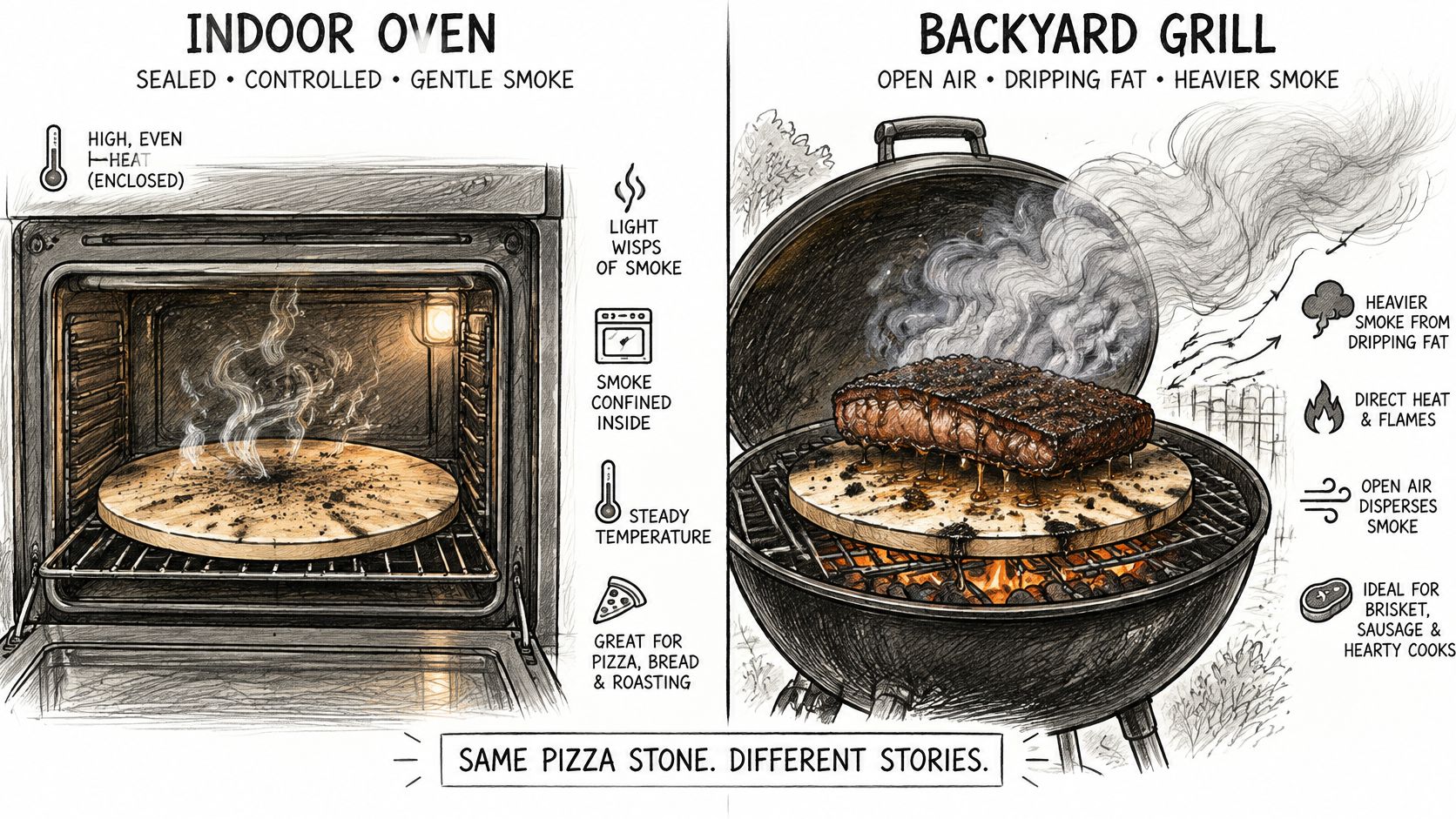
An indoor oven and a backyard grill can create different smoke problems even with the same stone. In an oven, loose flour or cornmeal can move around when the convection fan runs. On a grill, grease and flare-ups are more likely to reach the stone from below or from the side.
Keep the stone away from drips in either setup. On a grill, a fatty brisket or sausage can shed grease onto a stone placed beneath it, so set the stone on a rack away from the drip tray and keep it out of the path of falling fat. If grease dripping onto the burners causes flare-ups, use indirect heat rather than putting the stone over the active flame.
A grill's open lid lets wind and temperature changes affect the cooking environment. Keep the lid closed during preheating and baking, and check the stone's manual before using it at high grill settings. In an oven, turn off the convection fan for pizza unless the appliance or stone instructions say otherwise; moving air can blow loose launch flour toward the heating element.
For more on outdoor setup, follow a guide to cooking pizza on a gas grill. On a Saturday cookout when the grill and oven are both in use, clear the grill grate and drip tray before placing the stone. It's a simple way to keep old grease from becoming the next source of smoke.
Confirm the Fix and Decide Whether to Replace the Stone
Once the stone is clean and dry, run one empty preheat with a window open or the grill lid closed, then bake a plain dough pizza. Check the surface and note what you dusted with and which toppings you used. If smoke returns, those details can help you trace the cause to a launch habit, grease, or the appliance.
Keep the stone if the smoke stops after cleaning and changing the launch material. Stop using it if smoke continues on a clean surface, or if you see cracks, flakes, loose particles, or a persistent chemical smell. Check the warranty terms supplied with the product before the next pizza night. Reheating a cracked stone repeatedly won't repair it.
For an easy routine, keep a small dry brush, plastic scraper, and dry towel by the oven. Inspect the surface before each session, and remove residue before it gets another chance to smoke.
Hans Grill offers pizza stones, steels, peels, and other tools designed for high-heat baking at home or on a backyard grill. If you're ready to make your next pizza session easier to manage, visit Hans Grill to explore the gear.


