

How to Season Pizza Steel for Crisp Crusts at Home
You've just pulled a pizza steel from its packaging, rubbed it with oil, and placed it in the oven. Ten minutes later, the kitchen smells like burnt salad dressing, the surface feels tacky, and you're wondering whether seasoning was supposed to be this difficult.
The usual problem isn't the steel. It's too much oil. Pizza steel seasoning works best as a thin, baked-on film, not as a glossy coating. Once you treat it as ongoing surface maintenance rather than a one-time cast-iron ritual, the process becomes much easier to judge.
Table of Contents
- Why Seasoning Matters for Your Pizza Steel
- What You Need Before You Season
- How to Season Your Pizza Steel in the Oven
- Grill Method and High Heat Variations
- Everyday Care and When to Re Season
- Rust Removal Safety Tips and Final Takeaways
Why Seasoning Matters for Your Pizza Steel
A new carbon-steel pizza steel has a bare metal surface that needs protection from moisture. Seasoning uses heat to polymerize a very thin layer of oil. That layer can improve release and help resist rust, but it isn't a permanent nonstick coating and it won't compensate for wet dough, excess flour, or a pizza that sits too long on the peel.
The first bake often reveals the difference. An unprepared steel may develop surface rust during storage, while an over-oiled steel can leave sticky patches and smoke heavily. A properly seasoned surface usually looks matte, feels dry, and releases baked dough more cleanly after the steel has been preheated.
Steel also behaves differently from a cordierite stone. Carbon steel transfers heat much faster, with reported conductivity around 43 to 45 W/m·K, while cordierite has been measured around 13.5 W/m·K in one test and roughly 1.5 to 3 W/m·K in other comparisons. The faster transfer helps the dough receive stronger bottom heat, which supports quicker oven spring and a crisper base. These figures come from the history and development of baking steel.
Practical rule: Seasoning helps the surface behave better. It doesn't make a badly launched pizza release cleanly.
What seasoning can and cannot fix
Seasoning can help with:
- Light rust resistance, especially during storage.
- Cleaner release, when the dough and peel technique are already sound.
- Simpler cleanup, because baked residue is less likely to grip bare metal.
- A more even working surface, as thin coats build gradually through use.
It won't fix a steel that wasn't heated adequately, a wet dough pressed into the surface, or a sauce-covered pizza that leaks underneath. For a broader look at how a steel changes the home bake, see this guide to using baking steel in a home oven.
If the steel is new and bare, give it a full initial seasoning. If it already has a dry, darkened surface and only looks slightly dull, a light refresh may be enough. That distinction saves time and prevents the common mistake of repeatedly flooding a surface that only needed to be wiped clean and dried.
What You Need Before You Season
Set up the workspace before heating the steel. Gather warm water, mild soap for the first wash, a lint-free food-safe cloth or paper towel, a high-heat cooking oil, sturdy tongs or heat-resistant gloves, and foil or a baking sheet to catch drips. Protect the countertop from the plate's weight, and choose a stable oven rack.
Oil choice matters less than film thickness. Flaxseed and grapeseed oils are commonly used, but no clear independent winner is established. Use an oil that spreads easily and can be wiped almost completely away. A shiny, wet-looking surface usually means too much oil remains, which can leave a sticky coating and produce unnecessary smoke.
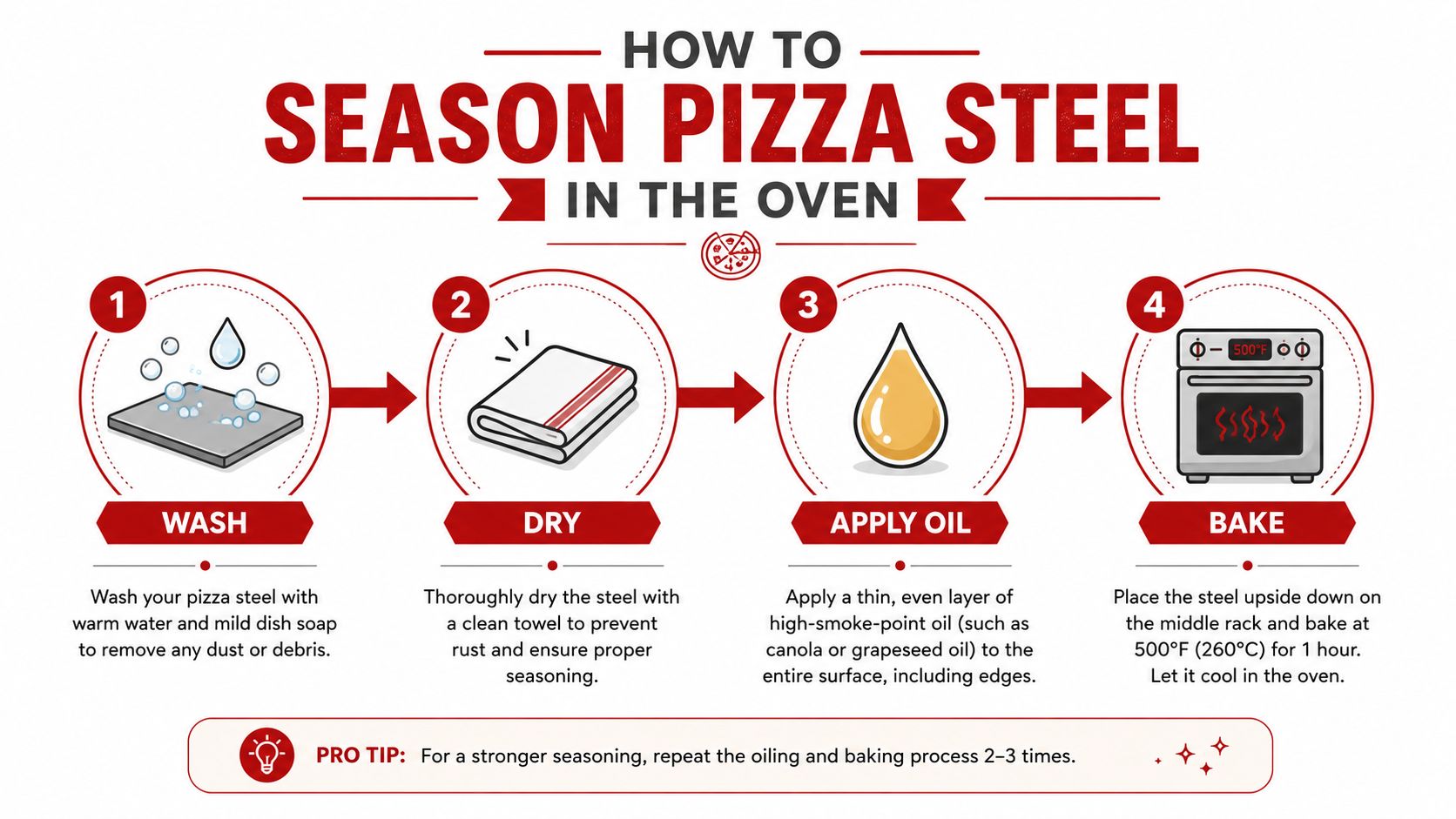
For a bare steel, the initial preparation is simple: wash it once, dry every surface thoroughly, apply a very thin film, and follow the oven cycle described in the next section. The practical temperature range is 400 to 500°F (200 to 260°C) for roughly 45 to 60 minutes, with the cycle repeated 2 to 3 times when building the first layer. Treat those figures as working benchmarks rather than a reason to chase an exact oven setting.
Oil choices at a glance
| Oil Type | Smoke Point and Best Use | Practical Note |
|---|---|---|
| Flaxseed oil | Commonly used for a thin initial seasoning film | Spread extremely thinly because excess oil can become tacky |
| Grapeseed oil | Food-safe option used in high-heat seasoning guides | Useful when you already keep it in the kitchen |
| Other high-heat cooking oil | Suitable when it can be spread and wiped nearly dry | The film thickness matters more than the label |
As noted above, steel transfers heat faster than stone, so a heavy coating can become uneven, sticky, or prone to smoking. Thin application keeps the working surface predictable while preserving the steel's fast response after a pizza is loaded. Comparative testing also discusses how steel and stone respond to loading and recovery, including differences between a 1/4-inch steel and a 1-inch cordierite stone. See the comparative testing discussion of pizza steels for those measurements.
Ventilate the kitchen before the first cycle. Keep the steel supported on a stable rack, place foil or a tray underneath, and use tongs or heat-resistant gloves once it has been heated.
A seasoned surface is maintained on a spectrum. A bare, newly washed plate needs an initial coat, while a dry, darkened steel that only looks dull may need nothing beyond a wipe, thorough drying, and occasional light refresh when release starts to worsen.
How to Season Your Pizza Steel in the Oven
A bare steel needs a careful first coat, while a dry, darkened plate may only need wiping and drying. Seasoning is a thin-film maintenance spectrum, not a ritual to repeat on schedule. Re-season when dough starts sticking or release worsens, not just because the color looks uneven.
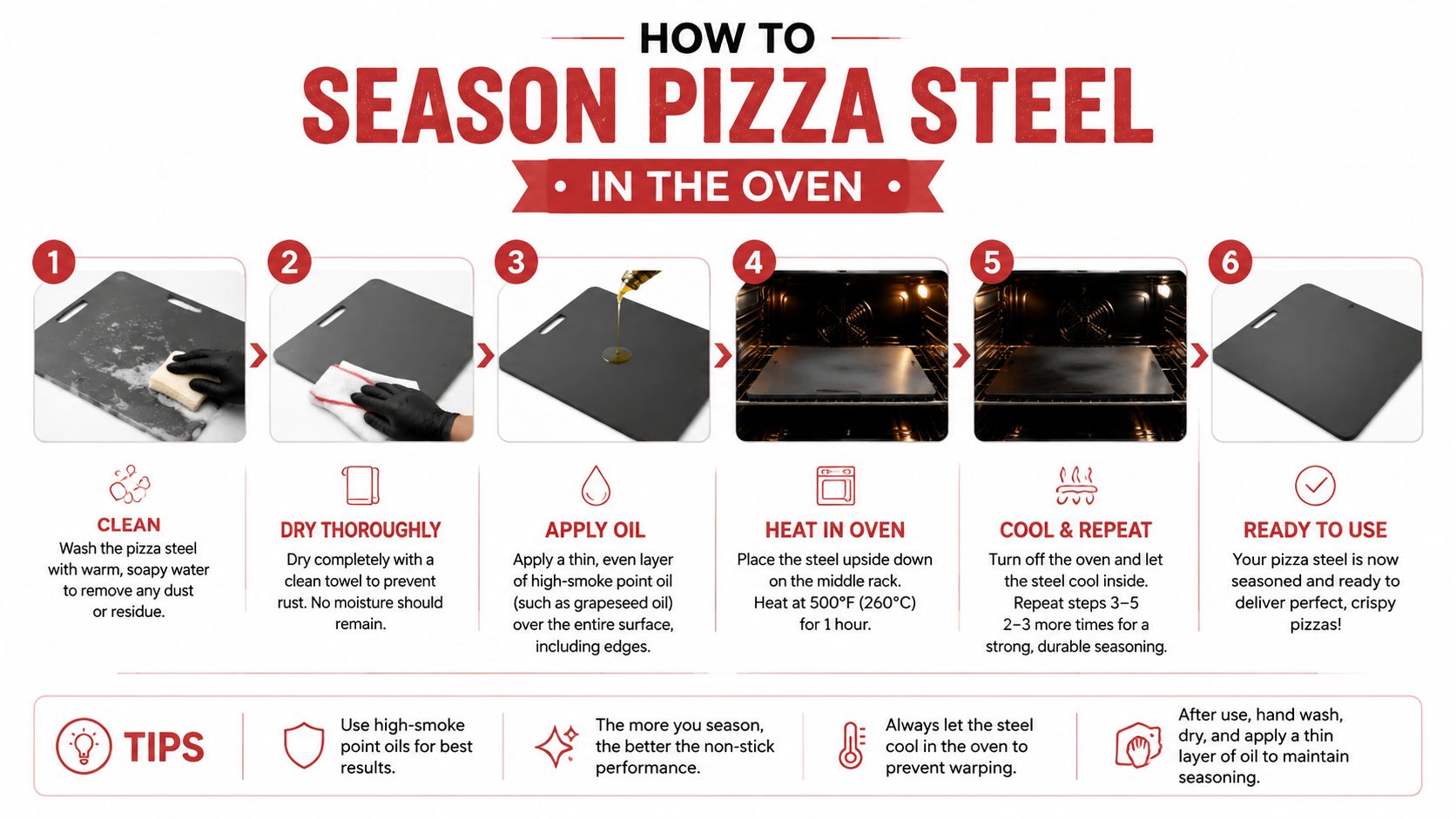
Start with a one-time wash using warm water and a small amount of mild soap. This removes handling residue from bare steel. Rinse thoroughly, then dry every face immediately, including the underside and narrow edges. Do not leave raw steel on a rack to air-dry, because trapped moisture can create rust spots.
Place the dry steel on a protected work surface. Put a small amount of oil on a cloth or paper towel instead of pouring it onto the plate. Rub it over the entire steel, including the edges and underside, then use a clean section of the cloth to remove nearly all of it.
The finished coat should look almost dry, not wet or glossy. Visible pooling near an edge means more wiping is needed. A sticky surface before baking has too much oil and is more likely to turn tacky or smoky.
The bake cycle
Set the steel on a stable oven rack with foil or a tray underneath. Bake at about 400 to 500°F (200 to 260°C) for approximately 45 to 60 minutes, following the practical range in the seasoning instructions for cooking steel. A little odor or smoke is common during the first cycle. Heavy smoke usually points to an oil film that was too thick.
Switch off the oven when the cycle ends and let the steel cool inside. Do not pour water over it, place it on a cold countertop, or cool it with a wet towel. Hot steel stays heavy and hot for a long time, so use sturdy gloves and leave room around it.
Inspect the cooled surface. Slightly uneven darkening is normal. The useful result is a dry, bonded feel without wet patches, gummy areas, or oil beads.
Repeat only when the surface needs it
For a bare new steel, repeat the wash-free oil-and-bake cycle 2 to 3 times in total, following the guidance above. Between cycles, wipe the cooled steel instead of scrubbing away the layer just formed. Apply another nearly invisible film only when the surface still needs coverage, then bake again.
After the initial build, pizza use can deepen the patina. A plate that looks dull but releases dough cleanly needs only a wipe and thorough drying. Color matters less than a dry, functional surface.
Grill Method and High Heat Variations
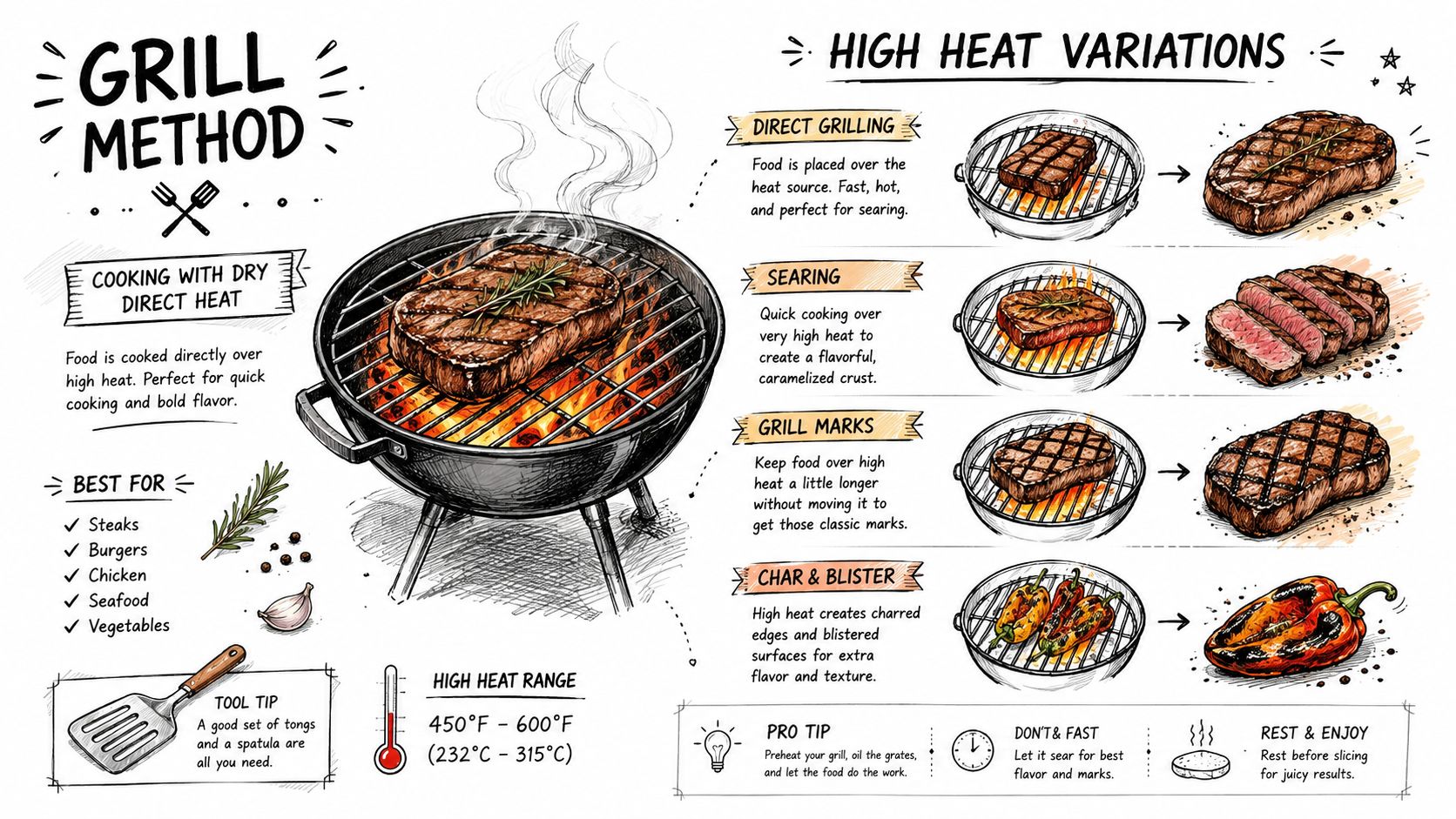
A grill can season pizza steel effectively, but it requires more attention than a kitchen oven. The lid traps heat, and oil residue can smoke quickly or flare if it reaches an active burner or charcoal bed. Apply the same nearly invisible film, then position the steel where it receives strong indirect heat rather than direct contact with flames.
On a gas grill, keep the steel supported on the cooking grates and close the lid. Use a reliable thermometer if your grill has one, because the air temperature near the steel can differ from the reading at the lid. If the grill runs hotter than the oven range used for the initial seasoning cycle, watch the surface and shorten the exposure rather than adding more oil.
Charcoal requires even more caution. Keep the steel above the grate, away from open flame, and avoid seasoning immediately over a fresh, aggressively burning coal bed. Excess oil can drip, smoke, and ignite. A grill's outdoor location helps with ventilation, but it doesn't remove the risk of flare-ups.
When the grill makes sense
The grill is convenient when you're seasoning a steel after outdoor storage or refreshing a surface that has picked up light rust. It keeps smoke out of the house, provided the grill is placed in a safe, open area. The oven is usually easier for an even initial coat because its heat is more controlled and surrounds the steel consistently.
For pizza baking, placement matters just as much as seasoning. A steel set over direct flame can overheat the bottom while the top remains pale. The practical guidance in this pizza steel grill guide is useful when adapting a steel to a BBQ setup.
Let the steel cool naturally after grilling. Don't carry a red-hot or heavily heated plate indoors, and don't set it on a surface that can scorch. If the oil smokes heavily, shut down the heat source when safe, keep the lid closed if that's the safer way to contain a flare-up, and wait until the steel is fully cool before inspecting it.
Everyday Care and When to Re Season
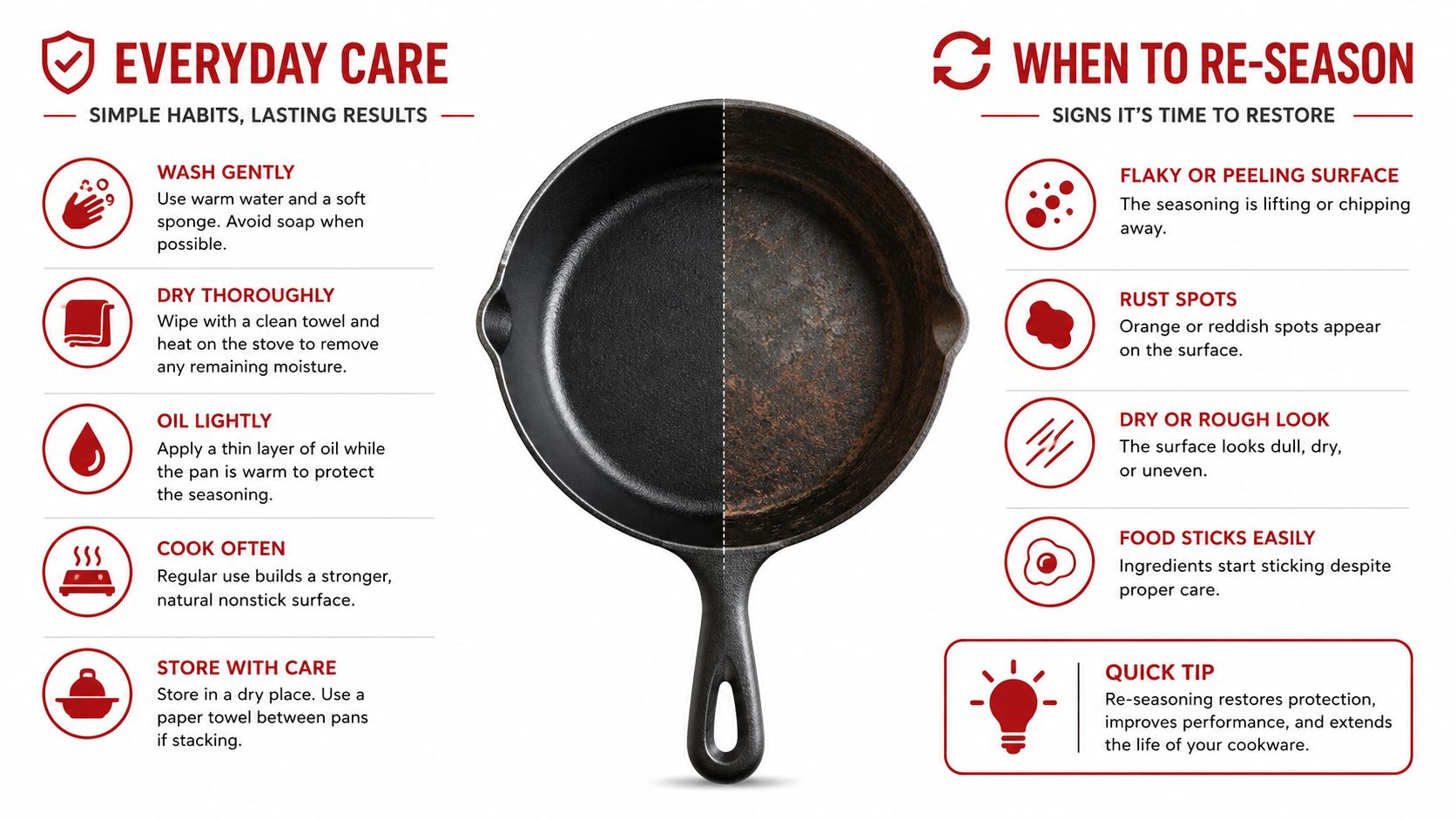
Seasoning works best as a maintenance spectrum. A steel that gets used regularly may only need a dry scrape and wipe, while one stored through a damp season may need a fresh oil film or a complete rust-removal cycle.
After a bake, let the steel cool completely. Scrape away stuck cheese or flour with a metal spatula or suitable scraper, then wipe the surface with a dry cloth. If residue remains, use hot water and gentle scrubbing once the steel is safe to handle. Dry it immediately and thoroughly.
Maintenance rhythm: Remove residue, dry the steel, inspect the surface, and oil only when the metal needs protection.
The signs that matter
Re-seasoning is useful when the surface begins to stick in ways it didn't before, develops visibly dull or patchy bare areas, or shows light rust after storage. It may also help after vigorous cleaning removes part of the existing film.
A simple wipe-down is enough when the steel is dry, clean, and releasing dough normally. Don't re-season just because the color looks uneven. Natural patina changes over time, and visual uniformity isn't the same as baking performance.
Published guidance is inconsistent about timing. Some recommendations call for repeating seasoning when food sticks or the surface looks dull, while others suggest re-seasoning around every 5 uses. Other instructions favor 2 to 3 initial coats followed by occasional touch-ups. This inconsistency is documented in the pizza steel cleaning and re-seasoning guidance, and it supports a performance-based approach rather than a fixed calendar.
What changes bake quality
Seasoning can improve release, but there isn't enough independent evidence to claim that a particular oil or a thicker patina produces a reliably better-browned crust. The steel's heat transfer and recovery do the major work beneath the dough. The seasoning layer should remain thin enough that it doesn't create smoke, residue, or a sticky contact surface.
The discussion of seasoning pizza steel also highlights the unresolved question of how much seasoning survives repeated high-heat pizza bakes. Until that's measured consistently, treat oil choice as a practical preference and film thickness as the controllable variable.
Rust Removal Safety Tips and Final Takeaways
Rust doesn't automatically mean the steel is ruined. Light surface rust can usually be addressed with gentle scrubbing, followed by a complete rinse, immediate drying, and a thin re-seasoning film. The objective is to remove loose oxidation without grinding aggressively into the surface or leaving abrasive residue behind.
Avoid soaking the steel unnecessarily. Water softens baked-on debris, but prolonged moisture exposure creates another rust opportunity. Never put a wet steel away, and don't rely on air-drying. Heat the empty steel briefly after washing if needed, then let it cool before applying a very thin protective film.
For a more detailed carbon-steel care reference, consult this guide to seasoning carbon steel. The same core habits apply here, but remember that a pizza steel is heavy, hot, and awkward to maneuver. Use sturdy oven gloves, place it on a stable rack, and protect counters and floors when carrying it.
The common myth is that more seasoning is always better. It isn't. Thick coats can turn sticky, smoke heavily, and create a rough surface that collects residue. A pizza steel performs more reliably when you keep the film thin, dry the metal completely, and refresh it only when release or rust resistance has declined.
Use this short checklist:
- Initial preparation: Wash once with warm water and mild soap, then dry immediately.
- Oil film: Rub on a very thin coat and wipe until the steel looks nearly dry.
- Heat cycle: Bake within the recommended 400 to 500°F range for about 45 to 60 minutes, using the practical guidance cited earlier.
- Build gradually: Repeat the initial cycle 2 to 3 times if the steel is bare.
- Daily care: Scrape, wipe, dry, and store in a dry place.
- Re-seasoning decision: Respond to sticking, bare patches, or light rust instead of following a rigid schedule.
Hans Grill offers pizza steels designed for use in a home oven or backyard grill, including the Pizza Steel PRO XL for cooks who want stronger bottom heat without buying a specialty pizza oven. Visit Hans Grill to compare its pizza tools and find equipment that fits your seasoning, baking, and cleanup routine.


