

Stainless Steel Pizza Steel: What You Need to Know
Most product listings treat a pizza steel as a simple category: buy a thick metal plate, heat it, and expect a crisper crust. That advice skips the detail that determines how the plate bakes. Stainless steel and carbon steel don't move heat at the same speed, so a stainless steel pizza steel can behave very differently from the carbon-steel surface many home bakers have in mind.
Stainless steel offers genuine practical advantages. It's durable, food-safe, resistant to ordinary rust problems, and easier to live with than a surface that demands careful seasoning. But it gives up some of the rapid heat transfer that creates aggressive bottom browning and blistering. The right question isn't whether stainless steel is good or bad. It's whether its heat behavior matches your oven, grill, dough, and expectations.
Table of Contents
- Why Not All Pizza Steels Are Created Equal
- How Stainless Steel Transfers Heat to Pizza Dough
- Stainless Steel vs Carbon Steel vs Pizza Stone
- Getting the Best Results from a Stainless Steel Pizza Steel
- Maintenance and Corrosion Prevention for Stainless Steel
- When Stainless Steel Is the Right Choice for Your Setup
- Key Takeaways for Your Pizza Steel Decision
Why Not All Pizza Steels Are Created Equal
Metal alone does not make a pizza steel perform well. The alloy matters, especially when the oven cannot provide intense top heat. Carbon steel moves heat into dough quickly. Stainless steel can hold plenty of heat, but its lower conductivity slows the path from the hot plate to the crust.
Independent pizza-surface comparisons place stainless steel near 16 W/m·K, while carbon steel is roughly 45 to 58 W/m·K. That gap explains the practical difference: stainless may brown the base more slowly, transfer heat less evenly, and produce more noticeable hot spots than carbon steel. Pizza baking surface guidance from PizzaBlab also places steel well ahead of cordierite stone for heat transfer, although stainless steel's advantage over stone is less pronounced than carbon steel's.
The modern home-pizza steel grew from experiments showing that metal transfers heat to dough more effectively than ceramic. Around 2012, Nathan Myhrvold's Modernist Cuisine helped popularize that principle, while Andris Lagsdin's Massachusetts experiments with steel plates helped turn it into a widely used home-pizza tool through Baking Steel. PizzaLogic's history and material comparison links that development with the continued use of carbon steel where rapid heat transfer is the priority.
Thickness isn't the whole story
A thicker stainless plate stores more energy, but it does not conduct that energy like carbon steel. Stainless steel can hold heat effectively, and often more than a pizza stone, yet conductivity remains the bottleneck. The surface can be extremely hot while the dough still receives heat less aggressively.
That trade-off produces a distinct baking profile:
- Carbon steel: fast heat transfer, strong bottom browning, and a higher risk of scorching when timing or placement is poor.
- Stainless steel: slower heat flow, gentler bottom baking, and less immediate blistering.
- Cordierite stone: slower heat transfer than steel, with a porous ceramic surface that responds differently to moisture.
Home ovens and grills can compensate for stainless steel's slower transfer by allowing a thorough preheat and placing the plate where it receives strong radiant heat. The adjustment is practical, not cosmetic. Stainless steel suits cooks who value corrosion resistance and simpler care, provided they accept a longer heat-up and a less forceful initial crust response.
How Stainless Steel Transfers Heat to Pizza Dough
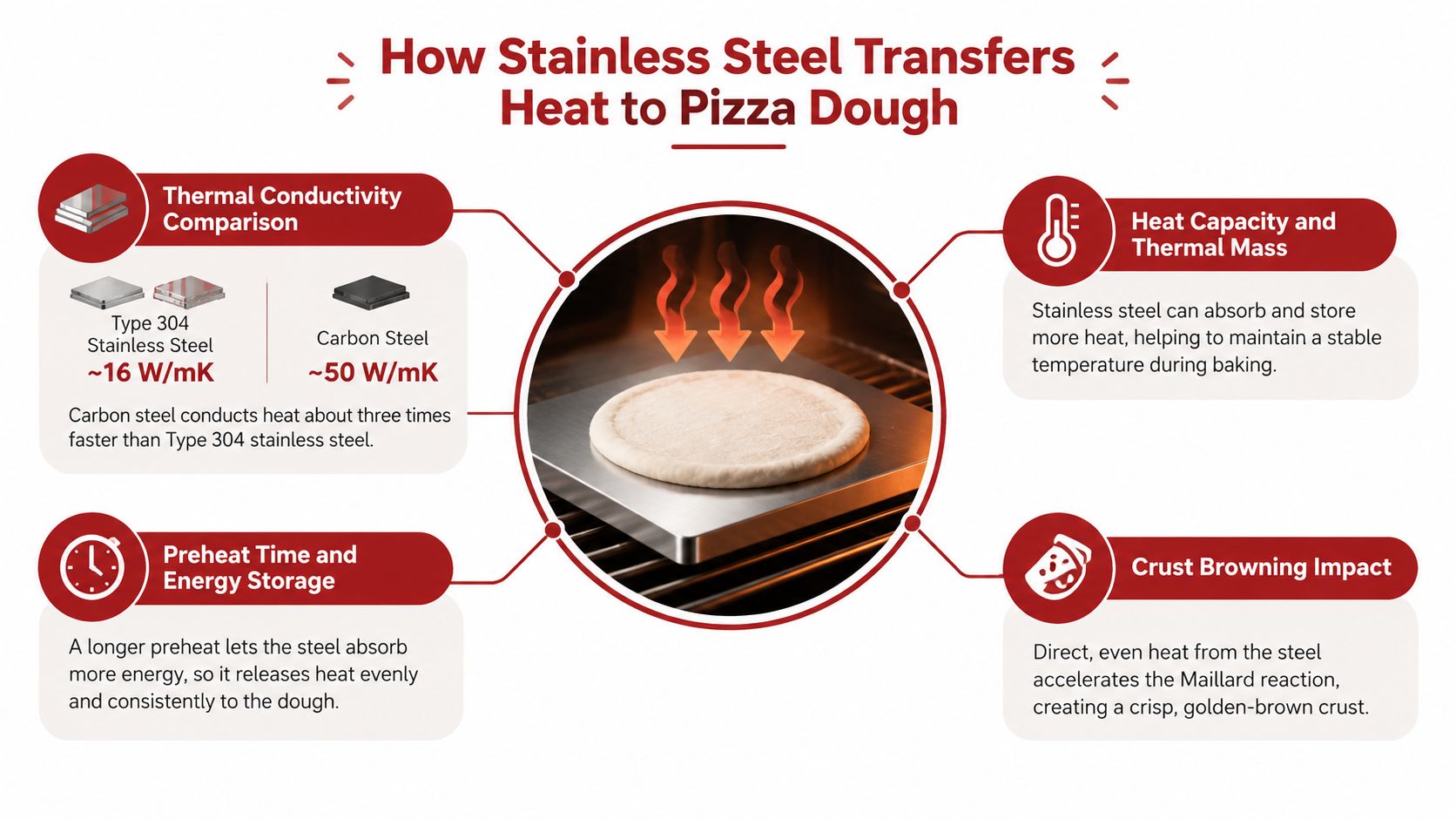
A pizza steel can show the same oven temperature as any other surface and still bake the dough differently. The deciding moment is launch, when relatively cool dough draws energy from the plate. Stainless steel's lower conductivity, as noted above, limits how quickly heat reaches that contact zone from the surrounding metal.
For Type 304 stainless steel, conductivity is about 14.4 W/m·K at 20°C, increasing to roughly 16.2 W/m·K at 100°C and 21.5 W/m·K at 500°C. The stainless-steel conductivity data from SteelPRO Group shows why an oven display or surface reading cannot describe the whole bake. The plate may be very hot while the dough still receives heat less aggressively than it would from carbon steel.
The contact-temperature drop
As soon as the dough lands, the contact area pulls heat from the steel. A material with higher conductivity replenishes that area quickly from the rest of the plate. Stainless steel does so more slowly, so the surface beneath the dough can cool locally, particularly when the plate is thin or has not fully heated through.
Thermal diffusivity describes how quickly a temperature change moves through a material. Thermtest lists stainless steel thermal diffusivity around 3.68 mm²/s, with 316 stainless thermal conductivity near 13.53 to 14.64 W/m·K, depending on grade and source. Thermtest's materials database helps explain why stainless steel can deliver a softer initial hit than carbon steel even when both surfaces feel hot.
The effect shows up in the crust:
- The bottom browns more gradually.
- Blistering is usually less forceful.
- Top heat contributes more to the final bake.
- A longer preheat gives the plate time to charge across its full mass.
Preheat is therefore part of the heat-transfer setup, not a minor timing detail. Give the steel enough time to absorb heat throughout, then place it where it receives strong radiant heat from the oven or grill. A thin plate may respond sooner but lose contact temperature more sharply. A thicker plate takes longer to charge, then supplies a steadier reserve once the bake begins.
Heat-transfer rule: A stainless steel pizza steel can be hot to the touch and still underperform if it has not had time to distribute heat through its full mass.
Carbon steel moves heat into the dough with a stronger initial surge. Stainless steel holds heat effectively, but its slower flow means the oven must continue supplying energy while the pizza bakes. That is why stainless rewards patience, thorough preheating, and careful positioning rather than a quick warm-up followed by an immediate launch.
Stainless Steel vs Carbon Steel vs Pizza Stone
All three surfaces can bake good pizza, but they do not deliver heat in the same way. Stainless steel favors durability and simpler upkeep. Carbon steel sends heat into the dough more aggressively. Cordierite stone provides a ceramic baking surface with slower transfer, plus its own handling and moisture concerns.
| Criteria | Stainless Steel | Carbon Steel | Cordierite Stone |
|---|---|---|---|
| Heat transfer | Slower than carbon steel, generally faster than stone | Fastest of the three for bottom heat | Slower than steel |
| Thermal mass | Can hold substantial heat | Holds heat while replenishing contact areas quickly | Often stores less heat than steel for a comparable surface |
| Bottom crust | Gradual browning, less forceful blistering | Fast browning and strong crisping | Even, gentler baking when fully heated |
| Rust resistance | Strong resistance when maintained correctly | Requires more care and can rust if neglected | Doesn't rust, but can stain or crack |
| Seasoning | Usually not required | Often benefits from seasoning | Not seasoned like bare metal |
| Cleaning | Avoid harsh abrasives and contamination from other metals | Scraping and rust management may be necessary | Avoid soaking and thermal shock |
| Best fit | Low-maintenance kitchens, grills, humid storage areas | Maximum crust response in a home oven | Bakers who prefer a ceramic surface and gentler heat |
Steel generally transfers heat to dough far faster than cordierite stone, but stainless steel does not match carbon steel's heat flux. Its greater thermal storage can keep the bake supplied with energy, yet that reserve does not fully replace fast delivery at the dough contact point. The result is a meaningful gap between stainless and carbon steel, even when both plates are thoroughly heated.
Stainless steel
Stainless steel suits bakers who want a metal surface without routine seasoning or regular rust removal. It also fits grills and outdoor kitchens, where storage conditions may be humid or inconsistent. The trade-off is slower heat movement through the plate, so the base may brown more gradually and benefit from stronger heat from above.
Stainless steel's corrosion resistance is useful, not absolute. Food residue, abrasive cleaning, and contact with incompatible metals can still damage the surface or leave contamination behind. Keep the plate clean and dry, and avoid treating it like a disposable tray.
Carbon steel
Carbon steel is the more direct choice for a thin, crisp base and pronounced bottom blistering. It transfers heat faster, which gives the dough a harder initial sear and quicker browning. That response comes with more maintenance: the plate needs careful drying, suitable storage, seasoning when applicable, and attention to rust.
Choose carbon steel when crust response ranks above maintenance simplicity. It is usually the stronger technical option for bakers chasing aggressive bottom heat in a home oven.
Cordierite stone
Cordierite stone offers a different baking behavior rather than a weaker form of steel. Once fully heated, it can produce an even, dry bake with gentler contact heat. It will not move heat into the dough as quickly as carbon steel, and it can stain, crack from thermal shock, or suffer from soaking.
Compare pizza steel and stone baking surfaces before choosing by appearance alone. The better surface depends on whether the priority is fast browning, low maintenance, or the baking character of ceramic.
Getting the Best Results from a Stainless Steel Pizza Steel
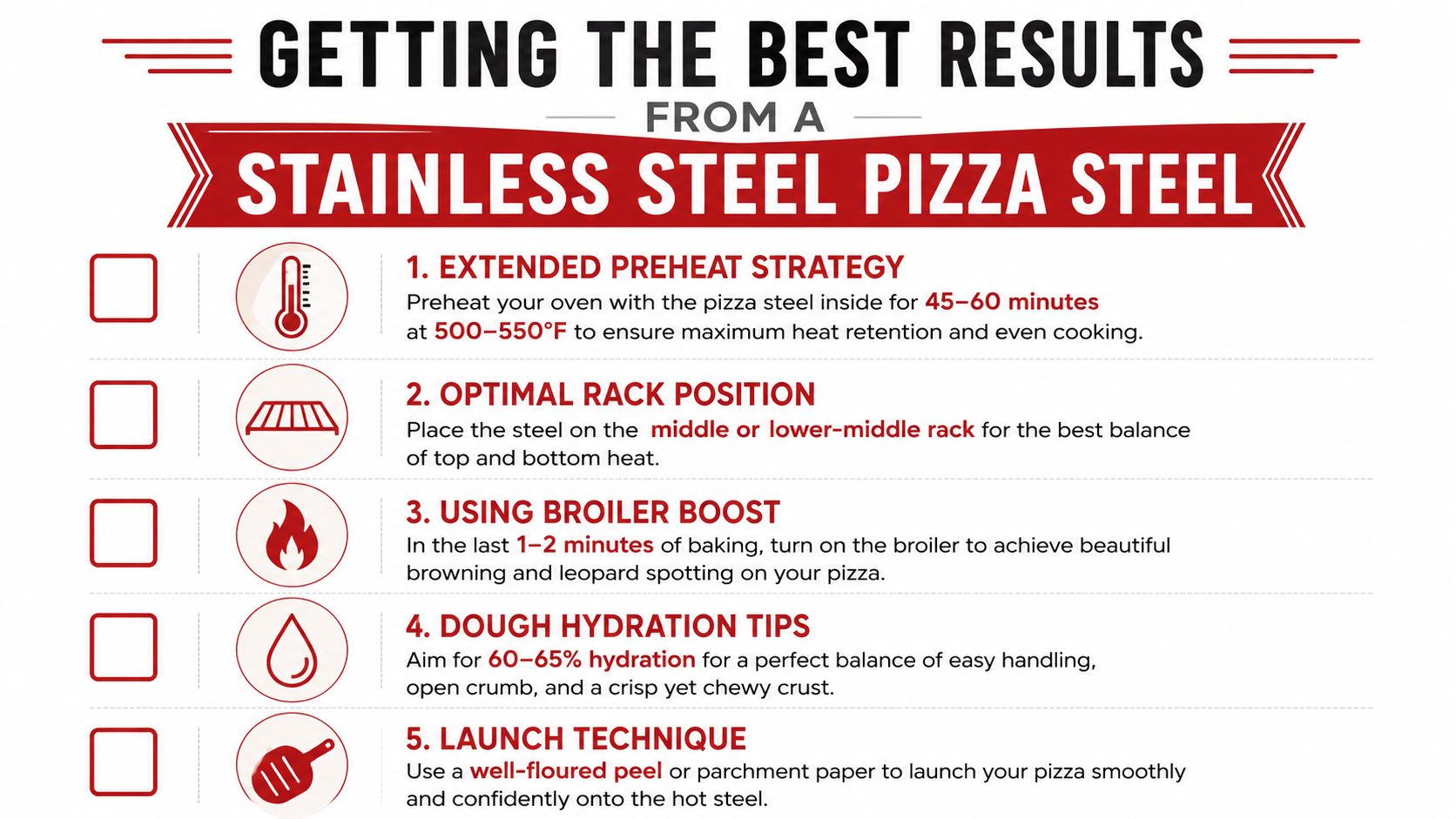
A stainless steel pizza steel rewards patience more than brute heat. Its lower thermal conductivity means it does not refill heat at the dough's contact point as quickly as carbon steel. Preheat the slab thoroughly, using the longest preheat your oven can support, rather than judging readiness by the oven's air temperature alone.
Position the steel high in the oven, with safe clearance from the top heating element. Stronger radiant heat helps compensate for slower heat transfer through the plate, so the crust and toppings can finish closer together. A lower position may leave the base pale while the cheese and toppings continue cooking.
Adjust the bake around the surface
Use dough that is pliable rather than cold and stiff. It stretches more easily, launches sooner, and spends less time on the peel while the steel loses stored heat.
Dust the peel lightly with flour or semolina. Excess flour burns on a hot plate and can give the crust a bitter taste. Build the pizza quickly, check that it slides freely, then launch with a firm forward-and-back motion. Hesitation increases the chance of a misshapen crust and wastes heat at the surface.
Launch advice: A clean launch starts before the dough reaches the oven. It protects the shape, limits heat loss, and gives stainless steel the best chance to brown the base.
Watch the crust instead of following a rigid timer. Rotate when the bottom has begun to set and the exposed edge starts to color, using a peel that can reach fully underneath. If the base is firm but the top needs more color, finish briefly under the broiler. Stay close, since the toppings can darken quickly.
A grill or BBQ changes the heat balance. Stainless steel's corrosion resistance suits a humid or outdoor setup, but the plate still needs heat from above to produce a blistered rim. Keep it stable, manage the lid temperature, and use the grill's upper heat rather than expecting the steel alone to create the finish.
For setup details, see Hans Grill's instructions for using a pizza steel.
Maintenance and Corrosion Prevention for Stainless Steel
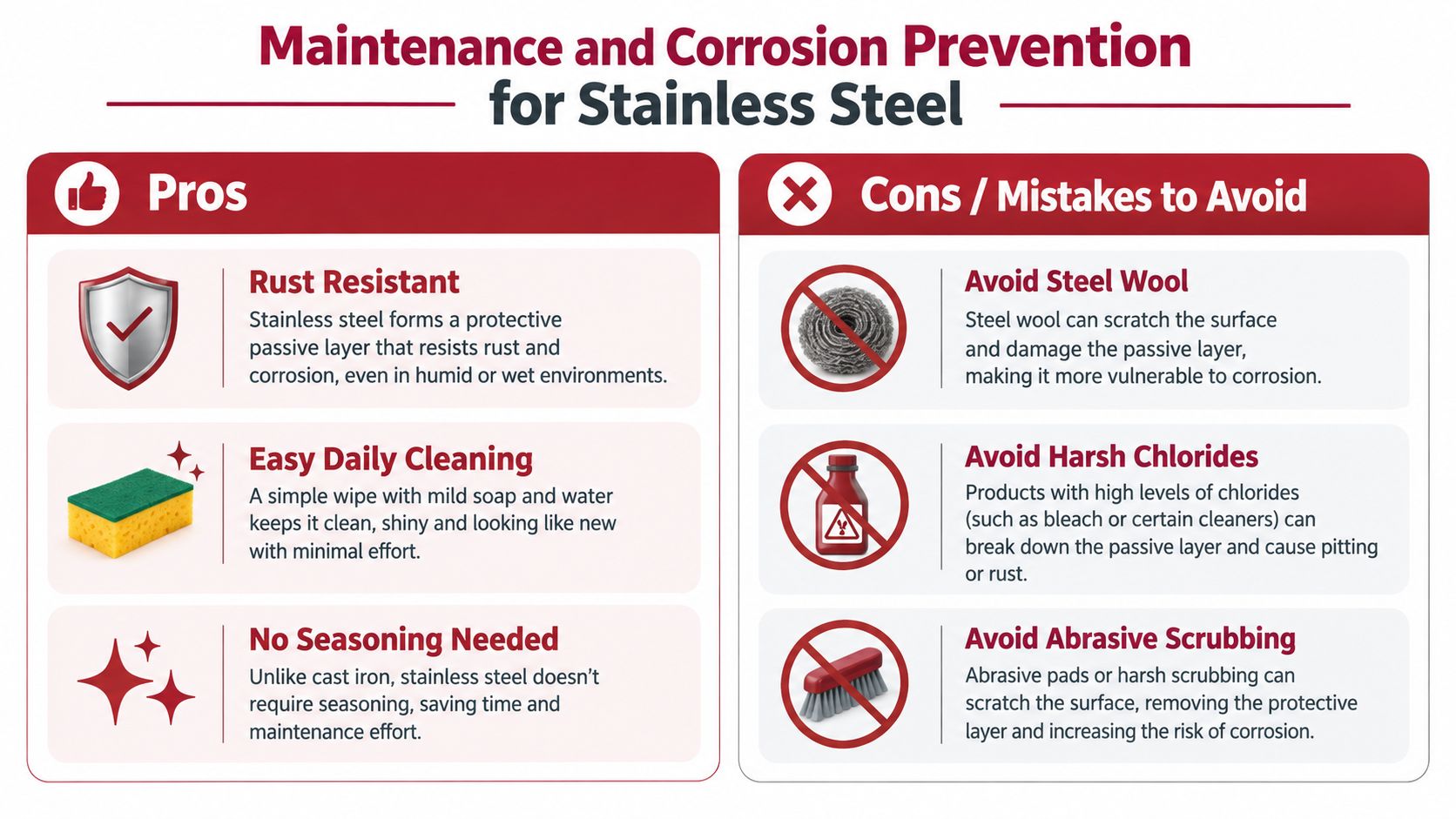
Stainless steel resists rust, but it is not immune to corrosion. Abrasion, harsh chemicals, trapped moisture, and particles from ordinary steel can damage or contaminate its protective surface. That makes carbon-steel cleaning advice a poor default: steel wool and aggressive sanding may suit a badly neglected carbon-steel plate, yet they can scratch stainless steel or leave behind ferrous fragments.
Clean the plate after it has cooled. Brush away loose crumbs, then wash it with a soft sponge or non-abrasive cloth and a mild cleaner suitable for food-contact cookware. Rinse thoroughly and dry every surface before storage. Sauce, salt, and moisture should not remain on the steel for extended periods.
Keep the surface clean without damaging it
Avoid steel wool, bleach, chloride-heavy cleaners, and abrasive scouring pads. These can scratch the finish, attack corrosion resistance, or transfer ordinary steel particles that later show up as rust-colored marks. Tasting Table's rusty pizza-steel guidance covers aggressive treatment for rusty pizza steel, but that should not become the routine for a stainless plate.
Store the steel separately from non-alloy steel tools, and remove any metal filings or debris before putting it away. Dry the area beneath and around the slab as well, since trapped moisture creates an avoidable corrosion environment.
Appearance alone does not identify rust. Heat tint, baked-on flour, oil residue, and mineral deposits can all discolor the surface without indicating structural failure. Begin with gentle cleaning and inspect the mark afterward. If you see corrosion or pitting, stop using the plate for food until it has been assessed or safely restored.
Stainless steel usually does not require the seasoning routine used for carbon steel. That reduces upkeep, but it does not eliminate cleaning discipline. For a clear comparison of seasoning and other steel-care methods, consult this pizza-steel seasoning guide.
When Stainless Steel Is the Right Choice for Your Setup
Choose stainless steel when storage and maintenance constraints outweigh the need for the fastest possible bottom-heat response. That makes it a practical fit for a backyard grill or BBQ in a humid setting, particularly when the plate may sit in damp storage or face changing weather. You give up some speed at the dough surface, so plan on a thorough preheat and use the grill's upper heat to finish the crust.
The material also suits bakers who want a metal surface without a seasoning routine. High-moisture dough, acidic toppings, and frequent washing are easier to accommodate when the plate does not depend on a maintained seasoning layer. Stainless still needs sensible cleaning and drying, but ownership is less demanding than with bare carbon steel.

Match the material to your priorities
Stainless makes the most sense when your setup includes:
- Outdoor storage: The plate can tolerate moisture exposure better than untreated steel.
- Low-maintenance cooking: Seasoning is not part of normal ownership.
- Controlled browning: You prefer gradual bottom coloration and can compensate with preheating and top heat.
- Mixed cooking environments: You will move the plate between an oven and a grill.
- Long-term practicality: A washable, durable tool matters more than extracting every possible blister.
Carbon steel remains the better choice for the quickest transfer of heat into dough and the strongest crisp-base response. Cordierite stone fits bakers who prefer ceramic baking behavior and accept more careful handling. The right choice depends on how you store, heat, and clean the surface, not on material labels alone.
Hans Grill offers the Pizza Steel PRO in an XL format for oven and barbecue use, with a pizza peel included. Treat it as one possible steel-based setup for indoor and outdoor baking. Before buying, check the material, thickness, dimensions, storage requirements, and the heat source you use. A stainless plate can work very well, provided your routine gives it enough time and top heat to recover its slower delivery to the dough.
Key Takeaways for Your Pizza Steel Decision
The central trade-off is simple: stainless steel offers durability and corrosion resistance, while carbon steel delivers heat more aggressively. Stainless steel's conductivity is much lower than carbon steel's, so it needs a longer preheat and benefits from placement nearer the oven's top heat source. Its thermal mass can store plenty of energy, but stored heat only helps when the plate can move that energy into the dough quickly enough.
Use this decision framework:
- Choose stainless steel for ownership simplicity. It fits cooks who want a metal surface without routine seasoning and who bake in environments where moisture control is difficult.
- Choose carbon steel for maximum crust response. It's the stronger technical choice when rapid bottom browning and blistering outrank easy maintenance.
- Choose cordierite stone for ceramic baking behavior. It suits bakers who want a stone surface and are comfortable with slower heat transfer and careful handling.
- Preheat stainless thoroughly. A short warm-up can leave the slab hot but underpowered at the dough interface.
- Use top heat strategically. Rack position, broiler assistance, and a well-managed launch help offset slower heat delivery.
- Clean stainless gently. Avoid steel wool, abrasive materials, bleach, and contact with non-alloy steel. Dry the plate before storing it.
Don't buy based on thickness or marketing language alone. Ask what material the plate uses, how it handles moisture, whether your oven can heat it adequately, and whether you're willing to trade a little bottom-heat speed for easier long-term care.
Hans Grill offers pizza tools for home ovens and backyard grills, including the Pizza Steel PRO, cordierite pizza stones, dough proofing boxes, and pizza peels. Visit Hans Grill to compare steel and stone options and choose the surface that fits your baking setup.


