

Baking Steel vs Stone Which Gives Better Crust
You've done everything right. The dough is fermented, the oven is fully heated, and the toppings are balanced. Yet the first slice bends instead of holding its shape, and the underside is pale where you wanted crispness and char. That frustration usually points to the surface beneath the pizza, not the mozzarella or sauce.
A baking steel and a baking stone both create a hot landing zone that a thin sheet pan can't match, but they don't deliver heat in the same way. Steel pushes energy into dough aggressively, while cordierite stone releases heat more gradually. That difference affects browning, oven spring, recovery between pizzas, handling, and even how forgiving your setup feels.
This comparison is for the first-time stone owner, the home baker considering an upgrade, and the grill owner deciding whether a metal plate is worth the extra weight. The useful question isn't which surface wins a bake-off. It's whether steel's faster heat transfer matters often enough to justify its cost, weight, storage demands, and learning curve. For frequent thin-crust baking, steel can be transformative. For casual cooks, a stone may deliver the better overall experience.
Table of Contents
- Introduction Why Your Pizza Bottom Matters More Than Toppings
- Understanding Baking Steel and Baking Stone Basics
- How Heat Transfer Really Works Between Steel and Stone
- Preheat Time Heat Recovery and Everyday Handling Compared
- Crust Results Oven Spring and Browning in Real Bakes
- Best Use Cases for Home Ovens BBQs and Different Bakers
- How to Choose Between Steel and Stone and Care for It
Introduction Why Your Pizza Bottom Matters More Than Toppings
Pull a pizza from the oven and the underside tells you immediately whether the setup worked. Good dough and fresh toppings cannot rescue a base that stays pale and soft. A properly heated surface supports the dough at once, setting it, browning it, and helping it lift before sauce moisture can soak inward.
Two identical dough balls can still produce different pizzas in the same oven. A weak surface lets the dough spread before it firms. A hot, heat-retentive slab starts cooking the base as soon as the pizza lands, producing anything from gentle golden crispness to darker blistering and a chewier bite.
The practical reality: Your oven's displayed temperature measures the air. It does not show how quickly the cooking surface transfers heat into the dough.
A stone and a steel both improve contact heat, but they suit different baking habits. Cordierite stone delivers heat steadily and more forgivingly. Carbon steel transfers it much faster, a useful advantage when a home oven cannot match the intense heat of a dedicated pizza oven. Steel's heat transfer can be roughly 18 to 20 times faster than stone's, but that advantage matters most with thin dough, repeated bakes, and a surface that needs to recover quickly.
Casual bakers may see diminishing returns. If you bake occasionally, easier storage, lower weight, and gentler heat can outweigh a darker, crisper bottom. If you bake several thin pies in one session, faster recovery and more forceful browning can justify steel's cost, weight, and storage demands.
| Criteria | Baking Steel | Baking Stone |
|---|---|---|
| Main material behavior | High thermal conductivity and rapid heat transfer | Lower conductivity and gradual heat delivery |
| Typical preheat | Often reaches baking readiness sooner in practical comparisons according to the comparison of heat behavior | Usually benefits from a longer, thorough preheat |
| Heat recovery after loading | Recovers heat quickly after a pizza is loaded | Recovers more gradually after losing heat to the dough |
| Typical crust character | Darker browning, stronger blistering, crisp underside | Even browning and a gentler crisp base |
| Main handling concern | Heavy and demanding to move while hot | Vulnerable to thermal shock and cracking |
| Best fit | Frequent thin-crust baking and back-to-back pies | Casual baking, bread, and forgiving everyday use |
The right surface depends on your baking frequency, dough style, oven, grill, and available kitchen space. Choose performance that matches how you bake, not the strongest result from a single bake-off.
Understanding Baking Steel and Baking Stone Basics
A baking stone and baking steel are thermal tools, not interchangeable slabs with different finishes. Both absorb heat during preheating and return it to the dough, but their materials control how quickly that energy reaches the contact surface.
Cordierite stone is a ceramic material commonly used for pizza stones. It heats steadily and releases energy in a controlled way. That gentler delivery can crisp the base without setting it too aggressively, giving beginners more room to adjust flour, sauce, hydration, and bake time. The composition and heat behavior of different stones are explained in this guide to what baking stones are made of.
Carbon steel responds more forcefully. Its dense metal plate moves heat quickly from the heated surface into the dough. That direct contact can produce a darker underside and stronger lift in an ordinary home oven, particularly with thin dough.
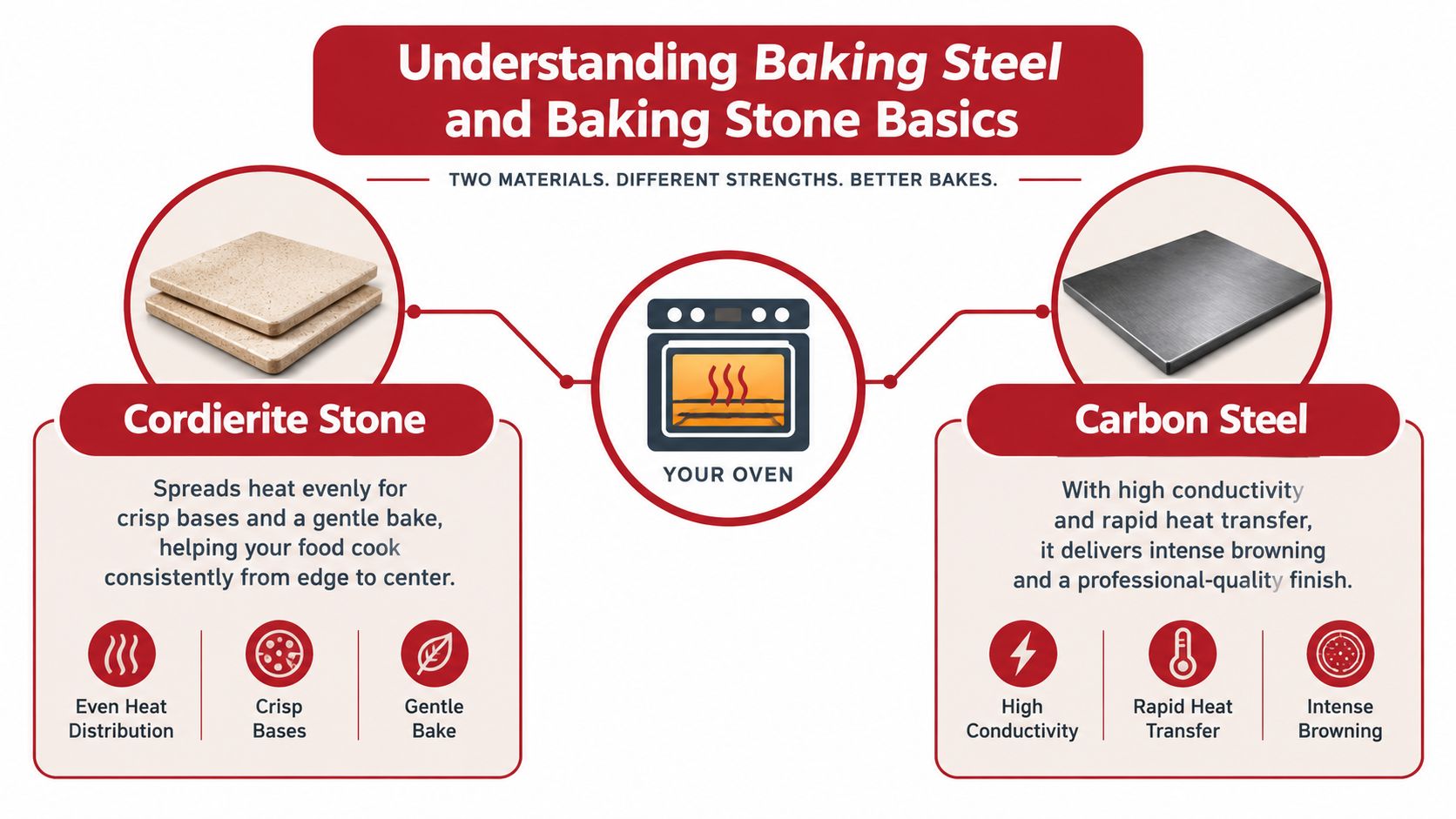
What each surface does in the oven
Preheating charges the slab. The oven warms the material, which then becomes the pizza's immediate heat source underneath. A stone responds softly, while steel delivers a sharper hit of heat, making dough thickness and oven position more important.
Load either surface before the oven heats. Warming only the exposed face leaves the slab unevenly charged and can compromise the bake. A rectangular format also provides a more useful landing area for pizza, bread, and other bakes than a small round surface.
Casual bakers should account for diminishing returns. Steel's heat transfer is roughly 18 to 20 times faster than cordierite's, but that advantage matters most when thin pies are baked repeatedly and the surface must recover quickly. If pizza appears on the menu only occasionally, a lighter stone's easier storage and gentler heat may outweigh steel's darker, crisper base. Steel also brings more weight, cost, and storage demand.
For beginners, food-safe construction and oven compatibility matter more than a clever label. A stone or steel intended for oven use may also suit a BBQ when the instructions allow it, although direct heat from below changes the cooking pattern. Placement then becomes part of the recipe.
The practical distinction is simple: stone moderates heat, while steel accelerates contact heat. Choose the surface that fits your baking frequency, dough style, oven, grill, and kitchen space.
How Heat Transfer Really Works Between Steel and Stone
Thermal conductivity explains why the two surfaces feel so different under dough. Baking steel typically measures around 45 to 58 W/m·K, while cordierite pizza stone measures around 1.5 to 3 W/m·K, according to the technical comparison from Baking Steel. In practical terms, steel transfers heat into dough roughly 15 to 20 times faster than cordierite.
The steel affects the bottom first, not the entire pizza at once. The top still relies mainly on circulating air and radiant heat from the oven. At the contact point, however, steel pushes energy into the dough quickly, while stone feeds it in more gradually.
The core difference: Stone stores and releases heat gradually. Steel creates a much faster heat flux at the dough's underside.
Thin pizza shows the contrast within the first 30 to 60 seconds of contact. As the base firms, the dough traps expanding gases and gains structure. Faster heat transfer can produce stronger oven spring, darker bottom browning, and more pronounced leopard spotting, especially in home ovens where the top may receive limited radiant heat. King Arthur Baking's comparison explains the connection between conductivity, heat flux, browning, and lift.
Stone's slower conductivity is useful control. A thick, sweet, oily, or heavily topped pizza may need more time for the upper crust to finish. On steel, the underside can darken before the center and toppings catch up. Steel therefore reveals weak points in dough thickness, hydration, and loading that a stone may conceal.
The same dough often needs different handling on each surface. Steel favors a well-stretched, evenly thin base and careful rack placement. Stone gives you more tolerance when the center is thicker or the topping load is generous.
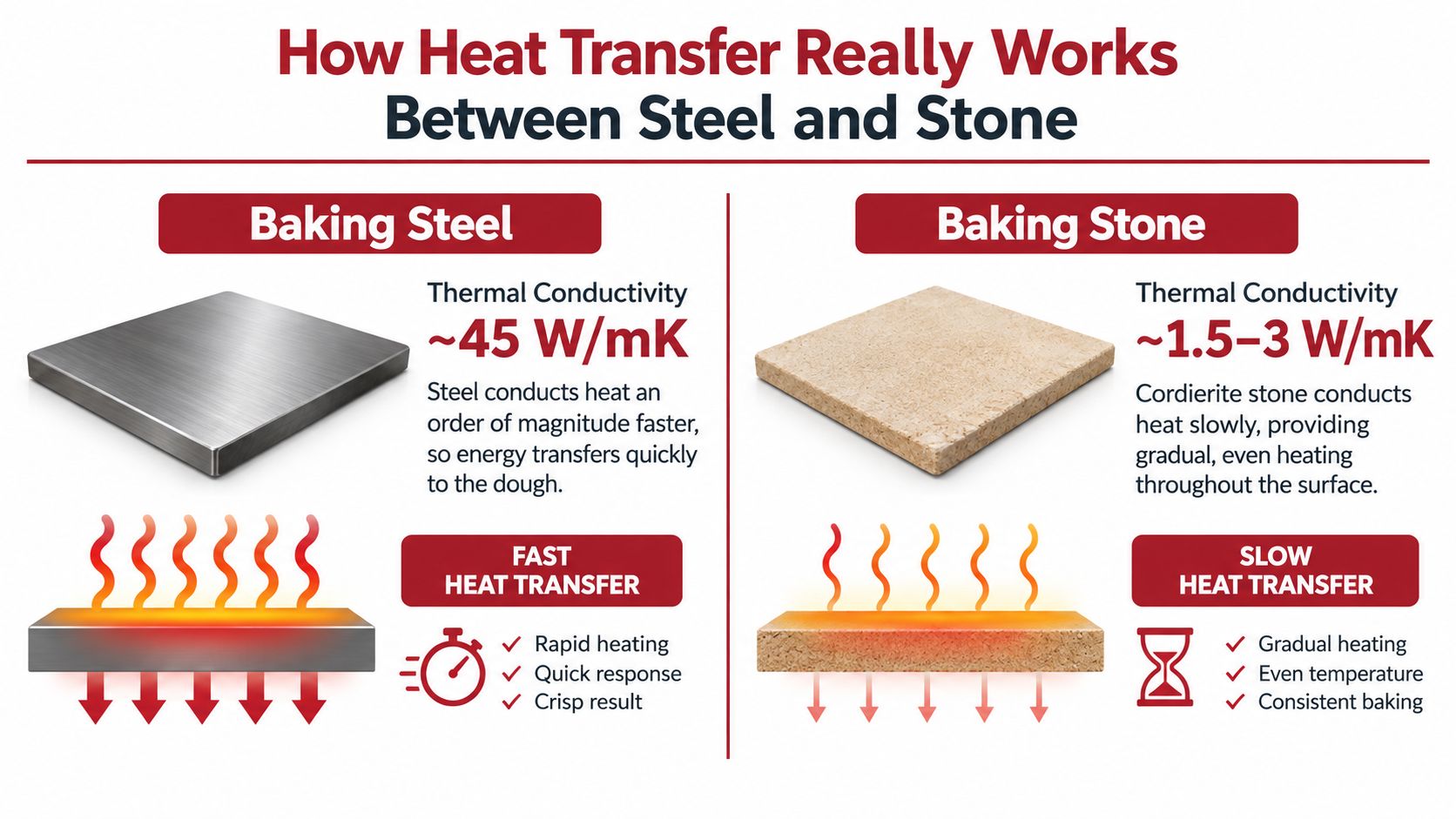
Material choice is only part of the result. Slab thickness, oven temperature, preheat quality, dough hydration, and distance from the heating element all change the bake. A thin or partly heated steel cannot deliver the same contact heat as a fully charged plate, and a stone in a weakly heated oven will not crisp the base as intended.
For format comparisons, Hans Grill's pizza steel thickness guide offers useful buying context. Thickness affects how much heat the steel stores, while conductivity controls how quickly that heat reaches the dough. Both properties matter.
Steel does not automatically win. Its faster heat transfer matters most for thin pies and repeated baking, where rapid contact heat and recovery improve the crust. For occasional baking, the extra weight, cost, and storage demand may outweigh that gain. Stone's restraint remains valuable when you want a forgiving surface for varied bakes.
Preheat Time Heat Recovery and Everyday Handling Compared
A weeknight pizza changes the calculation. If the oven is already running and you bake one pie, a stone's slower warm-up may be irrelevant. If you launch several pizzas in succession, steel's roughly 18 to 20 times faster heat transfer becomes more useful because the surface responds quickly after each launch.
Practical comparisons often place steel's preheat near 30 minutes, while a stone may need about 60 minutes to heat through. After loading, steel can recover in under 90 seconds, while a stone may require 4 to 6 minutes. Treat those figures as working guides, not guarantees. Oven strength, slab thickness, rack position, and bake frequency all change the result. For a stone-specific preparation check, see guidance on whether to preheat a pizza stone before loading.
Preheat and Recovery at a Glance
| Criteria | Baking Steel | Baking Stone |
|---|---|---|
| Preheat routine | Usually ready sooner | Requires a longer warm-up |
| After a pizza launches | Recovers rapidly | Needs more time to recharge |
| Back-to-back baking | Strong fit for several pies | Works, but pacing matters |
| Heat response | Immediate and intense | Gradual and forgiving |
| Moving while hot | Heavy and awkward | Easier to handle, but fragile |
| Main failure risk | Burns, dents, and difficult storage | Cracks from thermal shock or moisture |
The kitchen distinction: Steel saves time between bakes. Stone asks for more patience but is less demanding on the dough and oven setup.
Handling can outweigh recovery speed. A steel plate is heavy, and removing it from a hot oven requires a stable place to set it down, heat-resistant gloves, and enough counter space. Its weight will not cause ceramic-style shattering, but it can damage a surface or strain your hands if handled carelessly.
Stone requires different precautions. Sudden temperature changes can crack it, so keep a hot stone away from cold or wet surfaces and do not add moisture while it is hot. A cracked stone can remain usable if it stays stable, although launching and cleaning become less convenient.
Preheat time also shapes weeknight habits. Steel reduces the waiting period when pizza is an after-work decision. A stone makes more sense when the oven is already heating while you mix, stretch, and top the dough. For one occasional bake, the steel's speed may not justify its added weight, cost, and storage demands.
Storage is the quiet trade-off. A large slab needs a dry, protected home, and steel is especially inconvenient to remove after every use. Stone is easier to carry, but it still needs protection from knocks and moisture. The surface that stays accessible will produce better pizza than the theoretically faster one buried in a cabinet.
Crust Results Oven Spring and Browning in Real Bakes
Pulling a pizza from the oven reveals the practical difference quickly. Steel usually gives the underside a firmer bite, deeper browning, and more pronounced spotting. Stone tends to produce a dry, crisp base with a gentler color change, giving thicker or wetter dough more time to cook through.
For thin, Neapolitan-style dough in a home oven, steel's 18-20x faster heat transfer can matter when the upper heat is limited. The base sets rapidly, supporting oven spring at the rim while the center develops structure. That contact heat can create the contrast many home bakers want, a supple top above a crisp, spotted underside. Casual bakers may see diminishing returns, however. If you bake occasionally, the extra crust intensity may not outweigh steel's weight, cost, and storage demands.
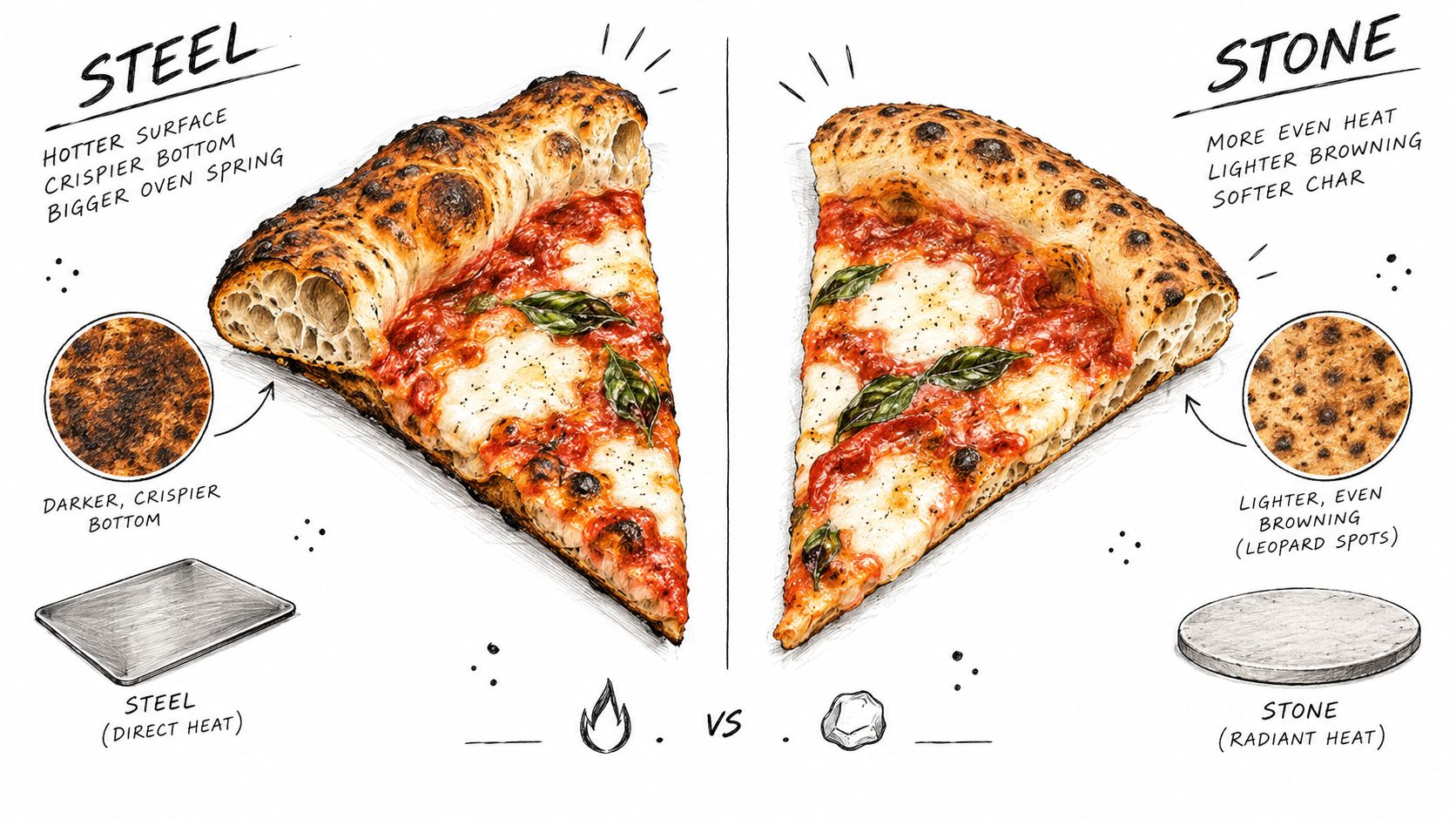
Thin crust rewards control
Steel performs best with evenly stretched dough and restrained toppings. A thin base leaves little mass between the surface and the crumb, so heat arrives quickly. The result can be dark spotting and a crisp underside that a stone develops more gradually.
The risk is an underside that finishes before the top. Move the steel higher if the lower element is overdriving the base, or lower the oven temperature when the bottom darkens too soon. A short parchment buffer can also delay direct contact while the dough sets.
Stone gives thin dough a wider margin for error. Browning may be less forceful, but the bake can stay balanced when shaping is inconsistent or the oven heats unevenly. That tolerance helps newer bakers avoid a pale center, torn dough, or scorched underside.
Thicker dough needs patience
American-style pizza, pan pizza, and heavily topped pies often need a more moderate transfer rate. The interior must cook before the bottom becomes too dark, so steel may require a higher rack, gentler heat, a brief parchment buffer, or a pan between the dough and the surface.
Stone often suits bread and thicker bakes because its response is less abrupt. It still supplies strong bottom heat, while giving the crumb more time to develop color without racing toward a burnt base.
Neither surface fixes poor shaping or a wet center. Match surface intensity to dough thickness, then adjust rack position and bake time. Steel matters most when rapid heat delivery solves a real oven or workflow problem. For an occasional baker, stone's lower handling burden may produce the better overall choice, even if the crust gains less dramatic browning.
Best Use Cases for Home Ovens BBQs and Different Bakers
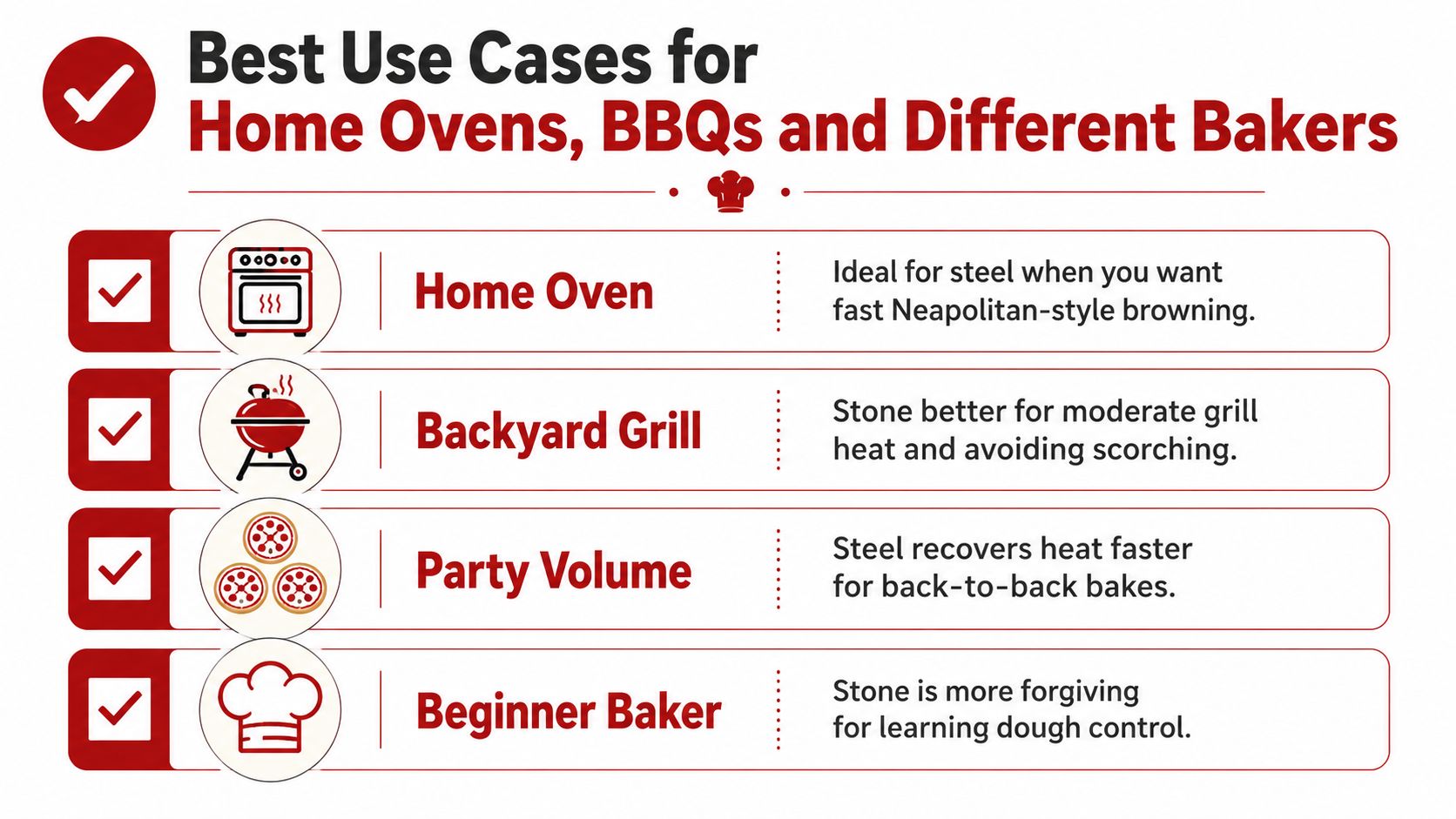
A thin pizza that browns slowly in a home oven can come off crisp but pale. A steel changes that result quickly, while a stone gives you more room to correct uneven shaping or heat. The right choice depends on the dough, baking frequency, and the space available between sessions.
Home oven priorities
Steel makes the biggest difference for frequent thin-crust baking. Its 18 to 20 times faster heat transfer can strengthen bottom browning and shorten the pause between launches, especially in an oven that struggles to deliver heat to the base. Place it high enough to balance top and bottom heat, particularly when the lower element runs aggressively.
For an occasional baker, those gains can have diminishing returns. A stone may produce a slightly less forceful underside, but it is easier to justify when storage, lifting, and forgiving performance matter more than the last step in crust intensity. It also suits a baker whose dough thickness and toppings change from one bake to the next.
Backyard grill conditions
A grill concentrates heat below the cooking surface. That can make steel scorch a delicate base before the toppings finish, particularly over direct heat. Stone is often easier to manage while you learn the grill's hot spots and the best position for the slab.
Use indirect heat where possible and warm the surface thoroughly before launching. Keep the transfer clean. Sticky dough can remain on the peel too long, then tear or fold during the move. Dust lightly, stretch close to launch time, and keep sauce from pooling in the center.
Match the tool to the baker
Stone gives beginners useful crispness without exposing every handling mistake as a dark underside. As dough control improves, steel becomes more appealing for deeper browning and repeated pizzas in one session.
Party hosts can benefit from steel's faster recovery between pies. A casual baker making pizza occasionally may gain less from that speed than they lose to a heavy plate that needs permanent storage. That trade-off matters more when the current stone already produces a satisfying crust.
Thin-crust enthusiasts will usually value steel's intensity in a home oven. Bakers who make bread, thicker pizza, and mixed recipes may prefer stone's steadier response. Hans Grill offers cordierite stone formats and its Pizza Steel PRO for oven or grill use, so choose according to material behavior and workflow rather than expecting one surface to suit every kitchen.
How to Choose Between Steel and Stone and Care for It
Choose steel when you bake often, prefer thin crust, make several pizzas in one session, or want darker bottom browning. Its 18 to 20 times faster heat transfer than cordierite stone matters most in a home oven that struggles to deliver strong heat from below. For an occasional baker, that speed may bring smaller gains than expected, especially if the current stone already produces a crust you enjoy.
A casual baker should weigh diminishing returns. Steel can shorten the wait between pizzas and push more heat into the dough, but its weight, cost, and storage demands remain part of every bake. If taking it out or putting it away makes pizza night less appealing, the extra crust performance has little practical value.
Choose stone when easier storage, lower handling demands, and forgiving performance matter more than rapid recovery. A quality cordierite slab works for pizza and bread, but protect it from thermal shock. Heat and cool it gradually, keep it dry, and never wash a hot stone or set it on a cold, wet counter.
Steel needs carbon-steel care. Dry it thoroughly after cleaning, follow the manufacturer's seasoning instructions, and store it away from moisture to prevent rust. It is not stainless cookware, and a damp storage area will work against the seasoning.
A simple decision test
- Bake frequently: Pick steel when repeated pizzas are normal.
- Bake occasionally: Pick stone when convenience and storage come first.
- Chase thin-crust char: Steel supplies stronger bottom heat.
- Bake mixed styles: Stone provides a gentler baseline.
- Use a hot grill: Start with stone if scorching is the main concern.
- Have limited storage: Choose the surface you can safely access and put away.
Preheat the chosen surface properly, then change one variable at a time. Adjust rack position before blaming the dough, and treat the first bake as calibration.
If you are comparing cordierite stone with conductive steel, Hans Grill lists oven and BBQ-ready tools, including the Pizza Steel PRO and rectangular stones. Choose according to bake frequency, crust preference, and available storage, then use the surface consistently before judging the result.


