

Oven Liners Aluminum
Aluminum oven liners look like a cleanup shortcut, but the sheet meant to protect your appliance can create a fire hazard, damage the oven surface, and interfere with ventilation. GE warns that foil can trap heat, block passages, and, in a gas oven, reduce ventilation enough to create a carbon monoxide poisoning risk. (GE's oven safety guidance) That makes the professional kitchen rule simple: don't treat foil as a permanent floor covering.
Pizza makes the problem even clearer. High-heat baking depends on controlled airflow and predictable heat transfer. A loose sheet of foil on the oven floor gives you neither. Use aluminum foil for a specific cooking task, not as an improvised oven liner.
Table of Contents
- Rethinking the Role of Aluminum Oven Liners
- Understanding How Aluminum Liners Function
- The Critical Safety Concerns of Using Liners
- Determining Safe Placement and Usage
- Exploring Better Alternatives for Your Oven
- Essential Cleaning and Maintenance Tips
- Final Thoughts on Safe and Smart Baking
Rethinking the Role of Aluminum Oven Liners
An aluminum sheet looks like an easy shield against grease, cheese, and sauce. Spills land on the foil, you lift it out, and the oven appears clean.
An oven is a designed heat system, not an empty box. Heating elements, vents, air passages, enamel surfaces, and circulation all work together. A full sheet of aluminum changes that balance. Cleanup is instant. The operational risk may surface later through uneven cooking or appliance damage.
Convenience is not the same as protection
A liner on the oven floor can reflect and concentrate heat rather than just catching mess. Whirlpool's guidance on aluminum foil in ovens warns that foil placed there can intensify heat enough to scratch or chip porcelain finishes, melt, and permanently damage the appliance.
A few minutes of cleaning are a better trade than damaging the cooking chamber. Place a sheet pan beneath food when the oven manual permits it, so the pan catches drips without becoming part of the oven floor. Use a covered baking dish for bubbling sauces. Both options contain spills while keeping foil away from the oven's built-in heat path.
Kitchen rule: Use foil to cover food or line approved cookware. Do not use it as oven flooring.
Pizza exposes the weakness of liners quickly. A stone or steel needs stable heat from below, with predictable radiant energy and airflow around the bake. Foil on the floor introduces another reflective surface and can change that balance. Drips beneath a pizza may also smoke or burn, leaving residue near high-heat equipment.
Professional pizza work depends on repeatable conditions. Keep the oven floor clear, place the pizza on the intended stone or steel, and handle spills with cookware designed to contain them. A clean oven matters, yet preserving controlled heat matters more.
Understanding How Aluminum Liners Function
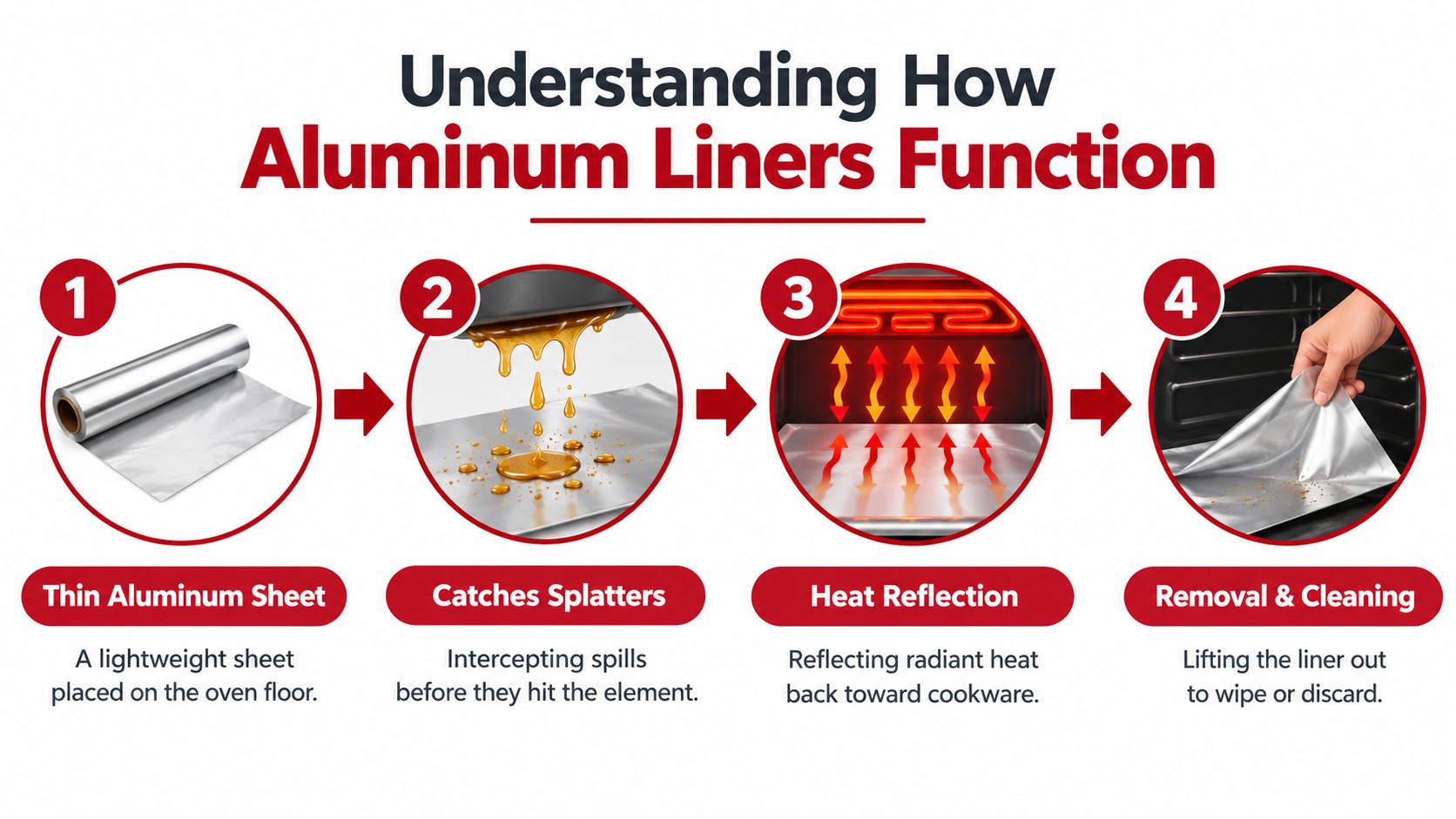
Aluminum's reflectivity determines how an oven liner behaves. The sheet can redirect radiant heat toward the oven floor, alter the heat pattern around cookware, and change how quickly food browns. Placement therefore determines whether foil supports a controlled bake or interferes with the oven's design.
Aluminum also conducts heat across its surface. A loose sheet has no rigid edge, drainage channel, or built-in ventilation. It can wrinkle, shift, tear, or move closer to a heating element during cooking. That makes it very different from an oven-safe tray or baking vessel built to contain food and drippings.
What the liner changes
A foil sheet creates a broad reflective surface inside the appliance. Across the oven floor, it can trap and redirect heat near the surface and heating components. Whirlpool's manufacturer guidance warns that bottom lining can damage the oven finish or melt the foil. (Whirlpool's explanation of floor damage)
Use foil only in a contained role:
- Covering food: A loose foil tent slows browning while the dish continues to bake.
- Lining a baking sheet: The sheet catches drips and keeps foil away from the oven's built-in surfaces.
- Wrapping a prepared dish: Foil helps retain moisture when the recipe and appliance instructions allow it.
- Protecting a crust edge: A narrow shield around a pie edge serves a different purpose from covering the oven interior.
Pizza makes the difference clear. Foil beneath a pizza can soften the crust and interrupt direct heat transfer. Set the dough on the intended stone, steel, or baking pan. If the oven manual permits a drip-catching tray, place it on a separate rack with clear airflow.
Professional pizza baking depends on repeatable heat from below, predictable radiant energy, and open circulation around the bake. Keep the cooking surface clear, contain spills in approved cookware, and reserve foil for jobs it can perform without altering the oven's heat path.
The Critical Safety Concerns of Using Liners
Aluminum foil becomes a safety problem when it covers a vent, slot, passage, or heating element. These openings manage combustion, ventilation, and heat movement. Covering them restricts the airflow the appliance needs to operate safely, a serious concern in any oven used for high-heat pizza baking.
Gas ovens demand extra discipline
GE warns that foil over slots, holes, or passages in a gas oven can reduce ventilation and create a carbon monoxide poisoning risk. Trapped heat and fire are further hazards. Its guidance also requires foil to remain at least 1½ inches from oven walls to preserve heat circulation. (GE's manufacturer safety instructions)
Treat those instructions as operating limits. Never line a gas-oven floor, cover bottom vents, or place foil around burner openings. A metallic sheet can redirect heat toward components that were not designed to receive it. If foil has dropped into a passage or fused to a surface, stop using the oven and follow the manufacturer's service instructions. Do not scrape at hot or damaged parts.
Electric ovens carry their own risks. Contact between foil and a heating element can damage the element or the foil. In a convection oven, foil that blocks circulation can produce uneven baking and send heat into areas without adequate protection. That matters when a pizza requires stable, predictable heat rather than a disrupted air path.
If the foil changes airflow, touches an element, or covers an opening, it's in the wrong place.
Contain the mess around the food. Cover a casserole, line an approved baking tray, or use an oven-safe pan with a lid. These choices protect the oven's heat path and give pizza dough the direct, consistent heat needed for a properly baked crust.
Determining Safe Placement and Usage
There's no universal permission slip for aluminum liners. The answer depends on the oven design, the cooking mode, the rack position, and the manufacturer's instructions. Recent guidance treats liners as suitable only for some appliances and placements, never as a full floor or full-rack covering. (Practical guidance on oven liner placement)
Use this decision process before adding foil:
- Read the appliance manual. Search its instructions for aluminum foil, oven liners, vents, racks, and self-cleaning. If the manual prohibits foil in the cavity, follow that rule.
- Reject the oven floor. Don't place a foil sheet directly on the bottom, even if the goal is only to catch a small spill.
- Inspect the surroundings. Keep foil away from heating elements, burner openings, convection fans, vents, and oven walls.
- Avoid full rack coverage. A sheet that blocks most of a rack can interfere with circulation, especially in convection mode.
- Contain the mess in cookware. Put foil on an approved baking sheet or use a covered roasting dish rather than creating a loose interior liner.
- Remove it after cooking. Temporary use is easier to control than leaving foil in the oven between bakes.
Pizza needs a clear rack and stable heat below the dough. For a reliable bake, follow the placement guidance in this pizza stone guide for oven use, and keep foil out of the path between the heat source and the baking surface.
Exploring Better Alternatives for Your Oven
The best replacement for an aluminum oven liner depends on the job. If you're trying to catch drips, use an oven-safe tray positioned according to the appliance manual. If you're trying to improve pizza, use a baking surface that is designed to store and transfer heat, not a reflective sheet intended for wrapping food.
Match the tool to the task
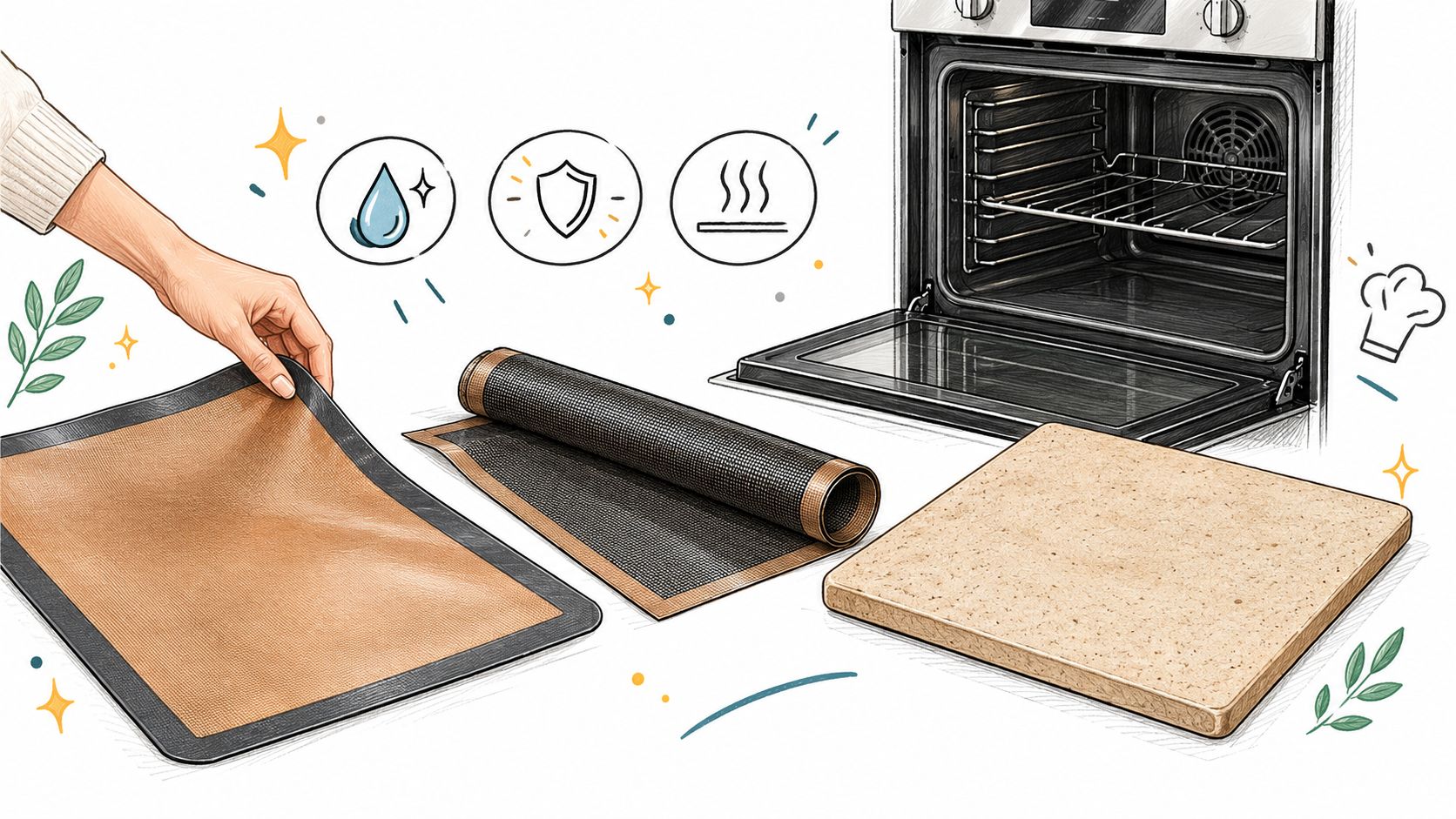
For spills, place a sturdy oven-safe baking sheet on a lower rack where it won't obstruct vents or heating paths. It gives grease a defined surface and can be removed once cool.
For cookies and pastries, use parchment on a baking sheet when the recipe and paper instructions allow it. A silicone baking mat can be reusable, but check its temperature and appliance compatibility before use. Never assume a product marketed as an “oven liner” belongs on the oven floor.
For pizza, choose a cordierite stone or baking steel. A stone provides a stable baking surface and supports a crisp base, while a steel transfers heat aggressively and suits cooks chasing strong browning. This comparison of baking steel versus stone can help you choose based on the crust you want.
For home ovens and grills, the Rectangular Pizza Stone from Hans Grill is one available cordierite option, designed to distribute heat for pizza baking. It belongs on the rack as a baking surface, not on the oven floor as a spill liner.
Essential Cleaning and Maintenance Tips
Skip the foil floor and control spills at the source. Place pizzas, pies, and casseroles on stable cookware, and don't overfill dishes that may bubble during baking. If food does spill, let the oven cool fully before removing loose residue with a non-abrasive scraper or cloth.
For baked-on grime, use the cleaning method approved in your owner's manual. A damp cloth and suitable oven cleaner may be appropriate for some interiors, while harsh abrasives can damage finishes. Don't pour cleaner into vents, burner openings, or heating assemblies.
Pizza stones need their own routine. Let the stone cool naturally, brush away dry crumbs, and use only the cleaning method recommended for its material. This pizza stone cleaning guide explains why soaking or using unsuitable cleaners can compromise the baking surface.
Inspect the oven periodically for foil stuck to the floor, damaged enamel, blocked passages, or residue near elements. Deal with small messes early, before they become smoke and baked-on carbon.
Final Thoughts on Safe and Smart Baking
Aluminum oven liners solve a small cleaning problem by creating a larger appliance problem. Don't line the oven floor, don't cover a full rack, and don't let foil touch heating elements, vents, burner openings, or oven walls. Gas ovens require particular caution because blocked passages can reduce ventilation and create a carbon monoxide risk.
Use foil where it belongs, on food or approved cookware. Use a baking sheet to catch drips, a suitable silicone mat or parchment sheet for compatible baking tasks, and a dedicated stone or steel for pizza. Your oven will operate more predictably, and your crust will benefit from a stable baking surface instead of a loose layer of metal.
Before your next bake, remove any permanent foil liner, check the appliance manual, and set up the right tool for the food. That one change protects the oven and gives your pizza a better chance of developing the crisp, properly browned base you're after.
Hans Grill offers pizza stones, baking steels, proofing boxes, and pizza tools for home ovens and backyard grills, giving you safer purpose-built options than an aluminum floor liner. Visit Hans Grill to choose the right baking surface and sharpen your pizza setup.


