

10 Ideas for the Ultimate Pizza Party for Kids
Planning a pizza party for kids can feel like a fast track to sticky counters, uneven slices, and a house that looks like a flour storm moved through it. The good news is that the whole thing gets a lot easier once you stop treating pizza night like a guess and start treating it like a simple system. Kids are already primed for pizza, too, since restaurant data shows children under 13 are making nearly 8 billion restaurant visits in a year and 17.2% of those visits include pizza as the ordered dish, which puts pizza right where kids already are at the table NPD/NRN coverage.
The best parties I've hosted or eaten my way through had two things in common. The food was easy to manage, and the kids had something to do besides hover around the oven. That lines up with birthday research showing 34% of parents in a large multi-country study said more games and activities would improve their child's last birthday party more than anything else, while only 23% said better theme or decorations would matter most Chuck E. Cheese birthday research.
A pizza party works because it's flexible. You can keep it simple for a small group, or turn it into a hands-on cooking lesson that feels a lot more memorable than boxed slices on a paper plate.
Table of Contents
- 1. DIY Pizza Station with Build-Your-Own Toppings Bar
- 2. Pizza Decorating Contest with Themed Bases
- 3. Pizza Stone Temperature Learning Game
- 4. Themed Pizza Box Design Station
- 5. Pizza Topping Tasting and Preference Voting Game
- 6. Pizza Peel Relay Race and Baking Challenge
- 7. Crust Comparison Taste Test and Crust-Making Workshop
- 8. Pizza Decorating with Edible Art Supplies Savory Edition
- 9. Dough Toss and Spinning Demo with Practice Challenges
- 10. Pizza and Movie Night with Ambiance Decorations
- Comparison of 10 Kids Pizza Party Activities
- Your Recipe for a Perfect Pizza Party
1. DIY Pizza Station with Build-Your-Own Toppings Bar
A build-your-own station keeps a pizza party for kids personal without turning you into the afternoon short-order cook. Each child gets a dough round or flatbread base, then picks sauce, cheese, and a few toppings from small bowls. That setup helps everyone leave with a pizza they'll eat, which matters when kids have strong opinions about what belongs on top.
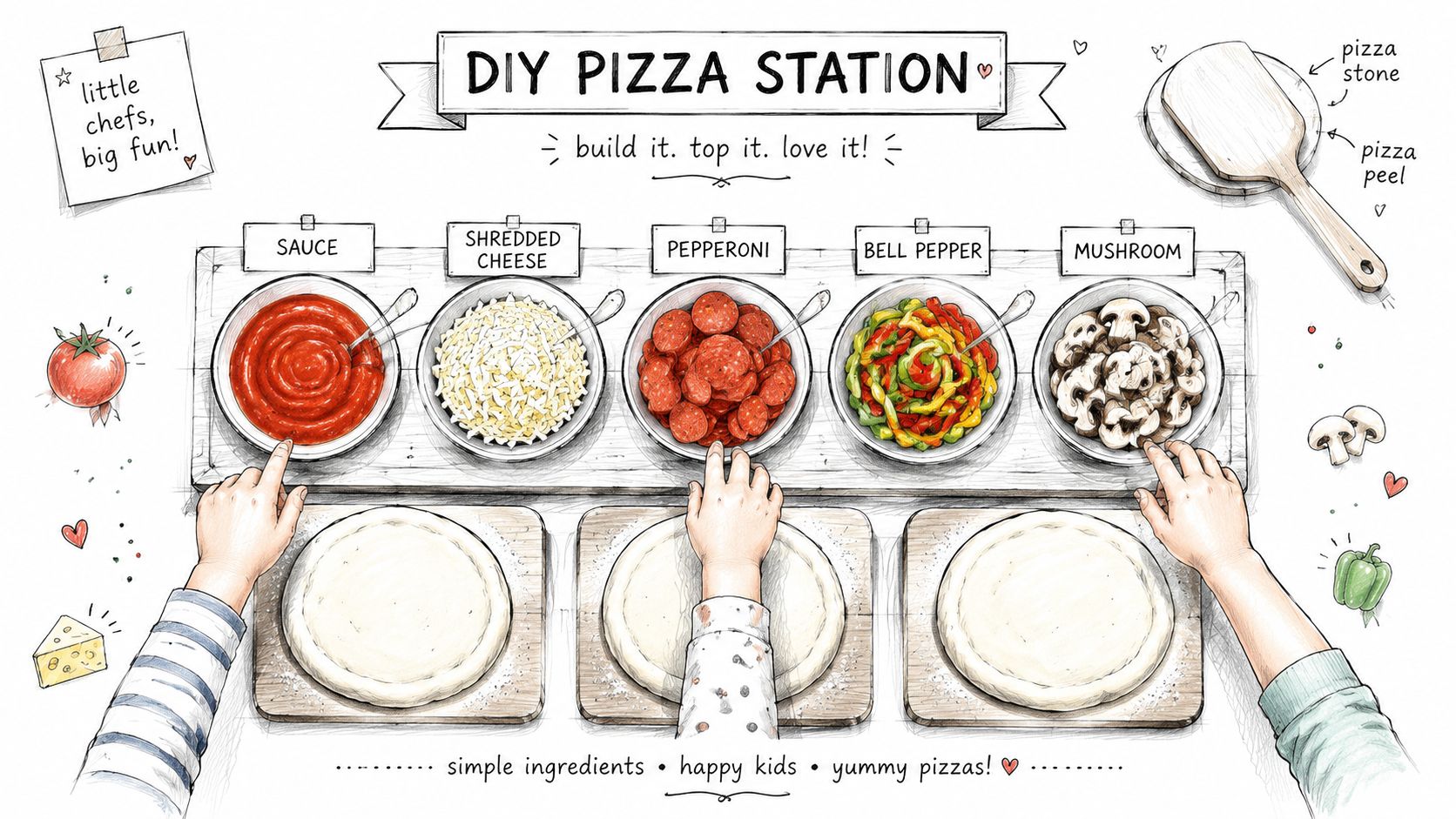
The station runs better when the order is obvious. I use dough, sauce, cheese, toppings in that sequence because kids follow it fast, and it cuts down on extra handling at the table. If you're baking on a stone or steel, use a proper preheat so the base firms quickly and the crust stays crisp instead of going soft.
A simple layout also helps kids make smarter choices. Keep the sauce in one spot, the cheese in another, and the toppings grouped by type so they can see their options without crowding around the table. If you want a good refresher on why heat management matters, Hans Grill's guide on how to preheat a pizza stone for better baking is a useful reference before party day.
Keep the line moving
The smoothest parties are the ones where the toppings are already portioned and labeled. Small bowls with serving spoons work better than big shared containers, especially when sauce starts to drip and everyone wants a turn at once.
- Label every bowl clearly: It helps kids move faster and makes allergen ingredients easier to spot.
- Pre-portion sticky ingredients: A little prep keeps the table from turning into a mess halfway through the first pizza.
- Use pizza peels for transfers: They make the move to the hot stone or steel safer and easier.
- Wipe hands early and often: Wet wipes near the station save your counters and your patience.
If you want a plant-based topping idea list that works well in a mixed crowd, Hans Grill has a useful guide on plant-based pizza toppings. That kind of planning pays off because kids notice when the choices feel thoughtful instead of random.
Practical rule: a pizza station works best when the adult prep happens before the kids ever walk in the room.
2. Pizza Decorating Contest with Themed Bases
A decorating contest gives kids the feeling of making edible art, which is half the fun at this age. Instead of raw dough, use pre-baked bases or personal crusts and let them build dessert pizzas with chocolate sauce, fruit, sprinkles, whipped cream, and candy. The format keeps things light and fast, which is perfect when you want an activity that doesn't depend on oven timing.
The best part is that no one gets stuck with a bad result. Kids can go bold and messy, or neat and symmetrical, and both versions can win something. That makes the contest less about being the “best cook” and more about creativity, which is exactly the kind of friendly energy a party needs.
Make judging feel fair
I'd avoid a single winner model, because it tends to shut quieter kids down. Instead, create categories like most colorful, neatest, silliest, and most surprising, then let every child hear their name called at least once.
- Use sturdy bases: Slightly cooled crusts hold up better under toppings.
- Keep toppings quick-setting: Anything runny turns into slide art fast.
- Offer simple tools: Small plates, spoons, and food-safe markers make decorating easier.
- Build in a showcase moment: A quick table walk lets kids admire each other's creations before eating.
This one works especially well as a dessert round after savory pizza, or as an indoor activity when the weather turns bad and you need something low-stress. It also plays nicely in classrooms, camps, and playdates because the setup is portable and the cleanup is straightforward.
3. Pizza Stone Temperature Learning Game
Kids usually like playing scientist, and pizza gives them a simple way to see that heat changes the result. With adult supervision, a non-contact infrared thermometer becomes a hands-on teaching tool. Let the kids guess which part of the stone is hottest before anyone checks the surface reading. The bake turns into an observation game instead of a long wait for dinner.
What makes this activity work is that it teaches something real without feeling like homework. Kids can compare a crust baked on a properly preheated stone with one from a stone that did not get enough time, then talk through why the texture changed. If you are using a Hans Grill stone, this is a natural moment to explain why even heat distribution matters and why preheating is part of the process, not an optional extra, as outlined in Hans Grill's guide on why you should preheat a pizza stone.
Turn the oven into a lesson
A simple chart helps the activity stick. Have children write down their guesses before baking, then compare them with the actual result after the crust comes out crisp and browned.
Practical rule: kids remember the bake when they can connect the crust's look to the stone's heat.
For a family with one or two older kids, this can become a small STEM moment without turning the party into class time. For a larger group, it works better as a side station while other pizzas are being topped or boxed. The science stays real, the pace stays playful, and dinner still comes together on time.
4. Themed Pizza Box Design Station
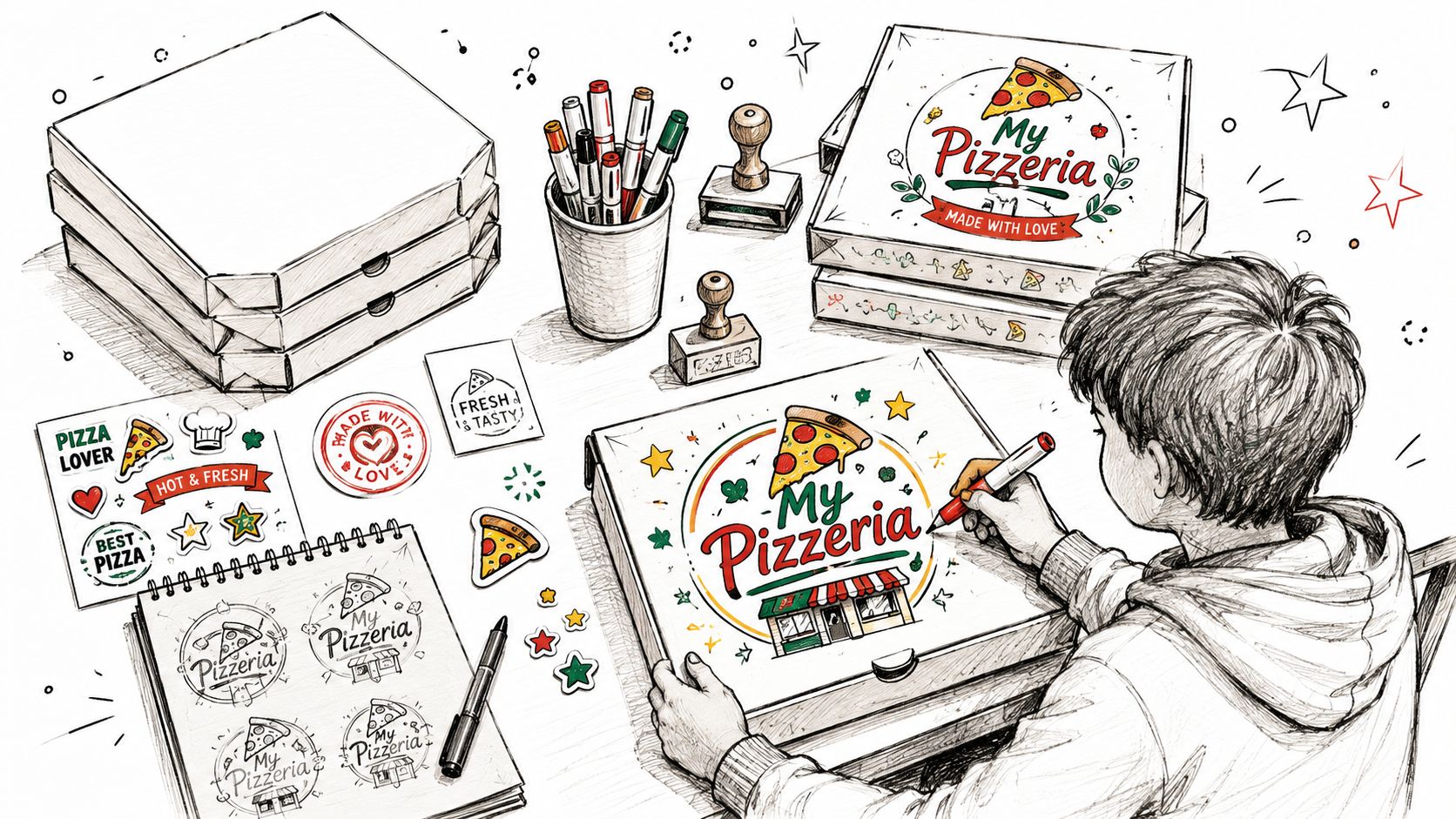
A blank pizza box is a lot more useful than people think. Hand a kid a plain box, a pile of markers, stickers, and stamps, and you've got twenty minutes of focused quiet that feels creative instead of structured. It's a great filler while dough rests or pizzas cool, and the finished boxes double as takeaway containers or keepsakes.
Thematic designs work especially well if your party already has a story. A superhero pizzeria, underwater pizza palace, or backyard restaurant theme gives kids a starting point without boxing them in. I've seen this work at birthdays where the children didn't know each other well, because drawing side by side gives them something to talk about without forcing conversation.
Give them a reason to care
Kids tend to do better when their artwork has a job. If they know the box will hold their leftovers, they put more effort into the design and treat it like something valuable instead of disposable craft paper.
- Provide templates: Simple outlines help younger kids get started.
- Offer strong colors: Bold markers and stickers show up well on cardboard.
- Seal finished art carefully: Clear tape protects the box if you plan to transport it.
- Take photos before packing: The designs are usually too good to lose in the shuffle.
This one pairs well with a pizza box “gallery walk.” Kids can hold up their designs, explain their imaginary restaurant, and compare logos before the food comes out. It doesn't need a prize to feel rewarding, although a small shout-out for the most creative design never hurts.
5. Pizza Topping Tasting and Preference Voting Game
A tasting game is a practical way to head off the last-minute, “I don't like that topping” scramble. Put out tiny samples of a few topping combinations, then let the kids vote with cards, stickers, or a simple slices rating scale. It works as a food lesson, a bit of crowd research, and a round of entertainment at the same time.
This format helps a lot with mixed-age groups or a pile of cousins who all want different things. Instead of guessing which toppings will please everyone, you get real preferences from the kids who will eat the pizza. They also start to notice that flavor pairing matters, which makes the final pizza feel more intentional and less random.
Make the tasting feel playful
You do not need a giant spread to make this work. Four to six small samples are enough, as long as they are clearly labeled and spaced out with water in between.
Standout point: small bites usually get better feedback than big ones, because kids are more willing to try something unfamiliar when it does not feel like a commitment.
One wild-card combination keeps the table lively. A good mix of familiar and adventurous choices gives the game some energy without overwhelming shy eaters. I'd also keep the final vote visible, because children love seeing a group decision turn into the actual party pizza.
The practical payoff is hard to miss. The winning topping or sauce becomes the party's shared choice, and you are less likely to end up with a tray full of pies nobody wants to eat.
6. Pizza Peel Relay Race and Baking Challenge
A peel relay race gives the party a burst of energy without turning the kitchen into a circus. Kids race practice pizzas, ideally lightweight foam or cardboard circles, from one station to another using proper peels, then place them in the marked oven zone with balance and control. The setup keeps the action lively while keeping hot food out of little hands.
The activity works best as a skill demo, not a free-for-all. Show the hand position first, keep the movement short, and place a few spotters around the “oven zone” so kids do not bump into one another. If you have a proper peel, using one that matches the size of your baking surface makes the practice feel more realistic and easier to control.
Keep the challenge tight
Short heats usually work better than long ones. They keep attention high and avoid the drag that comes from waiting around too long.
- Use practice discs first: Foam or cardboard helps kids learn the motion.
- Mark the oven area clearly: Tape or cones make the target obvious.
- Reward control, not just speed: A clean transfer matters more than a sprint.
- Keep adults on the hot side: Kids should stay with the practice zone.
For more detail on peel handling, Hans Grill's guide on how to use a pizza peel is a solid reference point. Clear instruction matters here because the game should build confidence, not create a near-miss with a hot oven.
7. Crust Comparison Taste Test and Crust-Making Workshop
A crust tasting gets kids interested fast, because they are being asked to vote with their mouths. Serve small samples of different crust styles, then let the group describe what they notice. Thin and crispy, thicker and chewier, and a stuffed-edge version all give children a clear way to compare texture, not just toppings.
Keep the language simple and specific. “Crunchy,” “soft,” “airy,” and “chewy” are easy words for kids to use, and they match what changes from one pie to the next. If you use the same stone for each crust, you can also show how steady heat helps keep the results consistent across bakes.
A short dough demo makes the lesson stick.
Let kids touch a little raw dough, shape a piece, and then compare it with the baked sample later. The difference between sticky dough and finished crust teaches more than a lecture ever could. If you want that contrast to come through clearly, a well-heated stone helps the crust set the same way each time, and Hans Grill's guide on how to use a pizza peel is useful when you are moving shaped dough without stretching it out of shape.
Practical rule: if kids can touch, taste, and vote, they'll remember the lesson longer.
This station works well at home with one or two enthusiastic little bakers, and it also fits food science events and pizza camp sessions. The goal is not to turn every child into a dough expert. It is to help them notice that crust texture comes from preparation, heat, and timing, not luck.
8. Pizza Decorating with Edible Art Supplies Savory Edition
Savory pizza art feels a little more grown-up, which makes it a good fit for older kids who think the dessert station is for little kids. Use fresh herbs, microgreens, edible flowers, cheese crisps, and a light balsamic drizzle to finish personal pizzas after they've baked. The result looks polished, and the kids get to think like plating-minded chefs for a minute.
I've found that this one works best when you keep the palette restrained. Too many toppings turn the pizza into a pile, but a few well-placed ingredients make the dish feel intentional. That gives kids a useful lesson, because it shows that restraint can be part of creativity too.
Teach the finish, not just the build
A lot of home pizza parties stop at topping, but restaurants do not. The final garnish matters, and older kids usually enjoy learning that the last few touches change both the look and the flavor.
- Use hardy herbs first: Basil and oregano are easier for beginners to place.
- Pre-portion delicate items: Small bowls help prevent waste.
- Encourage spacing: A sparse, tidy finish often looks better than a crowded one.
- Use tweezers or small tongs: They help with precision and make the moment feel special.
This idea works well for farm-to-table themes, culinary clubs, or a special birthday dinner where the kids want something that feels a little fancy. It is still pizza, but it has enough style to feel like an upgrade.
9. Dough Toss and Spinning Demo with Practice Challenges
A dough toss demo brings instant energy to a pizza party for kids. Children lock in quickly when they see dough lift, stretch, and turn in the air, and the activity does not need much setup to feel memorable. A short adult demonstration followed by practice rounds with smaller, safer dough pieces or foam circles keeps the pace fun and controlled.
Start slowly if you are teaching the motion. Kids usually do better when they understand that control matters more than height, and that a smooth toss is safer than a dramatic one that tears the dough. The handling side of the process also benefits from clear technique, especially if you are pairing the demo with Hans Grill's how to use pizza peel guide for adults who are managing the oven and transfers.
Make practice feel like a game
Keep the first challenges simple and specific. Ask kids to keep the dough round, make a gentle spin, or land the shape without tearing it, then hand out tokens for good attempts rather than perfection.
You can turn the practice into a mini science lesson too. Kids notice that dough behaves differently depending on how much stretch, speed, and balance they put into it, which makes the activity more than a trick. It teaches them that pizza dough has structure, not magic, and that careful handling helps the crust stay usable.
An adult should stay close the whole time, especially if flour is flying and the floor is slick. The goal is a fun memory and a bit of hands-on learning, not a cleanup job that takes over the evening.
10. Pizza and Movie Night with Ambiance Decorations
A pizza and movie night is the comfort-food version of a party, and it works because it lets the evening breathe. Kids eat homemade pizza, settle in with friends, and watch something familiar while the room feels more like a tiny pizzeria than a dining room. It's a great finish for an active day, or the whole party if you want low drama and a cozy mood.
A little decoration goes a long way here. Warm string lights, red-and-white checkered tablecloths, chalkboard signs, and battery-operated candles create the vibe without adding clutter or cleanup risk. If you're serving straight from a stone, the pizza becomes part of the entertainment because the kids can help bring slices to the table during a break.
Make the room feel intentional
I'd keep the food and seating organized so the movie doesn't compete with the meal. Theater-style seating facing the screen works better than a scattered setup, especially if you've got a mix of ages and a few kids who want to chat through every scene.
- Choose an age-right movie: Titles like Ratatouille or Teenage Mutant Ninja Turtles fit the theme well.
- Keep side food simple: Breadsticks or salad work if you want a little balance.
- Use soft background music before the film: It sets the tone while people arrive.
- Serve in an easy intermission window: Kids do better when they can grab more food without missing the whole movie.
This format is especially strong for end-of-summer parties, sibling birthdays, or a backyard setup that doubles as an outdoor cinema. It's relaxed, memorable, and still feels like a real event.
Comparison of 10 Kids Pizza Party Activities
| Activity | 🔄 Implementation complexity | ⚡ Resource requirements | 📊 Expected outcomes | 💡 Ideal use cases | ⭐ Key advantages |
|---|---|---|---|---|---|
| DIY Pizza Station with Build-Your-Own Toppings Bar | Medium, needs prep & supervision | Moderate, pre-made dough, toppings bar, Hans Grill stone/peels, table space | Hands-on creativity, personalized pizzas, ~30–45 min engagement | Birthday parties, camps, family nights | High customization, showcases crisp results on quality stone |
| Pizza Decorating Contest with Themed Bases | Low, simple setup, judging | Low, pre-baked bases, sweet toppings, small prizes | Fast, photo-ready edible art, immediate consumption | Dessert segment, rainy-day activities, short parties | Quick turnaround, minimal oven time, high fun factor |
| Pizza Stone Temperature Learning Game | Medium–High, adult-supervised science demo | Moderate, pizza stone, infrared thermometer, test pizzas | STEM learning, clear visual of heat effects, improved technique | School STEM days, workshops, new stone owners | Teaches thermal principles, highlights Hans Grill stone benefits |
| Themed Pizza Box Design Station | Low, craft-focused, minimal oversight | Low, blank boxes/cardstock, markers, stickers, stamps | Tangible keepsakes, quiet focused activity, 15–20 min | Pre-party activity, mixed-age groups, quiet breaks | Low cost, reusable takeaway, scalable complexity |
| Pizza Topping Tasting & Preference Voting Game | Medium, sample prep, allergy management | Moderate, small sample plates, labels, voting cards | Taste exploration, group decision on final pizza, ~10–15 min | Birthday flavor selection, food-education, family nights | Encourages trying new flavors, democratic selection process |
| Pizza Peel Relay Race & Baking Challenge | Medium–High, space + safety management | Moderate, pizza peels, foam practice pizzas, course markers | Skill practice, active entertainment, improved peel technique | Large parties, camps, team-building events | Teaches peel handling, energetic team engagement |
| Crust Comparison Taste Test & Crust-Making Workshop | High, multiple doughs & timed bakes | High, prepared doughs, Hans Grill stone, baking schedule | Deep texture learning, clear demo of crust differences, 30–40+ min | Baking workshops, enthusiast parties, school food science | Demonstrates stone consistency, strong educational impact |
| Pizza Decorating with Edible Art Supplies (Savory) | Medium, delicate ingredient handling | Moderate, microgreens, herbs, tongs, small tools | Elevated presentation, flavor variation, restaurant-style finishes | Culinary programs, teen parties, farm-to-table themes | Teaches plating, produces sophisticated-looking pizzas |
| Dough Toss & Spinning Demo with Practice Challenges | Medium, demo + supervised practice | Low–Moderate, practice dough/foam, tarps, demo materials | Kinesthetic skill building, fast rounds, crowd-pleasing | High-energy party segments, camps, carnival attractions | Highly engaging, builds shaping confidence quickly |
| Pizza & Movie Night with Ambiance Decorations | Low, setup-focused, low supervision | Low–Moderate, decorations, screen, Hans Grill stone for pizzas | Relaxed gathering, showcases finished pizzas, 2+ hours | Family nights, cozy parties, post-event celebrations | Low-pressure social event, memorable atmosphere |
Your Recipe for a Perfect Pizza Party
The best pizza party for kids isn't the one with the most decorations. It's the one where the food feels easy, the kids stay engaged, and the adults don't spend the whole night putting out fires, literal or otherwise. A smart mix of hands-on stations, a little friendly competition, and a clear serving plan turns pizza night into something kids will talk about later.
What makes the whole thing work is balance. Food needs to be simple enough to manage, but fun enough to feel special. The party needs movement, but not chaos. And the pizza itself should be worth the effort, which is where a quality stone or steel helps by giving you a crisp, more pizzeria-style result at home.
The research points in the same direction. Parents say kids want more games and activities, not just nicer decor Chuck E. Cheese birthday research, and birthday celebrations are clearly a major social event across countries, with elaborate parties especially popular among children ages 6 to 7 in the Chuck E. Cheese study birthday research. That's why the strongest pizza parties are interactive, not passive.
If you're planning one soon, pick two or three ideas that match your space and your child's energy level. A topping bar, a tasting game, and a movie night can carry a whole evening without wearing you out. If you want the food side to feel more reliable, Hans Grill's pizza stones, pizza steels, and peel tools are built for home cooks who want repeatable baking on ovens and BBQs, and that kind of consistency makes party night a lot calmer.
If you're ready to make the pizza part of your party easier, take a look at Hans Grill for pizza stones, steels, peels, and other tools that help you get crisp, home-baked results without extra fuss. A better bake makes the whole party feel more special, and it gives kids a pizza they'll be excited to say they made themselves.


