

Seasoning a Baking Stone How to Do It Right
The most popular advice about seasoning a baking stone starts with the wrong comparison. A pizza stone isn't cast iron, and wiping it with oil before the first bake can leave you with smoke, sticky patches, and an unpleasant smell instead of a smoother cooking surface.
The right question is simpler: should your baking surface be seasoned at all? For most modern cordierite pizza stones, the answer is no. They're designed for dry use, careful preheating, and gradual darkening through repeated baking. Some porous stoneware products are different, and pizza steel follows its own metal-care rules.
Before you reach for oil, identify the material, check the manufacturer's instructions, and decide what you want. Are you trying to create a darker patina, improve release, or get a crisp base through better heat transfer? Those goals don't require the same treatment. This guide to what baking stones are made of helps establish the material differences that control the answer.
Table of Contents
- Introduction Do You Actually Need to Season Your Baking Stone
- Know Your Stone Material Before You Oil It
- How to Season a Porous Baking Stone Safely and Evenly
- Oven Versus Grill Seasoning and Heat Management
- Ongoing Care Cleaning and Maintenance That Protects Your Stone
- Troubleshooting Common Seasoning Problems and Fixes
Introduction Do You Actually Need to Season Your Baking Stone
Most cordierite pizza stones shouldn't be oiled. An independent guide published in 2026 reports that manufacturers of cordierite stones used in nearly every backyard pizza oven explicitly warn against oiling, and that no major pizza oven or stone manufacturer recommends oiling a cordierite deck. That guidance on seasoning a pizza stone reflects the practical consensus among modern pizza-stone users.
Cordierite is built for repeated high-heat changes, not for developing an oil coating. Its coefficient of thermal expansion is 1.5 × 10^-6/°C, compared with 12 × 10^-6/°C for steel, so it's less prone to expanding and contracting dramatically as the temperature changes. That doesn't make it indestructible, but it explains why controlled preheating matters more than creating a cast-iron-style surface.
A new cordierite stone may look pale at first. After repeated bakes, it will usually develop darker areas, flour marks, and baked-on stains. That's normal use, not a failed finish. The stone stores heat and transfers it into the dough. It doesn't need an oil film to perform that job.
Practical rule: If the label says cordierite, kiln shelf, or pizza stone, start with dry use unless the manufacturer specifically instructs you to season it.
Traditional porous stoneware deserves a more qualified answer. Some products can benefit from a very thin polymerized oil layer, particularly when the manufacturer describes seasoning as part of care. Even then, seasoning is a maintenance preference rather than a universal requirement for crisp pizza.
The decision comes down to three checks:
- Material: Cordierite usually means skip oil. Porous stoneware may allow careful seasoning. Steel needs steel-specific care.
- Manufacturer guidance: Product instructions take priority over a generic kitchen ritual.
- Your goal: A darker patina and easier release aren't the same thing as stronger heat transfer.
For crisp crusts, the priorities are a fully dry surface, thorough preheating, a quick launch, and dough that isn't excessively wet underneath. Oil can't compensate for a stone that hasn't heated through.
Know Your Stone Material Before You Oil It
The fastest way to ruin a useful baking surface is to apply cast-iron advice to the wrong material. Look at the product label, packaging, and texture before deciding whether seasoning a baking stone makes sense.
Cordierite is usually dense, matte, and manufactured as a refractory slab. It's associated with commercial deck ovens and kiln shelves, and a baking forum archive describes cordierite stones as FDA-approved industrial refractory products that can resist thermal shock above 2300°F/1250°C. The cordierite discussion and technical background also helps explain why these stones are made for dry, repeated heating.
A one-inch-thick cordierite stone can hold more than 1,800 BTUs per square foot at 500°F, according to an independent practical guide on the material. That stored heat is what browns the underside of pizza. The stone's performance comes from thermal mass and contact, not from a nonstick coating.
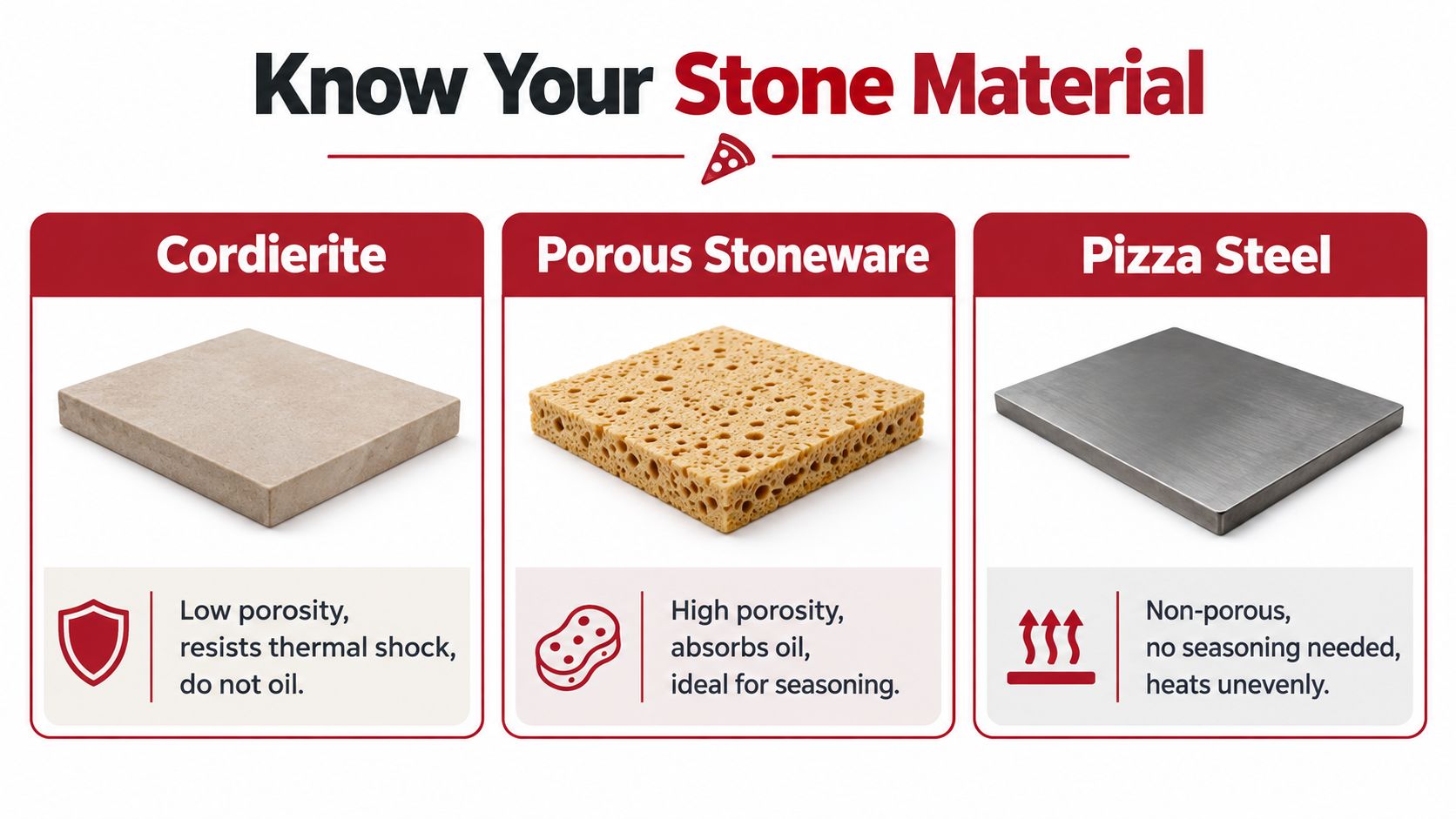
Three surfaces with three care routines
Traditional stoneware is generally more absorbent. It may have a rougher, more ceramic texture and may be sold specifically as bakeware rather than as a refractory pizza deck. If the instructions mention seasoning, a thin polymerized layer can be appropriate. If they say to use it dry, follow that instead.
Pizza steel is the outlier. It's a non-porous metal plate, so it won't absorb oil like stoneware. It can be protected with a very thin oil film when the manufacturer recommends it, but that's metal maintenance, not stone seasoning. Steel also responds differently to heat, often producing aggressive browning where it contacts the dough.
| Surface | Seasoning decision | Main priority | Common mistake |
|---|---|---|---|
| Cordierite | Usually skip oil | Slow, thorough preheating | Treating it like cast iron |
| Porous stoneware | Follow product instructions | Thin, even conditioning if approved | Applying a heavy coat |
| Pizza steel | Use steel-specific guidance | Dry storage and heat control | Assuming stone rules apply |
A useful comparison of pizza stone materials can help if you're unsure which surface fits your baking routine. The key distinction is simple: stone gets its working character from heat and use, while steel and some stoneware may have separate conditioning requirements.
If you mainly want crisp crusts, choose the “skip oil” path for cordierite and concentrate on preheating. If you own porous stoneware with explicit seasoning instructions, use the restrained method below.
How to Season a Porous Baking Stone Safely and Evenly
Seasoning only makes sense here if the stone is porous stoneware and the manufacturer permits it. Cordierite pizza stones generally belong in the dry-use category, so don't use this method just because the stone is new or pale.
Start with a fully dry, clean stone. If it has been rinsed, let it air-dry completely before applying anything. Hidden moisture inside porous material can create trouble when the stone heats rapidly. Gather a high-smoke-point oil and a lint-free cloth. You're aiming for a barely visible film, not a wet coating.
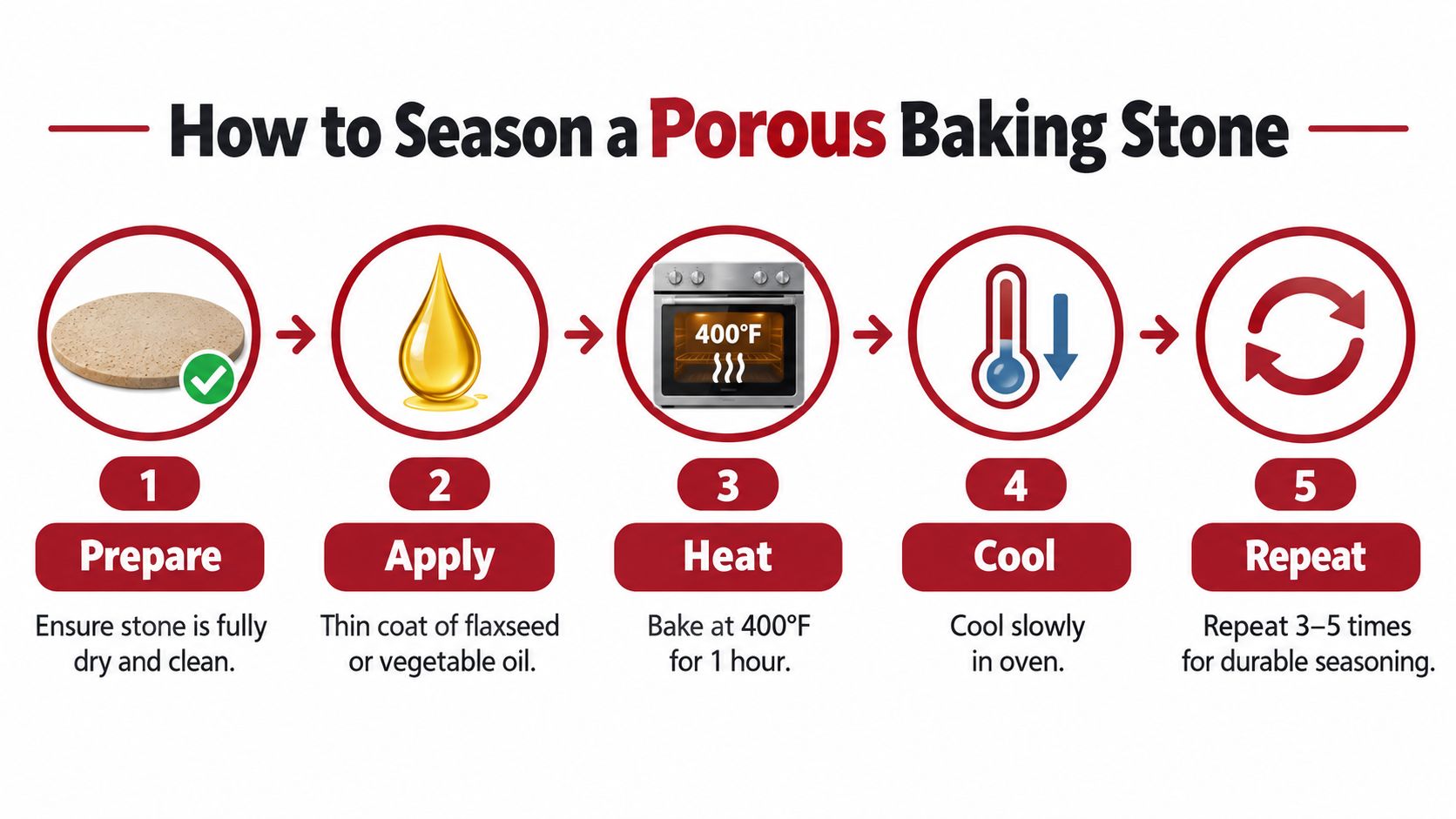
Build the layer with restraint
- Prepare the surface. Confirm that the stone is dry and free of loose crumbs. Don't season over old grease, pooled oil, or damp patches.
- Apply a thin film. Put a small amount of oil on the cloth, then wipe the entire cooking surface. Follow with a clean part of the cloth until the stone looks almost dry. Any visible pooling is too much.
- Heat gradually. Put the stone into a cold oven. Bring the oven to a temperature within roughly 350°F to 500°F, then hold it there for 20 to 60 minutes, following the practical method described in this porous bakeware seasoning guide. Starting cold lets the stone and oven rise together instead of forcing a sudden temperature change.
- Cool slowly. Turn the oven off and leave the stone inside until it has cooled. Don't put it on a cold countertop, rinse it, or move it into a chilly outdoor space while it's hot.
- Inspect before repeating. A finished pass should feel dry, not tacky. It may look slightly darker, but it shouldn't have shiny puddles, gummy areas, or a strong burnt-oil smell. Repeat the light cycle 2 to 3 times, rather than trying to create the entire layer with one heavy application.
A thick coat fails because porous stone absorbs oil unevenly. Excess oil gathers in low spots, smokes during heating, and can cure into a sticky residue instead of a hard surface. If the stone starts smoking heavily, turn off the heat, ventilate the area, and let it cool before inspecting the film.
The best seasoning layer is easy to miss. If you can clearly see the oil sitting on the stone, you've probably applied too much.
Don't expect a porous baking stone to behave like a polished pan. Seasoning may improve release over time, but it won't replace a properly floured peel, quick launching, and a heated surface.
Oven Versus Grill Seasoning and Heat Management
An oven gives you steadier heat. A grill gives you sharper hot spots, stronger radiant heat, and less forgiveness when the stone sits over one aggressive burner or coal zone. The seasoning method, when approved for the material, matters less than how evenly you bring the surface up to temperature.
In a home oven, place the stone inside while the oven is cold. Set the temperature, allow the stone to heat with the chamber, and let it cool in place after the cycle. A middle rack is a sensible starting position because it gives the stone room around it and avoids placing it directly against an upper or lower heating element.
On a gas grill, start with the stone in the cool grill and bring the burners up gradually. Avoid putting the stone directly over a concentrated flame during its first heating cycle. If the grill runs hotter than expected, lower the burners and create an indirect zone rather than trying to correct the problem by moving a hot stone.
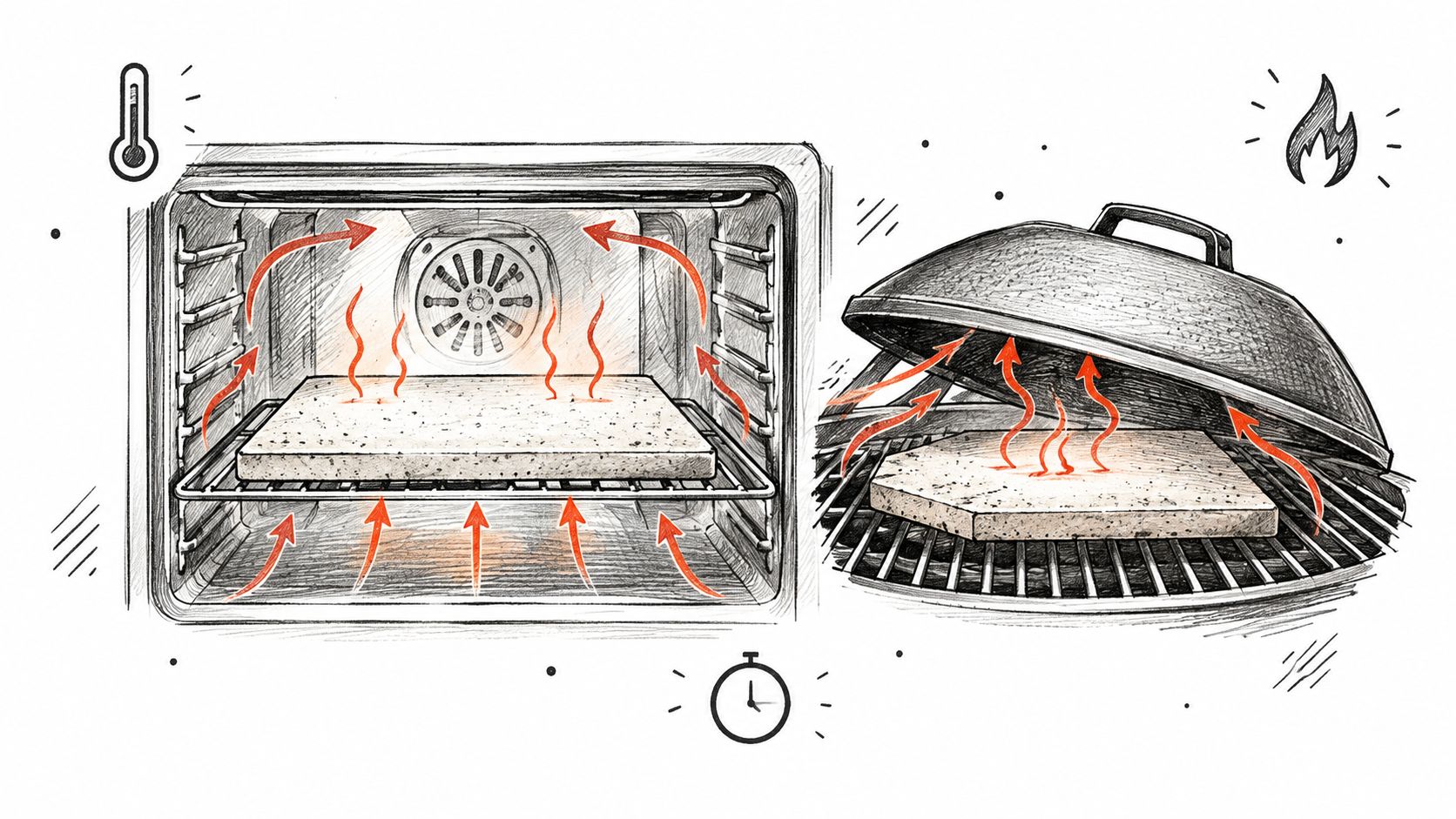
Heat the mass, not just the surface
Cordierite's stored heat is central to crisp bottoms. A stone that feels hot on top but hasn't heated through can produce pale or uneven crusts. Give it time to absorb heat throughout, especially on a grill where the underside may receive much more energy than the cooking face.
Avoid three risky transitions:
- Cold stone into a hot oven: Put the stone in before ignition or before the oven begins heating.
- Cold dough or water onto a blazing surface: Don't introduce unnecessary temperature shocks.
- Hot stone onto a cool or wet surface: Let it cool inside the oven or grill.
On charcoal, use a stable fire and favor indirect heat while the stone warms. A flare-up can scorch an oil-treated surface without creating an even finish, and direct radiant heat can stress one section of the slab more than another.
The grill can bake excellent pizza, but it demands attention to burner balance, airflow, and cooldown. For a modern cordierite stone, dry preheating remains the safer default. Don't add oil to compensate for uneven grill heat. Fix the heat arrangement instead.
Ongoing Care Cleaning and Maintenance That Protects Your Stone
A baking stone improves through use, not cosmetic perfection. Dark patches, flour marks, and baked-on traces are expected on a working porous surface. Scrubbing the stone back to its original color can remove nothing useful while adding water, soap, or mechanical stress.
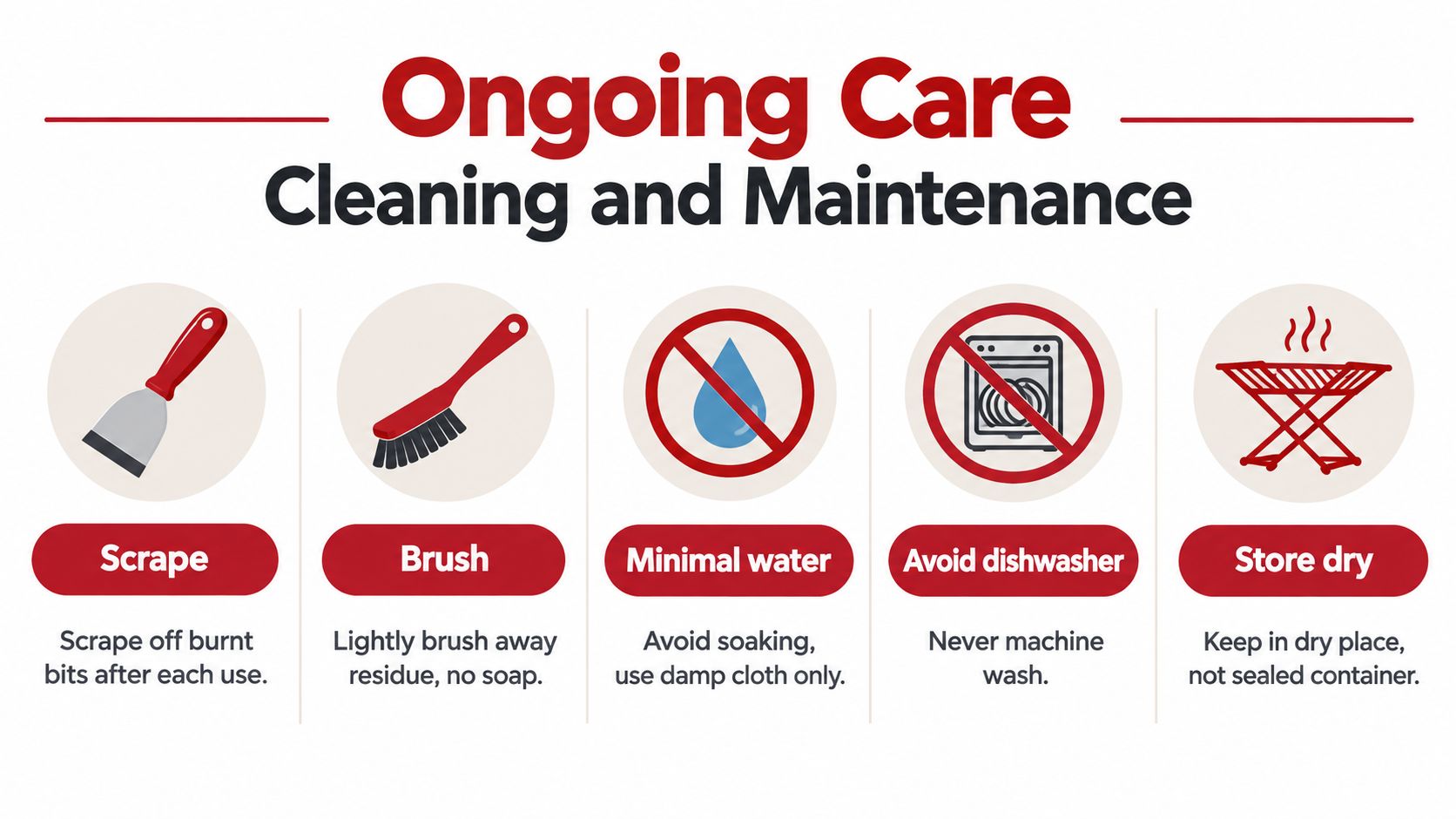
Let the stone cool completely before cleaning. Use a bench scraper or flat spatula to lift burned cheese, flour, and topping residue, then brush away the loose debris. If a wipe is necessary, use very little water on a damp cloth and allow the stone to dry fully before heating it again.
The routine that preserves the surface
- Scrape after baking: Remove hard residue once the stone is cool.
- Brush lightly: Clear crumbs without digging into the material.
- Avoid soaking: Porous stone can retain water below the visible surface.
- Skip soap and the dishwasher: Detergent can enter the pores and leave odors or flavors.
- Store dry: Keep the stone somewhere dry and protected from knocks.
Don't oil a hot stone. Hot oil can smoke immediately, spread unevenly, and create the sticky patches that are difficult to remove. If you want a practical cleaning reference, use this guide to cleaning a baking stone.
A monthly check doesn't need to be elaborate. Look for trapped debris, dampness, unstable cracks, or a persistent rancid smell. A dark, dry stone that heats evenly is usually in better condition than a pale stone that has been repeatedly soaked and scrubbed.
Store the stone in the oven only if you remember it's there before running a cleaning cycle or changing the oven setup. Otherwise, a dry shelf with enough room to prevent impacts works well.
Troubleshooting Common Seasoning Problems and Fixes
Seasoning failures usually come from too much oil or rushed heat. The symptoms are fairly clear if you stop trying to add another coat and inspect the surface closely.
Sticky or gummy patches mean oil has pooled or hasn't polymerized evenly. Don't cover them with more oil. Let the stone cool, scrape gently with a suitable flat tool, and return to dry baking. If the residue remains heavy, repeat controlled heating only if the material's care instructions allow it.
Smoke and off smells usually point to excess grease, an unsuitable oil, or old residue. Ventilate the room, stop adding oil, and let the stone cool naturally. Afterward, scrape and brush away what you can. A mild smell during the first heat cycle can happen, but persistent rancid odor indicates that the stone has absorbed something you shouldn't keep reinforcing.
Uneven dark spots are normally cosmetic. Porous stone darkens where dough, flour, cheese, or oil has contacted it, so a patchy patina doesn't automatically indicate uneven performance. Judge the stone by stability and baking results, not by whether it remains a uniform color.
A stained stone is usually a used stone. A greasy stone is a maintenance problem.
Small cracks deserve more caution. Rapid temperature changes, trapped moisture, direct grill hot spots, and impacts can all contribute to cracking. Stop using a stone that shifts, sheds fragments, or no longer sits securely. A stable hairline crack may remain usable in some situations, but heating it again carries a risk of further failure, so replacement is the sensible choice when the slab becomes structurally unreliable.
If you haven't used the stone yet, don't season it by reflex. Identify the material, follow its instructions, and let heat management do the work. For a cordierite pizza stone, dry use and gradual preheating are usually the recovery plan and the correct first-use plan.
Hans Grill offers cordierite pizza stones for oven and BBQ baking, along with a Pizza Steel PRO for cooks who prefer a conductive metal surface. Visit Hans Grill to compare those options and choose the baking surface that matches your preferred heat-management and maintenance routine.


