

Baking Steel Review for Crisp Home Pizza
The most popular advice about pizza steels is also the least useful: buy the most conductive plate you can find and crank the oven as high as it goes. Conductivity is a trade-off, not a trophy. A steel can crisp a thin, lean pizza quickly, but that same fast heat can scorch a sweet or delicate base before the top is ready. A useful baking steel review should consider the dough, the oven, the steel's recovery between pies, and whether you can handle the plate safely.
Table of Contents
- Baking Steel Review Scorecard Against Stones
- Why Home Ovens Need a Hotter Deck
- Control Faster Browning Before It Scorches
- Check Alloy Grade Before You Trust the Plate
- Handle the Weight Without a Kitchen Mishap
- Choose the Surface and Your First Bake
Baking Steel Review Scorecard Against Stones
Choose steel for thin, relatively lean dough when you want quick underside browning. Choose ceramic or cordierite when the dough is wet or sweet, or when you'd rather have more time to catch the bottom before it darkens. Both surfaces can reach near 500°F after a long preheat, so surface temperature alone doesn't make steel the winner. The difference is how each surface delivers heat to the dough.
| Review measure | Baking steel | Ceramic or cordierite stone | What to conclude |
|---|---|---|---|
| Surface after a long preheat | Near 500°F after about 1 hour | Near 500°F after about 1 hour | Equal temperature isn't equal performance |
| Heat into the dough | Faster conduction through dense metal | Slower transfer through porous ceramic | Steel browns the underside sooner |
| Typical home pizza time | About 4–6 minutes | About 8–10 minutes | Shorter is better only if the bottom isn't scorched |
| Time to useful heat | Thick carbon steel nearer 30 minutes; many plates 45–60 minutes | Often 45–60 minutes | Publish preheat, not a maximum-temperature claim |
| After the pizza lands | Surface can drop quickly; a thick plate may hold near 500°F at the center | Gentler contact and some moisture uptake | Score the second and third pie, not only the first |
| Moisture behavior | Very low porosity, almost no absorption from dough | Porous surface takes some steam and moisture | Stone is more forgiving for wet or sweet dough |
The Wirecutter comparison of pizza stones and baking steels found that steel and ceramic stones could reach approximately 500°F after an hour, while steel transferred heat into dough faster. That can mean faster bottom browning and stronger oven spring, but it doesn't mean steel always stays hotter after a pizza lands. A steel's surface temperature can drop quickly under cold dough, so recovery matters when you're baking a run of pizzas.
Independent testing of pizza-baking surfaces also points to thickness and composition as important review criteria. One tested steel averaged about 517°F after 30 minutes, with its center near 500°F immediately after baking and limited center-to-edge temperature swings. That's a useful result for that plate, not a promise that every steel or oven will behave the same way.
A thick carbon-steel plate may become useful sooner, but for repeatable baking, a home oven's practical preheat is still often 45–60 minutes. Hans Grill positions its Pizza Steel PRO as delivering 30% faster heat through ultra-conductive steel. Treat that as a product claim, not proof that a home oven will reproduce pizzeria conditions.
Review test: Compare preheat time, recovery between pies, underside color, and bake length. A photo of a blistered rim can't tell you whether the base burned or the next pizza baked evenly.
Why Home Ovens Need a Hotter Deck
A pizzeria-style pizza's spotted rim is an outcome, not a measure of how well a home baking surface performs. The more useful question is whether the cooking surface delivers enough heat to the dough quickly, even as the dough cools the surface on contact.
A 2023 peer-reviewed study of Neapolitan pizza in a wood-fired oven measured the pies' thermal behavior rather than judging appearance alone. After about 80 seconds, the raised rim of most tested pizzas averaged 150 ± 13°C. The margherita took about 100 seconds, with its greater mass slowing the heating. A separate scientific review discussed in the same source puts typical Neapolitan bakes at 60–90 seconds, with the oven floor around 380–430°C and the dome near 485°C.
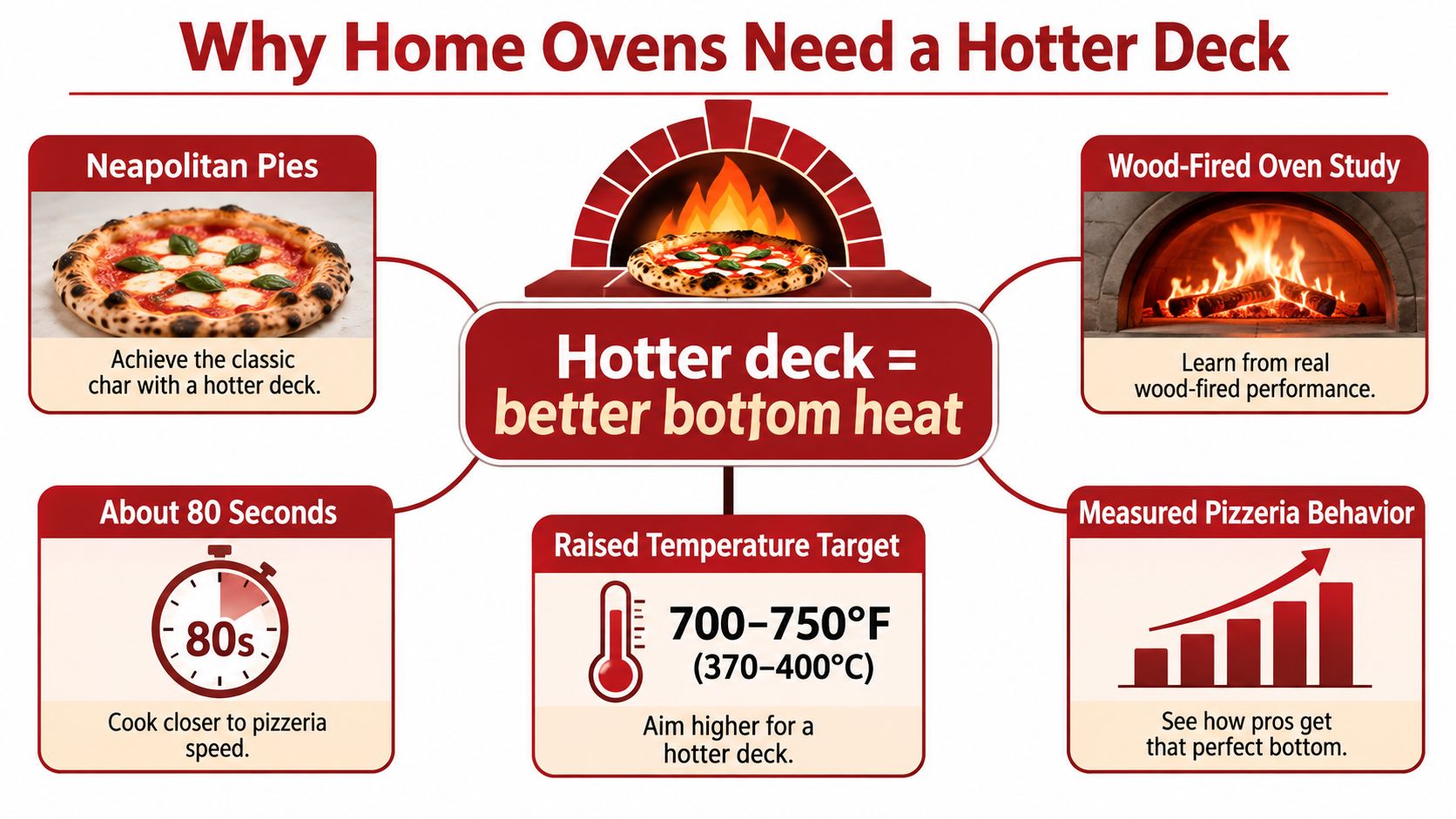
A home oven can heat the air and the baking surface, but a steel doesn't turn the appliance into a wood-fired deck. Its job is to store heat and transfer it into the dough at launch. That distinction explains why a review based only on the oven's maximum temperature misses the point. The plate and dough meet at the base, where fast heat transfer drives browning and helps the crust rise.
What a useful review measures
Look for evidence that connects the surface to the baked pizza. A credible review should report:
- Preheat time and surface temperature: A stated oven setting isn't a measurement of the steel's surface.
- Temperature across the plate: A hot center and cooler edges can produce uneven crusts.
- Recovery between pizzas: The second pie can tell you more about a plate's usable heat than the first.
- Underside color and total bake time: These show whether fast transfer produced crispness or a scorched base.
The pizzeria measurements establish a demanding target, but they don't make every dark spot proof of success. A steel can narrow the gap by giving the dough a hotter, more responsive interface. It can't reproduce the same floor and dome conditions as a wood-fired oven. For home cooks, the meaningful evidence is how well the plate handles the cold dough, loading, and oven-door opening during an actual bake.
Control Faster Browning Before It Scorches
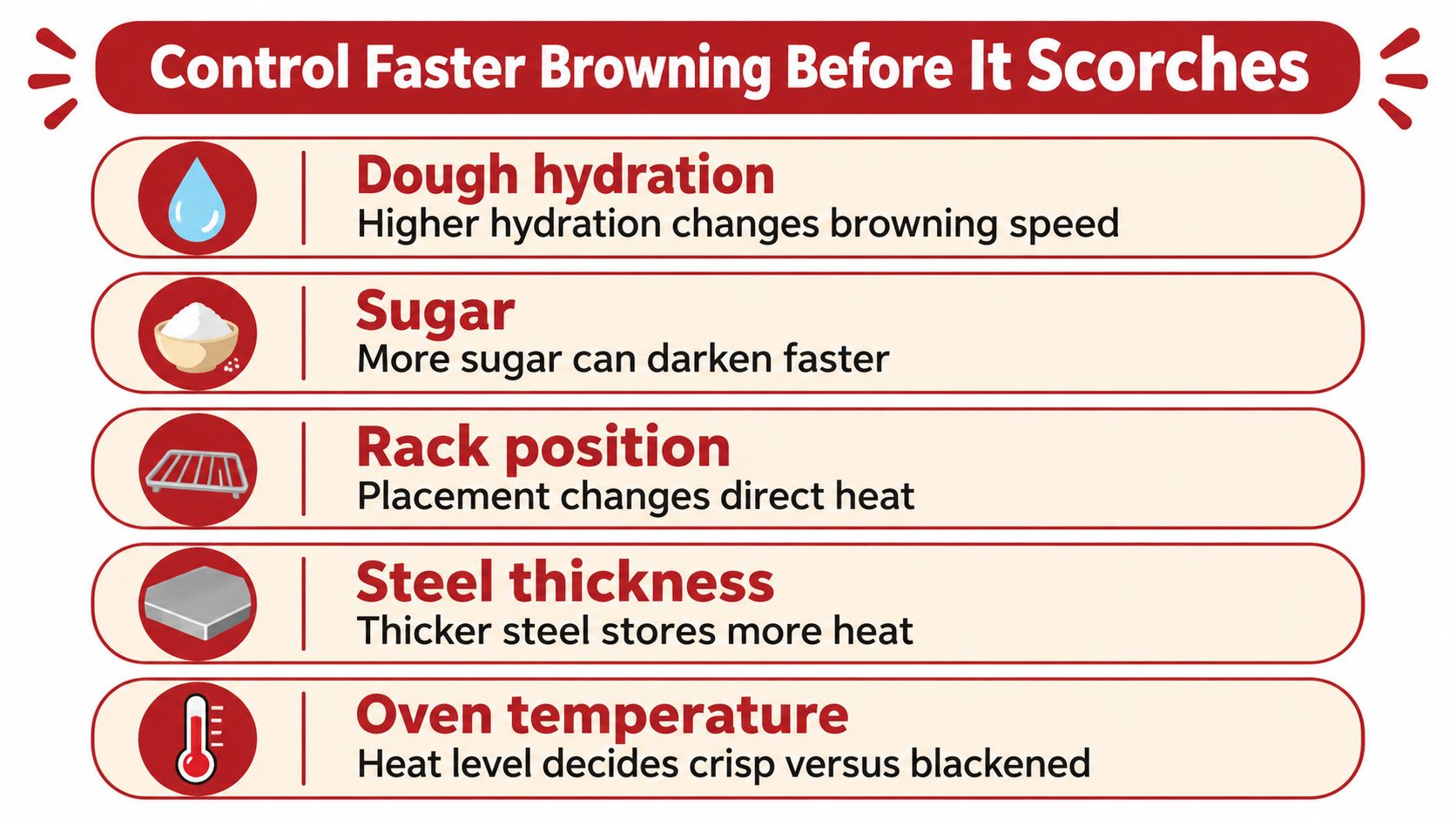
Faster isn't always better. A baking steel's strong heat transfer can create a crisp base in a short bake, but it can also brown the bottom before a wetter center or a slower-browning topping has caught up. The baking-steel comparison guide from Cook, Craft & Create identifies dough hydration, sugar, rack position, steel thickness, oven accuracy, and pizza style as factors that can shift the result from blistered to scorched.
| Dough style | Rack and heat | Typical failure |
|---|---|---|
| Thin lean New York or Neapolitan | Low rack, full heat | Scorched base left unwatched |
| Wet high-hydration dough | Higher rack or gentler heat | Delayed set and soggy center |
| High-sugar or dessert dough | Higher rack or stone | Early sugar burn on the underside |
| Frozen pizza | Moderate heat with a longer set | Burnt underside with a cold center |
| Bread, calzone or cookies on steel | Rack per product guidance | Scorching if treated like a Neapolitan |
Thickness changes the heat available to a pie, too. Some thicker carbon-steel plates reach useful heat sooner and maintain comparatively stable temperatures after baking, while other steels need a longer preheat. That's why a review should report bottom-surface temperature, recovery after successive pizzas, bake time by style, and failures, rather than presenting preheat alone as a complete performance score.
Compare like with like, then adjust
A fair steel-versus-stone test uses the same oven setting and rack position for both surfaces. Once you've compared the results, try moving the steel higher or lowering the oven heat if the base colors too quickly. A thin, lean pizza can start on the lower rack at full heat, but watch it closely near the end of its bake. A wetter dough needs more time to set, while sugar can darken early; for either, start with a stone or a gentler steel setup.
Frozen pizza needs time for the center to heat through, so don't assume a fresh-pizza bake time will suit it. Bread, calzone, and cookies need their own rack and heat settings, rather than Neapolitan-style treatment. For more detail on choosing a starting temperature, see this guide to pizza steel temperatures.
The decision is practical: use steel when thin, relatively lean dough is your regular bake and you can monitor the base. Use a stone, or a gentler setup with steel, when you want more tolerance for wet, sweet, or delicate dough.
Check Alloy Grade Before You Trust the Plate
“Steel” doesn't tell you enough about a plate's food-contact suitability. Alloy, purity, fabrication, surface condition, and intended use all matter. A product page that names none of these leaves you without the details needed to judge its material or care requirements.
A U.S. FDA opinion on AISI 304 and 316 stainless steels states that those materials wouldn't be expected to become significant components of food under the conditions described, and that premarket approval as food additives isn't required. The guidance also points to 21 CFR §174.5, which requires food-contact materials to be sufficiently pure and not impart odor, taste, or other qualities that make food unfit. That narrow finding shouldn't be extended automatically to bare carbon steel, coated plates, or products made from an unidentified alloy.
Stainless steel itself doesn't conduct heat evenly, which is why some cookware uses aluminum or copper layers. That's a separate consideration from the heat storage and delivery people want from a thick baking plate. A carbon-steel plate and a stainless-steel plate shouldn't be assumed to perform or require the same maintenance.
Before comparing prices, check the product page for:
- Material or alloy grade: Reject a listing that only says “steel” without further specification.
- Thickness and surface condition: These help you understand the plate you're buying.
- Maximum-use guidance: A coating needs a stated heat limit.
- Cleaning instructions: Carbon steel may need immediate drying and occasional oiling or re-seasoning.
A product-specific discussion of stainless-steel pizza steels can help clarify why the material choice matters. The simple document check is this: if the listing doesn't identify the material, surface, heat guidance, and care routine, don't treat a broad food-safe claim as enough information.
Handle the Weight Without a Kitchen Mishap
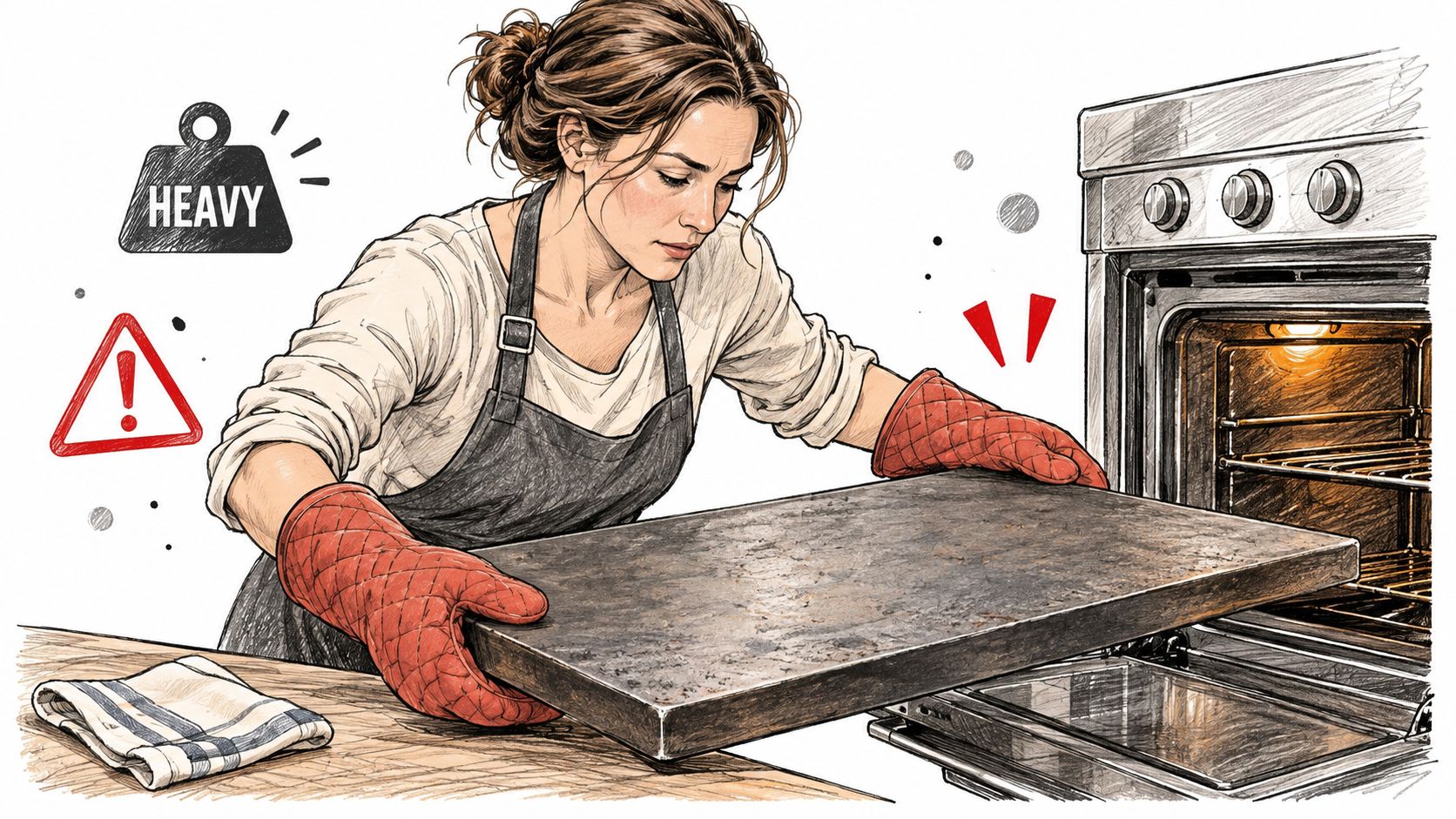
A steel can bake well and still be the wrong purchase for your kitchen. Its mass affects how safely you can move it, where it can sit, and whether you'll want to use it on an ordinary pizza night. A review of pizza stones and baking surfaces from Business Insider notes the handling concern posed by heavy, hot plates and the need to plan for protection, storage, and preheating.
Before the first preheat
Check the plate's dimensions and weight, then measure your oven opening and rack space. Ask whether you can lift it without twisting in a narrow space, and whether it leaves enough room for air to circulate or for a second rack. Decide where it will cool and where it will live between uses. In a compact kitchen, a plate that's difficult to store may end up neglected.
Plan for the preheat's time and energy use, too. A long warm-up is part of owning a high-mass surface, not an incidental detail. On a BBQ, check lid clearance and consider how fuel changes and accidental contact affect the setup. Outdoor use is not the same oven test in a different location.
Clean, dry, and store with care
Carbon steel can rust if it stays wet. After baking, let the plate cool enough to handle safely, clean off residue without leaving it to soak, dry it immediately, and apply a light coat of oil if the surface needs it. If moisture or food residue damages the seasoning, follow the maker's care instructions for restoring the surface.
Safety rule: Baking steels, stones, and ovenware get extremely hot and retain heat for a long time. Use appropriate protection, set a safe cooling area, and keep hot equipment away from children.
The thickest plate isn't automatically the best one. Families, older cooks, renters with compact ovens, and anyone who can't move a heavy plate safely may be better served by a smaller or lighter surface. A product that's easy to position and care for is more useful than one that stays in storage because handling it feels like a risk.
Choose the Surface and Your First Bake
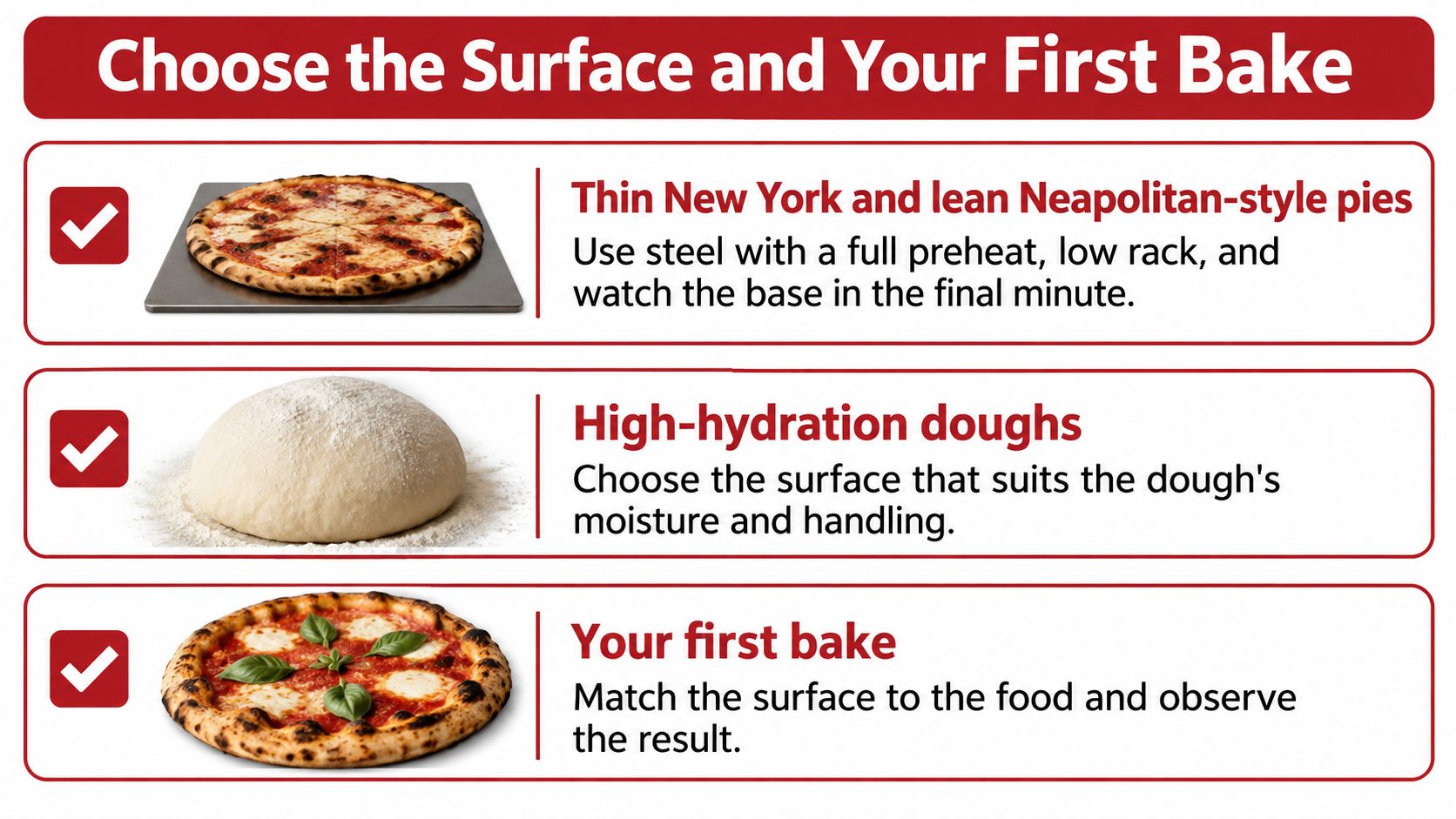
Match the surface to the food you bake most often, not to the most dramatic pizza photo. Thin, lean dough benefits from steel's fast contact heat. Wetter dough, sugary bakes, and delicate crusts reward a more forgiving setup. A vented cordierite stone, for example, releases steam and absorbs moisture, while bare steel has very low porosity.
| Your main job | Surface to buy | Price | First-use habit |
|---|---|---|---|
| Thin lean pizza every week and you can lift a heavy plate | Pizza Steel PRO (XL) | $119.99 | Full preheat, low rack, watch the base late in a short bake |
| Beginner crisp bases or dough that burns easily | Rectangular Pizza Stone | $59.99 | Cordierite in the oven or on a BBQ, with more margin than steel |
| First stone kit rather than maximum speed | Pizza Stone PRO XL Set | $69.99 | Use the set for oven or BBQ nights before adding a steel |
| Compact oven or uncertain lifting | Rectangular Pizza Stone | $59.99 | Confirm rack space before the long preheat |
A guide to using a pizza steel can help you establish a routine, but the starting choice should still follow your usual bake. The Pizza Steel PRO is intended for pizza, bread, calzone, and cookies, and can be used in an oven or on a BBQ. Its listed price is $119.99. For a gentler starting point, the Rectangular Pizza Stone is $59.99, while the Pizza Stone PRO XL Set is $69.99.
Set up for the food you actually make
For thin New York-style pizza or lean Neapolitan-style dough, use steel with a full preheat, set it on a low rack, and watch the base closely near the end. For wet or high-sugar dough, use a stone or move the steel higher and start with gentler heat. Frozen pizza needs more time for the center to set, so don't treat it like fresh thin dough.
Bread, calzone, and cookies may also suit steel, provided the plate is rated for those uses and you follow its product guidance. If you're cooking outdoors, confirm that the grill lid closes with the surface in place and keep a clear, protected handling path. Your first bake should test one variable at a time, so you can tell whether a dark base came from the dough, the rack, or the surface.
Make the first bake repeatable
- Preheat the surface for the product's recommended time. For a home oven, a 45–60 minute preheat is a practical starting point for repeatable sessions; a thick carbon plate known to be ready may take nearer 30 minutes.
- Launch a thin, lean pie on the low rack and check its base early.
- Adjust for wet or sweet dough by raising the rack, using gentler heat, or switching to stone.
- Let the surface cool, then clean and dry it before storing it for the next pizza night.
Hans Grill offers a Pizza Steel PRO, cordierite stone options, and pizza-baking accessories for home ovens and BBQs. Choose the surface that matches the dough you cook most often, then visit Hans Grill to compare the options for your setup.


