

Baking Stone Care Made Simple for Home Pizza Fans
Pizza night is over. The crust came out crisp, but melted cheese has welded itself to the stone, and your first instinct is to reach for dish soap. Put the bottle down. Baking stone care is less about making the surface look new and more about protecting a porous cooking material from the three things that cause trouble: absorbed chemicals, trapped moisture, and sudden temperature changes.
The routine is simple once you know which decision matters. Cool the stone completely, remove residue without attacking the surface, use water sparingly when the situation calls for it, and never store the stone while it still holds moisture. Those habits protect the crisp-baking surface and reduce the chance that your next pizza will taste like detergent or arrive on a cracked slab.
Table of Contents
- Why Your Baking Stone Needs Different Care Than Other Cookware
- Cleaning Your Stone the Right Way After Every Bake
- Soap, Rinsing, and the Dishwasher Question Answered
- Preventing Thermal Shock and Cracks
- Safe Use on Ovens and BBQs Without Wrecking Your Stone
- Drying, Storage, and Habits That Extend Stone Life
Why Your Baking Stone Needs Different Care Than Other Cookware
A baking stone isn't a sheet pan with a rough finish. Cordierite and ceramic stones are porous, and that porosity helps pull moisture from dough as the pizza bakes. The same structure that supports a crisp base can also absorb water, soap, oils, and cleaning chemicals. Guidance from Hans Grill on what baking stones are made of helps explain why treating the surface like stainless steel leads to the wrong cleaning habits.
After a bake, the stone may look scorched, greasy, or permanently stained. That appearance doesn't automatically mean the stone is unsafe or dirty in a meaningful kitchen sense. Dark marks and baked-on patches are normal signs of use, and trying to remove every trace can create more risk than leaving a harmless patina alone.
Porosity is useful, not a defect
The stone's open structure is part of its job. It receives heat and gives the dough a dry cooking surface, while the rough texture helps the pizza bake rather than sit in its own moisture. You don't need to sterilize that surface after every pie, and you shouldn't oil it to create a cast-iron-style seasoning layer. One manufacturer instruction manual states that these stones don't require seasoning, so normal use is enough.
Soap creates a different problem from ordinary food residue. Because the material can absorb liquids, detergent may remain below the surface and affect the flavor of later pizzas. Soaking creates another hazard, since moisture can stay inside the stone and expand during a later heating cycle.
The working principle: remove loose food, avoid introducing chemicals, and protect the stone from abrupt heat changes.
That principle handles most care decisions. The rest comes down to what spilled, how cool the stone is, and whether every trace of moisture has left before the next bake.
Cleaning Your Stone the Right Way After Every Bake
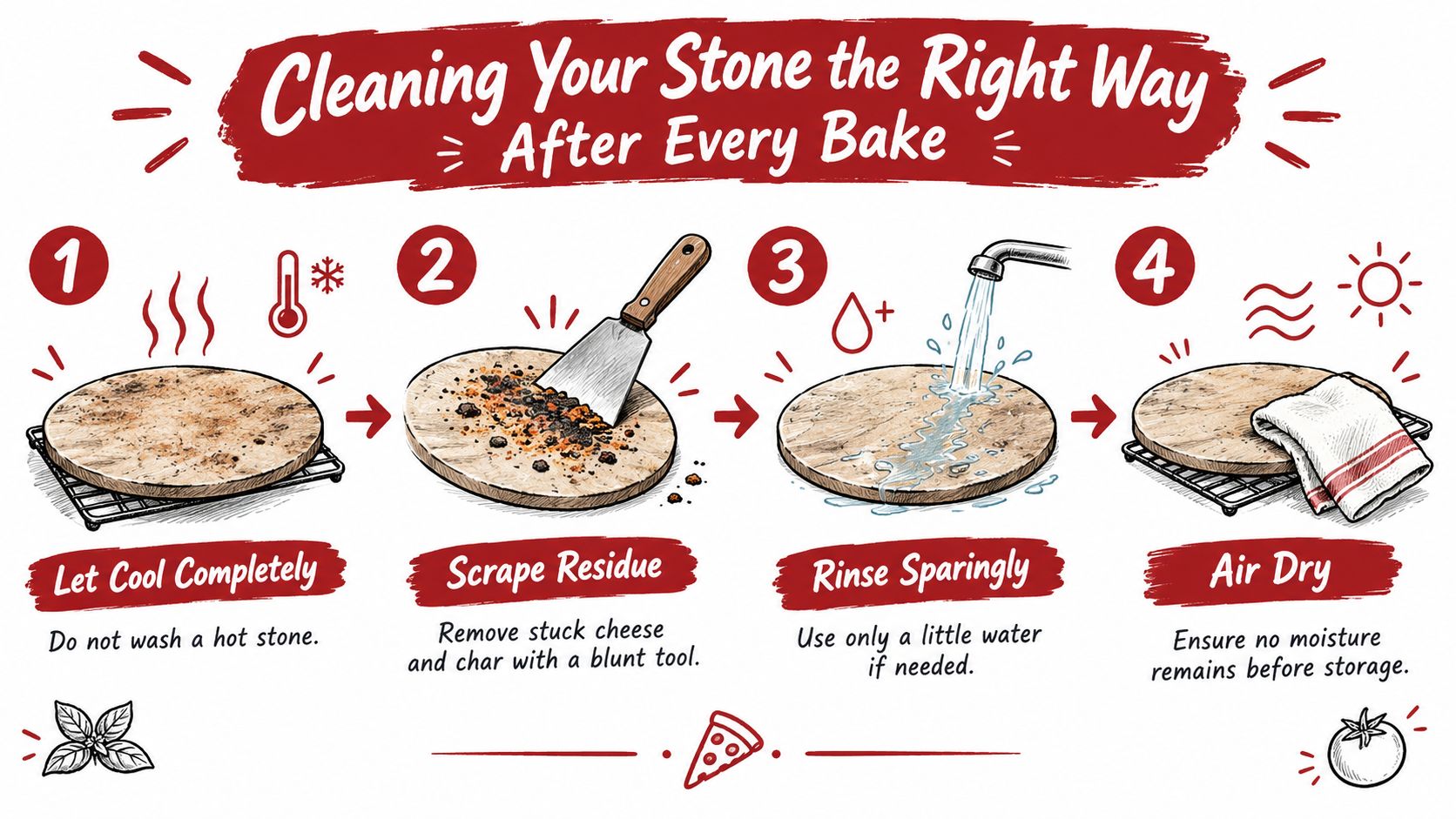
The safest everyday routine is deliberately uneventful. Let the stone cool completely inside the oven or grill, then remove loose crumbs with a brush and lift stuck food with a blunt scraper. Finish with a barely damp cloth only when dry removal hasn't done enough.
Use a small tool kit
A blunt bench scraper, wooden spatula, or dedicated stone-cleaning tool can lift hardened cheese and dough without gouging the surface. A firm oven brush handles loose char. Avoid turning the job into a scouring project, because aggressive tools can roughen areas unevenly and make future sticking worse.
Follow this order:
- Cool completely. Don't clean a hot or warm stone. Heat makes even a small amount of moisture dangerous.
- Scrape first. Hold the scraper at a shallow angle and work under the residue rather than grinding it into the pores.
- Brush away debris. Sweep crumbs and char from the surface and corners.
- Wipe lightly. If a film remains, use a cloth that's barely damp, then leave the stone exposed to air.
Stubborn residue doesn't always need water. If the stone can safely remain in the appliance, heat can carbonize food during a later empty preheat, after which brushing usually removes the brittle remains. Don't chase discoloration just because it looks untidy. A stained stone can still bake excellent pizza.
Practical rule: if the residue is dry and loose, keep the stone dry. Water is a fallback, not the default.
The dishwasher is unsuitable for this material. It combines prolonged water exposure with detergent, exactly the conditions porous stones handle poorly. Soap, soaking, and sprays can leave absorbed compounds behind, while a rushed return to heat can put the stone under thermal stress.
For a visual walkthrough of the sequence, watch this pizza stone cleaning demonstration. The key isn't achieving a spotless appearance. It's removing food that can interfere with the next bake while keeping the stone's structure intact.
Soap, Rinsing, and the Dishwasher Question Answered
The honest answer to the water question is more nuanced than “never” or “wash it normally.” Most care guidance agrees that soap and soaking are poor choices for porous stones, but guidance differs on whether a brief rinse is acceptable. The useful distinction is between routine cleanup and an unusual greasy spill.
After an ordinary bake, scrape and brush first. A lightly damp cloth is usually enough for a thin film. If oil or sauce has spread across the surface, remove as much as possible while dry before deciding whether a minimal rinse is worth the added drying burden.
A decision table for common messes
| Situation | Safe Response | Never Do |
|---|---|---|
| Loose flour, crumbs, or dry char | Brush the fully cooled stone and wipe away dust | Don't rinse a surface that can be cleaned dry |
| Welded cheese or baked dough | Lift it with a blunt scraper, then brush the fragments away | Don't attack it with a sharp knife or aggressive metal tool |
| Thin greasy film | Scrape or blot what you can, then use a barely damp cloth | Don't pour water over the whole surface |
| Heavy greasy spill | Remove excess fat first. If the manufacturer permits it, use a brief, light rinse on a fully cooled stone, then dry it thoroughly before heating | Don't soak, scrub with soap, or put it straight back into heat |
| Soap residue or chemical cleaner | Don't add more liquid. Follow the stone maker's specific replacement or cleaning guidance | Don't assume a dishwasher cycle will solve it |
| Any mess on a hot stone | Wait until the stone is fully cool before touching or wiping it | Don't splash water onto it |
Some appliance guidance recommends no water or chemicals at all, while other instructions allow a minimal amount of hot water. That conflict is why the material and the maker's instructions matter. For a cordierite stone, the conservative choice is dry scraping and brushing, with a light rinse reserved for a genuine spill and only when the product guidance allows it.
Why soap remains the easy no
Soap isn't needed to remove the residue that normally matters, and porous cordierite or ceramic may absorb it. Later heating can bring that flavor back into food. The dishwasher adds detergent, immersion, and handling stress at once, so it isn't a reasonable shortcut for baking stone care.
If you do rinse after a spill, drying becomes the main task. Leave the stone in a dry, ventilated place until there's no coolness, dampness, or moisture at the edges. A stone that feels dry on top may still hold water inside, so don't use the next preheat to “finish” the job.
Preventing Thermal Shock and Cracks
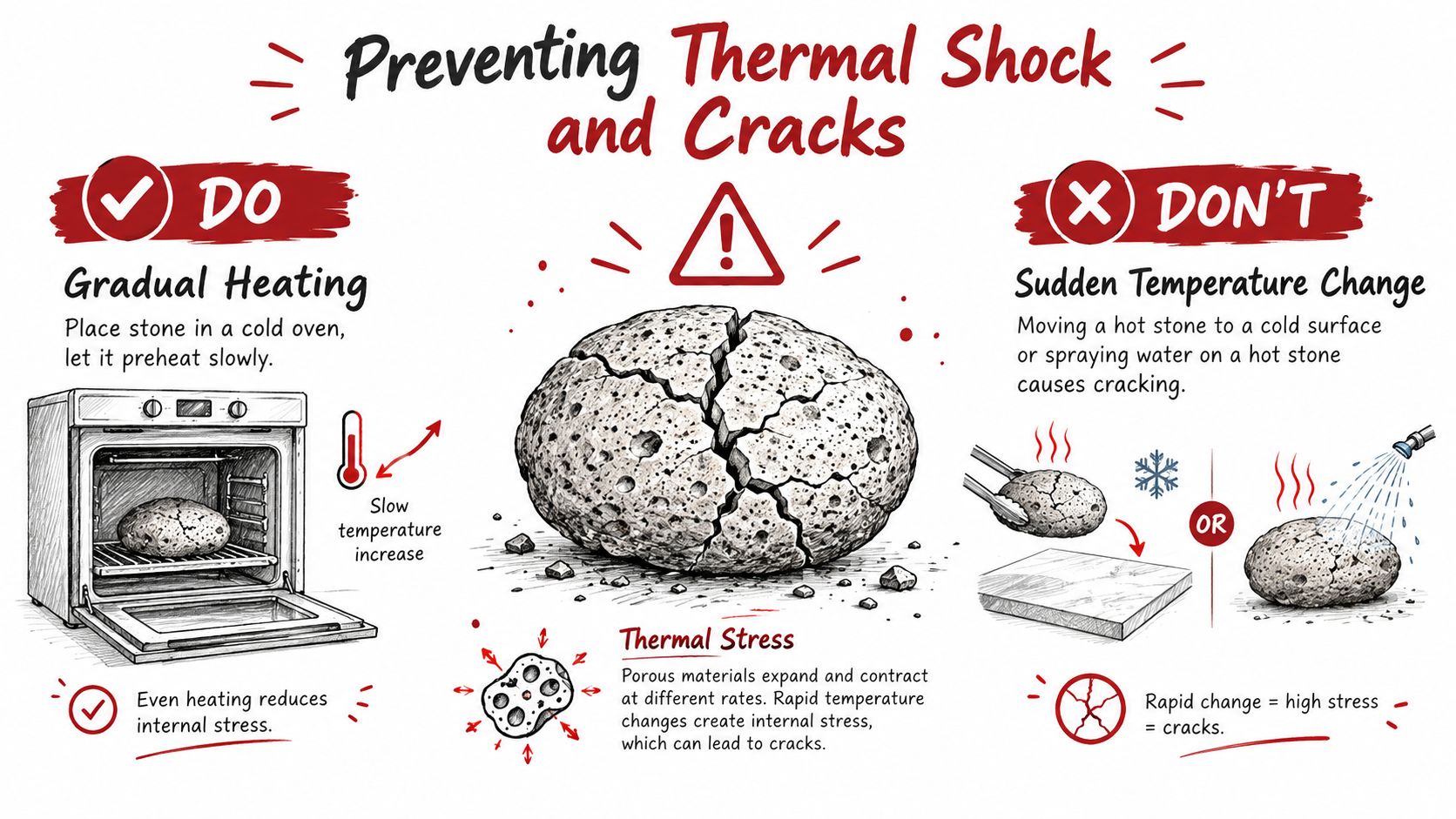
Thermal shock is the failure that turns a usable stone into two pieces. The material expands and contracts as it heats and cools. When one part changes temperature much faster than another, internal stress can crack the stone.
The most important habit is to start cold. Put the stone into a cold oven or grill, then let the appliance and stone heat together. At the end, leave the stone in place until it has cooled close to room temperature before cleaning or moving it. A practical guide to why pizza stones crack reinforces the danger of abrupt temperature changes.
Three habits prevent most avoidable failures
Cold start. Place the stone on the rack or grate before preheating. Don't transfer a cold stone into an already blazing appliance unless its instructions specifically allow that method.
Cool in place. After baking, turn off the heat and let the stone cool inside. The stone's center and surface can remain at different temperatures even after the pizza is gone, so carrying it immediately to a cold counter creates unnecessary stress.
Keep water away from heat. Moving a hot stone to a sink is the classic mistake. Cold water can cool the outer layer abruptly while the interior remains hot, and the resulting stress can produce a crack.
A similar issue occurs when a stone has been rinsed and then reheated before it has dried. Water trapped in the pores can become steam as the stone heats, adding pressure inside the material. Drying isn't a cosmetic step. It belongs to the crack-prevention routine.
A stone doesn't need gentle treatment because it's fragile during normal baking. It needs consistent temperatures because sudden changes are what punish it.
Don't create dramatic temperature swings during loading, either. A frozen or very cold pizza placed onto a fully heated stone can expose the surface to a sharp local change. Use the stone according to its manufacturer's limits and avoid treating it as a heatproof shock absorber.
Safe Use on Ovens and BBQs Without Wrecking Your Stone
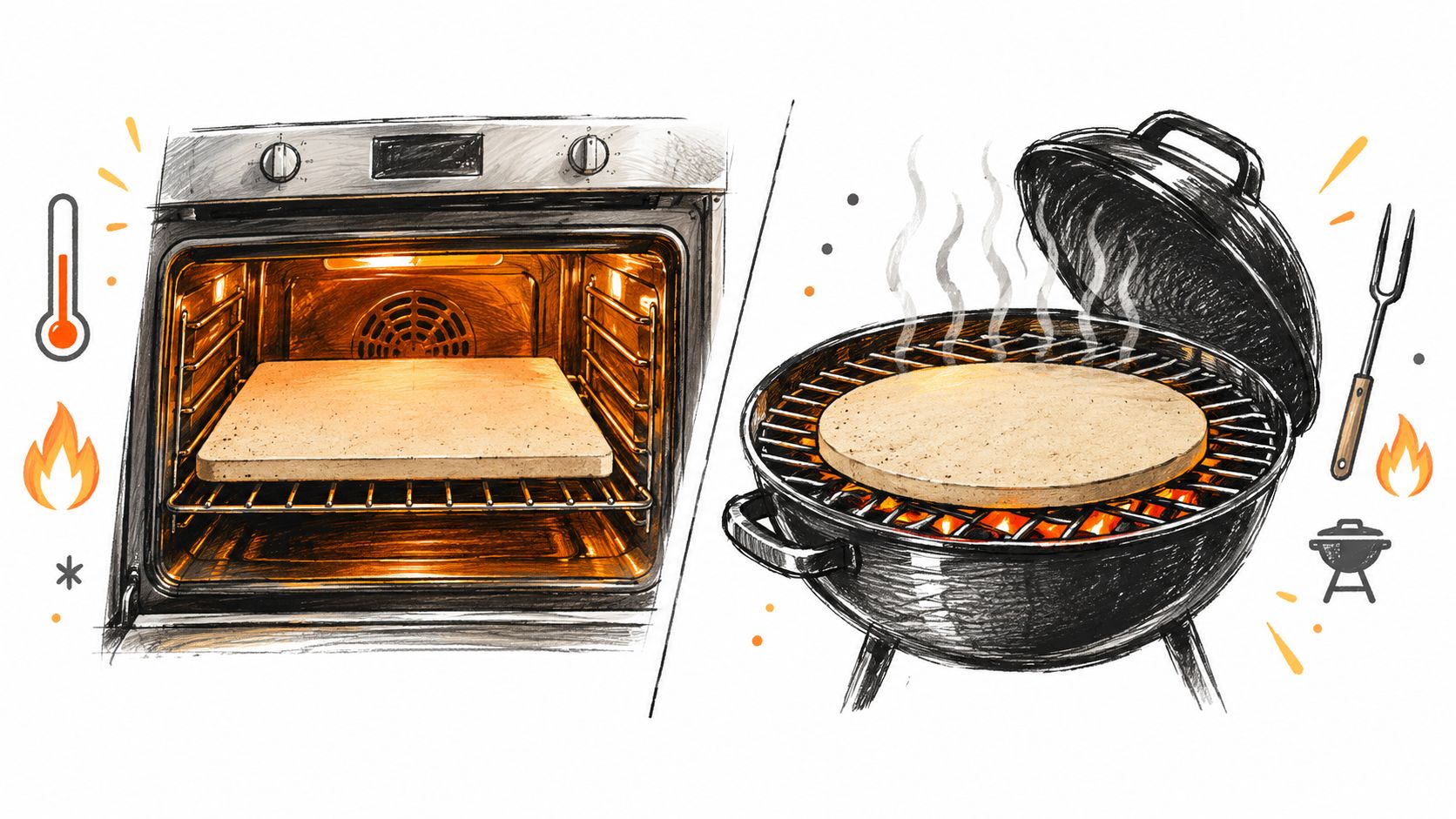
An oven gives you enclosed, predictable heat. A BBQ gives you stronger local hot spots, moving air, direct flame, and a grate that may shift or flex. The stone can work in both environments, but the setup needs to match the appliance.
In a home oven
Set the stone on a stable rack with room around it for air circulation. Avoid placing it directly against the oven wall, and don't use it as a broiler target unless the manufacturer says it can handle that exposure. The broiler can create intense top-side heat while the lower surface remains cooler, which is a poor arrangement for an item that prefers gradual, even heating.
Keep the stone inside while the oven preheats. When the bake is finished, switch the oven off and let the stone cool where it is. If you need to remove it for storage, use suitable heat protection only after it has cooled enough to handle safely.
On a BBQ
Use an indirect-heat arrangement rather than placing the stone directly over active charcoal or a concentrated gas burner. Direct flame contact can create a severe hot spot on one portion of the stone, while the rest remains cooler. Position the stone on a stable grate and make sure it can't slide when you launch or retrieve a pizza.
Gas grills often provide more controllable burner patterns, while charcoal can produce uneven zones as the coals burn. In either case, build the heat gradually with the stone already in place. Don't move the stone between a hot grill and a cold work surface during service.
The Hans Grill BBQ baking stone guide is a useful reference for adapting stone use to outdoor cooking. If your stone has a rack or handles, use those designed contact points, but don't assume handles make a hot stone safe to carry across a patio. A dropped stone can fail even when temperature management has been perfect.
Drying, Storage, and Habits That Extend Stone Life
Drying takes longer than the surface suggests. After a permitted light rinse, leave the stone in a dry, well-ventilated place until it feels completely dry throughout. Waiting at least 24 hours before storage is a cautious benchmark shown in the maintenance guidance provided for this article, especially when water may have entered the pores.
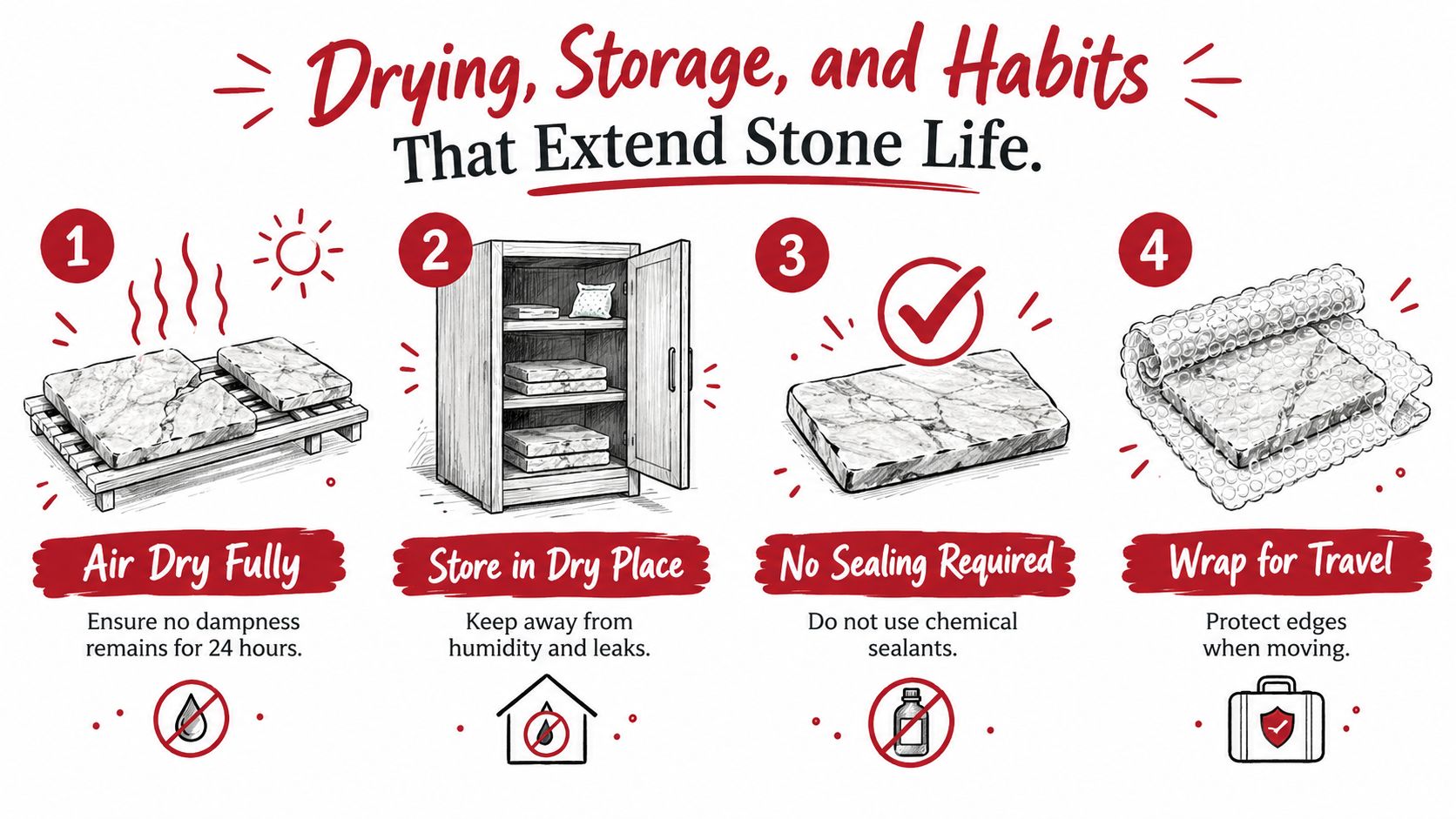
Store the stone flat in a dry cupboard or protected shelf, away from drops, leaks, and heavy items. Chemical sealants aren't necessary, and a stone that stays permanently in a dry oven avoids handling damage, though you should still inspect it before use.
Your durable routine is short: cool fully, scrape, brush, wipe lightly, air-dry completely, and store safely. Once you stop trying to restore a spotless appearance, baking stone care becomes easier and your stone can keep producing crisp bases through many pizza nights.
If you need a cordierite stone or pizza tool setup for both the home oven and backyard grill, explore the practical options from Hans Grill. Choose the equipment that fits your baking surface, then make cool-down, dry cleaning, and safe storage part of every pizza session.


